
Back · Dumbbells
Dumbbell Incline Shrug
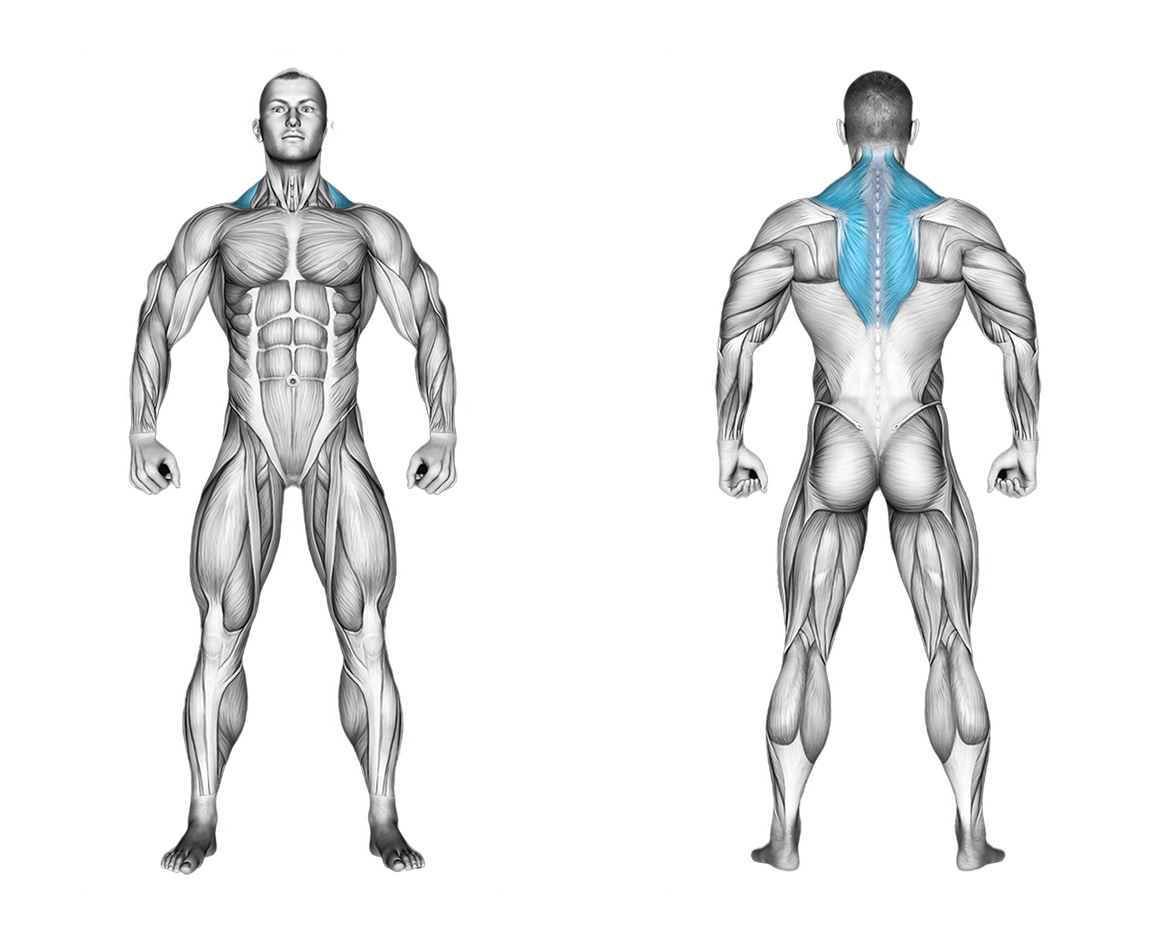
The dumbbell incline shrug is an isolation exercise that targets the middle and upper trapezius along with the rhomboids due to the chest-supported incline position. It is suitable for lifters of all levels and fits well into the middle or end of a back workout to build upper-back thickness without spinal loading.
How to do it
- Lie chest-down on an incline bench set at 30-45 degrees with a dumbbell in each hand.
- Let the dumbbells hang at arm's length below you.
- Elevate your shoulders by shrugging them up towards your ears, keeping your arms straight.
- Hold briefly at the top.
- Lower your shoulders back down with control.
Common mistakes
- Bending the elbows during the shrug, which shifts tension away from the traps and onto the biceps.
- Lifting the chest off the bench to heave the weights, which reduces muscular isolation and strains the shoulders.
- Craning the neck upward, which places unnecessary compressive stress on the cervical spine.
- Dropping the dumbbells quickly without control, which eliminates tension during the eccentric phase.
Tips
- Focus on retracting and elevating the shoulder blades simultaneously rather than purely pulling shoulders toward the ears.
- Keep your neck neutral throughout the set by fixing your gaze on the floor beneath the bench.
- Pause for a full second at the top of each repetition to maximize peak contraction in the upper back.
Sets and reps
Perform 3 to 4 sets of 10 to 15 controlled repetitions with a brief pause at peak contraction. Rest for 60 to 90 seconds between sets.
Muscles worked
Your coach guides every set
Turn on the coach in Gloox: it asks how you feel, picks the weight from your history and cues technique and rest. Rate each set and the next one is tuned to you.

On a computer? Point your phone's camera here to get the app.
Questions
How does this exercise differ from standing dumbbell shrugs?
The chest-supported incline angle directs more tension into the middle trapezius and rhomboids while completely eliminating lower-back fatigue.
What should you do if you experience shoulder or neck pain during the exercise?
Stop the movement immediately and consult a healthcare specialist if the discomfort persists.
Similar exercises
Dumbbell Bent Over Reverse RowDumbbells
Dumbbell Incline RowDumbbells
Dumbbell Lying Neutral Grip Row on RackDumbbells
Dumbbell RowDumbbells
Dumbbell Bent-Over RowDumbbells
Dumbbell Palm Rotational Bent Over RowDumbbells
Dumbbell One Arm Bent over RowDumbbells
Dumbbell Hammer Grip Incline Bench Two Arm RowDumbbells