
Glutes · Dumbbells
Dumbbell Hip Thrust on Bench
The dumbbell hip thrust on a bench is a targeted exercise designed to build strength and size in the gluteal muscles. It is suitable for lifters of all experience levels and works well as a primary glute movement or as an accessory after heavy squats and deadlifts.
How to do it
- Position yourself perpendicular to a flat bench with your upper back resting against the edge.
- Place a dumbbell on your pelvis for added resistance.
- Keep your feet flat on the floor, shoulder-width apart, and close to your buttocks.
- Hold the dumbbell in place with your hands.
- Inhale and brace your core. As you exhale, drive through your heels to lift your hips, thrusting the dumbbell upwards.
- Lift your hips until your body forms a straight line from your shoulders to your knees, squeezing your glutes at the top of the movement.
- Keep your movements controlled and avoid arching your back excessively.
- Slowly lower your hips back to the starting position, controlling the descent.
Common mistakes
- Hyperextending the lower back at the top shifts the load away from the glutes and places excessive stress on the lumbar spine.
- Placing the feet too far forward or too close shifts tension to the hamstrings or quadriceps instead of the glutes.
- Tilting the head backward disrupts spinal alignment and prevents achieving a full posterior pelvic tilt.
Tips
- Place a folded towel or exercise mat under the dumbbell to cushion your pelvic bone from discomfort.
- Keep your chin tucked and your eyes fixed forward throughout the set to protect your lower back and maintain core engagement.
- Pause for a full second at lockout to maximize peak glute contraction before lowering the weight.
Sets and reps
Perform 3 to 4 sets of 10 to 15 controlled repetitions, resting 60 to 90 seconds between sets for optimal muscle growth.
Muscles worked
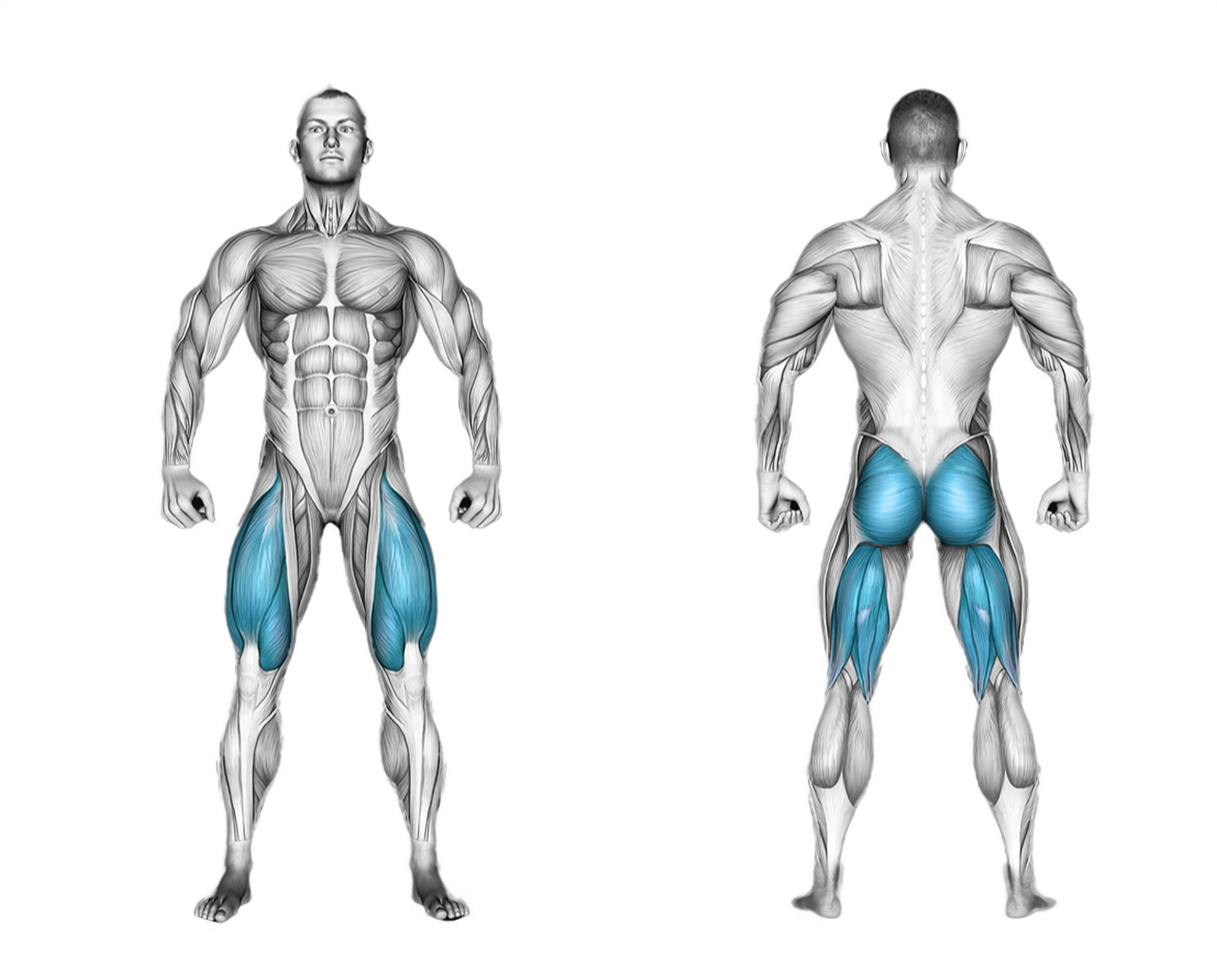
Your coach guides every set
Turn on the coach in Gloox: it asks how you feel, picks the weight from your history and cues technique and rest. Rate each set and the next one is tuned to you.

On a computer? Point your phone's camera here to get the app.
Questions
How does the bench hip thrust differ from a glute bridge on the floor?
Elevating your upper back on a bench creates a significantly larger range of motion, allowing deeper glute stretch and higher muscle activation.
Is this exercise safe if you have lower back issues?
It places minimal compressive load on the spine, but if you feel any lower back pain, stop the exercise and consult a healthcare professional.
Similar exercises
Dumbbell Glute BridgeDumbbells
Resistance Band Lateral WalkResistance bands
Resistance Band Bent Leg Side Kick (kneeling)Resistance bands
Band Seated Hip External RotationResistance bands
Barbell Lunge TwistBarbell
Cable Donkey Diagonal KickbackCable machine
Cable Donkey KickbackCable machine
Smith Kneeling Rear KickSmith machine