
Shoulders · Cable machine
Cable Lateral Raise
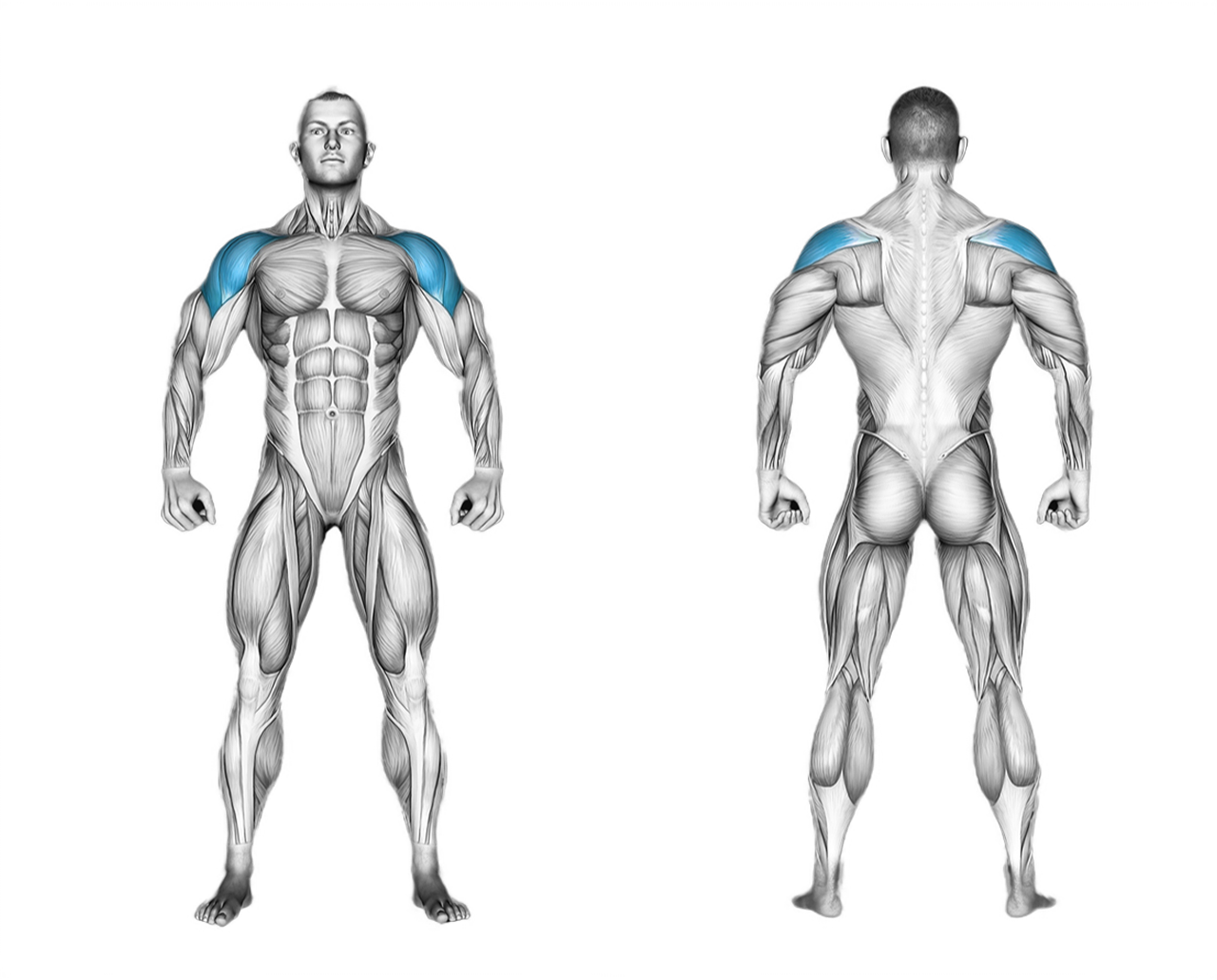
The cable lateral raise is an isolation exercise designed to target the lateral deltoids with constant tension. It is typically performed after heavy overhead presses to build shoulder width and definition.
- Muscles
- Shoulders
- Equipment
- Cable machine
- Type
- Strength
- Animation
- Men and women
How to do it
- Stand in the middle of a cable crossover machine, with both pulleys set to the lowest position.
- Attach a single handle to each pulley and grab them with each hand.
- Stand with your feet shoulder-width apart and your body upright.
- Inhale and brace your core. Exhale as you simultaneously lift both arms to the sides, keeping them straight, until they are parallel to the floor.
- Focus on using the muscles in your shoulders, especially the lateral deltoids.
- Control the movement throughout, ensuring your arms are raised and lowered simultaneously.
- Slowly lower your arms back to the starting position, controlling the weight.
Common mistakes
- Using body momentum or swinging robs the lateral deltoids of tension and stresses the lower back.
- Raising the arms significantly higher than shoulder height shifts the work toward the upper trapezius.
- Dropping the weight quickly on the descent eliminates eccentric tension, which is the primary benefit of the cable machine.
Tips
- Keep a soft bend in the elbows and maintain that exact angle from start to finish.
- Raise your arms slightly forward in the scapular plane rather than straight out to the sides to protect the shoulder joint.
- Pause briefly at the top of each rep to ensure the lateral deltoid is actively holding the load without momentum.
Sets and reps
Perform 3 to 4 sets of 12 to 15 reps with 60 to 90 seconds of rest between sets to maximize muscle hypertrophy. As an isolation movement, it benefits from moderate loads and strict form rather than heavy, low-rep training.
Muscles worked
Your coach guides every set
Turn on the coach in Gloox: it asks how you feel, picks the weight from your history and cues technique and rest. Rate each set and the next one is tuned to you.

On a computer? Point your phone's camera here to get the app.
Questions
Why choose cables over dumbbells for lateral raises?
Cables maintain continuous tension on the muscle at the bottom of the movement, whereas dumbbells provide virtually no resistance until the arms are partially raised.
What should you do if you feel pain in the shoulder joint?
Stop the exercise immediately, adjust your arm path slightly forward into the scapular plane, and consult a qualified specialist if the pain persists.
Similar exercises
Cable Cross Over Reverse FlyCable machine
Cable One Arm Lateral RaiseCable machine
Cable One Arm Lateral RaiseCable machine
Cable Leaning Lateral RaiseCable machine
Cable Front RaiseCable machine
Cable Standing Rear Delt Row With RopeCable machine
Cable Standing Y-raises (with rope attachment)Cable machine
Cable Bent over Contralateral Rear Delt RowCable machine