
Shoulders · Cable machine
Cable One Arm Lateral Raise
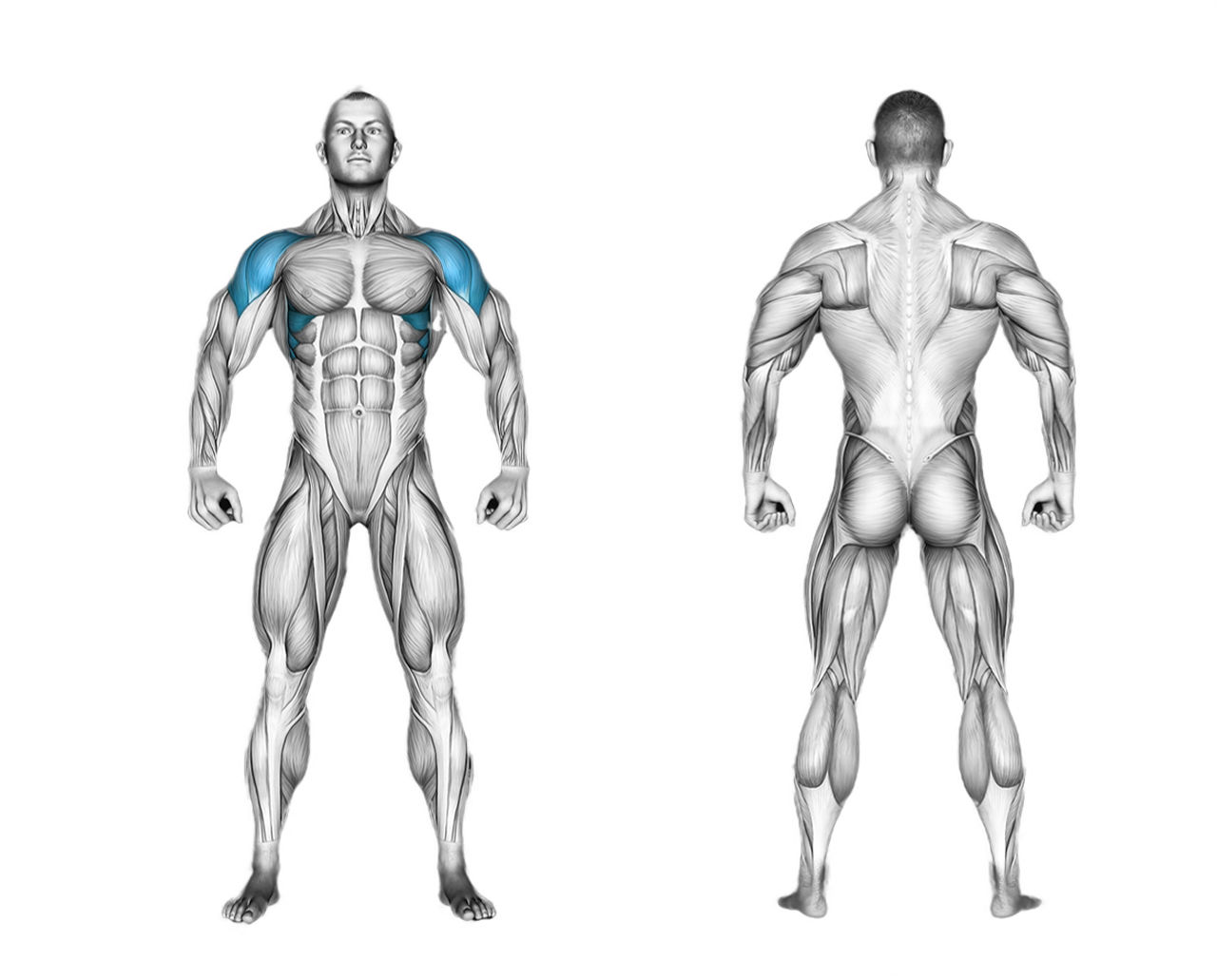
The cable one arm lateral raise is an isolation exercise designed to target the lateral head of the deltoid muscle. It provides continuous tension throughout the entire range of motion, making it ideal for shoulder hypertrophy toward the middle or end of an upper-body workout.
- Muscles
- Shoulders
- Equipment
- Cable machine
- Type
- Strength
- Animation
- Men and women
How to do it
- Stand beside a cable machine with the pulley set to the lowest position.
- Attach a single handle to the pulley and grab it.
- Step away from the machine to create tension on the cable, standing with feet shoulder-width apart.
- Keep your body straight, core engaged, and the hand not holding the handle on your hip or extended for balance.
- Inhale and slowly lift your arm to the side, keeping it straight, until it is parallel with the floor.
- Focus on using the lateral deltoid muscle to perform the lift.
- Exhale as you control the movement back to the starting position, maintaining a slow and controlled motion.
Common mistakes
- Using body momentum and swinging the torso reduces tension on the deltoid and places unnecessary stress on the lower back.
- Raising the arm significantly above shoulder level shifts the workload away from the lateral deltoid and onto the upper trapezius.
- Locking out the elbow completely places excessive shear stress on the elbow joint.
Tips
- Maintain a slight bend in your elbow and focus on leading the movement with your elbow rather than your wrist.
- Pause briefly when your arm reaches shoulder height to eliminate momentum and maximize peak contraction.
- Stop the descent just before the weight stack touches to keep constant tension on the muscle throughout the entire set.
Sets and reps
For hypertrophy and endurance, perform 3 to 4 sets of 12 to 20 reps per arm, resting 45 to 60 seconds between sides.
Muscles worked
Your coach guides every set
Turn on the coach in Gloox: it asks how you feel, picks the weight from your history and cues technique and rest. Rate each set and the next one is tuned to you.

On a computer? Point your phone's camera here to get the app.
Questions
Why choose cables over dumbbells for lateral raises?
Cables provide continuous mechanical tension from the bottom of the movement to the top, whereas dumbbells lose resistance at the bottom.
Should the cable be set up in front of or behind the body?
Both variations are effective, though running the cable behind the body provides a slightly more direct line of pull for the lateral deltoid, while running it in front is often gentler on shoulder mechanics.
Similar exercises
Cable Cross Over Reverse FlyCable machine
Cable One Arm Lateral RaiseCable machine
Cable Leaning Lateral RaiseCable machine
Cable Front RaiseCable machine
Cable Lateral RaiseCable machine
Cable Standing Rear Delt Row With RopeCable machine
Cable Standing Y-raises (with rope attachment)Cable machine
Cable Bent over Contralateral Rear Delt RowCable machine