
Shoulders · Cable machine
Cable Standing Y-raises (with rope attachment)
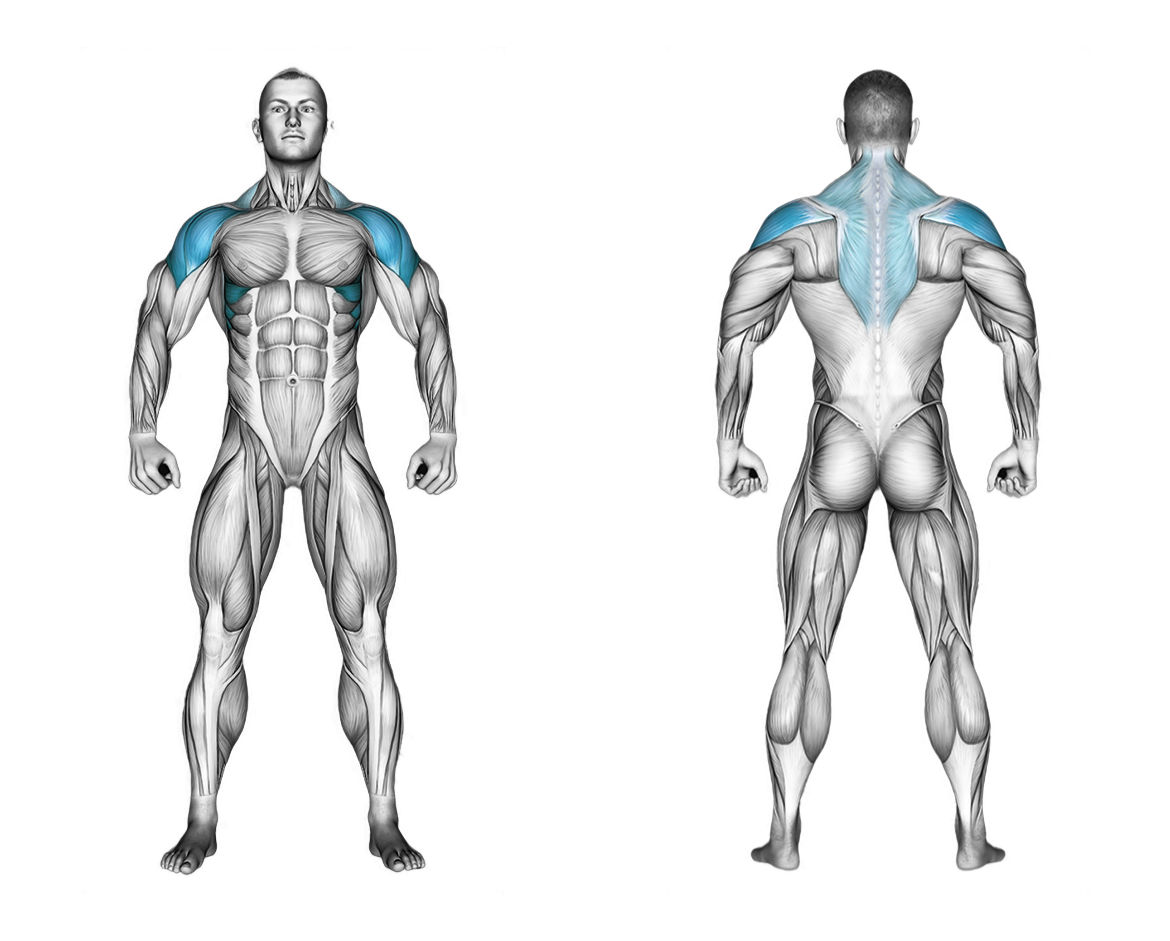
Cable standing Y-raises with a rope attachment are an isolation exercise targeting the lower trapezius, lateral deltoids, and scapular stabilizers. They are ideal for building shoulder balance, improving posture, and finishing off an upper-body or shoulder-focused workout.
- Muscles
- Shoulders
- Equipment
- Cable machine
- Type
- Strength
- Animation
- Men
How to do it
- Stand facing a cable machine with a rope attachment set at the lowest position.
- Grab each end of the rope with your hands.
- With arms relatively straight and a slight bend in your elbows, raise the rope up and out to form a Y shape with your body.
- Squeeze your shoulders and upper back at the top.
- Lower back down with control.
Common mistakes
- Arching the lower back to heave the rope upward, which shifts tension away from the shoulders onto the lumbar spine.
- Bending the elbows excessively during the lift, turning the movement into a row and engaging the biceps.
- Raising the arms straight ahead instead of out at a roughly 30-to-45-degree angle, missing the targeted lower trap engagement.
- Letting the cable snap back quickly at the bottom rather than controlling the eccentric lowering phase.
Tips
- Pause for a full second at the top of the Y-position to maximize the contraction in your shoulders and upper back.
- Keep your core braced and ribs pulled down to prevent the torso from leaning back as you lift.
- Choose a light resistance so that momentum does not compromise your shoulder mechanics.
Sets and reps
Perform 3–4 sets of 12–20 controlled repetitions with 60–90 seconds of rest. Because this movement targets smaller stabilizers, prioritizing high volume and strict form works far better than chasing heavy loads.
Muscles worked
Your coach guides every set
Turn on the coach in Gloox: it asks how you feel, picks the weight from your history and cues technique and rest. Rate each set and the next one is tuned to you.

On a computer? Point your phone's camera here to get the app.
Questions
What muscles do cable Y-raises work the most?
The primary targets are the lower trapezius fibers, lateral deltoids, and serratus anterior, with secondary support from the rear deltoids.
Can dumbbells replace the cable machine for Y-raises?
Yes, performing prone Y-raises lying chest-down on an incline bench mimics this movement pattern, though cables provide smoother tension at the bottom.
Similar exercises
Cable Cross Over Reverse FlyCable machine
Cable One Arm Lateral RaiseCable machine
Cable One Arm Lateral RaiseCable machine
Cable Leaning Lateral RaiseCable machine
Cable Front RaiseCable machine
Cable Lateral RaiseCable machine
Cable Standing Rear Delt Row With RopeCable machine
Cable Bent over Contralateral Rear Delt RowCable machine