Legs · Barbell
Barbell One Leg Squat
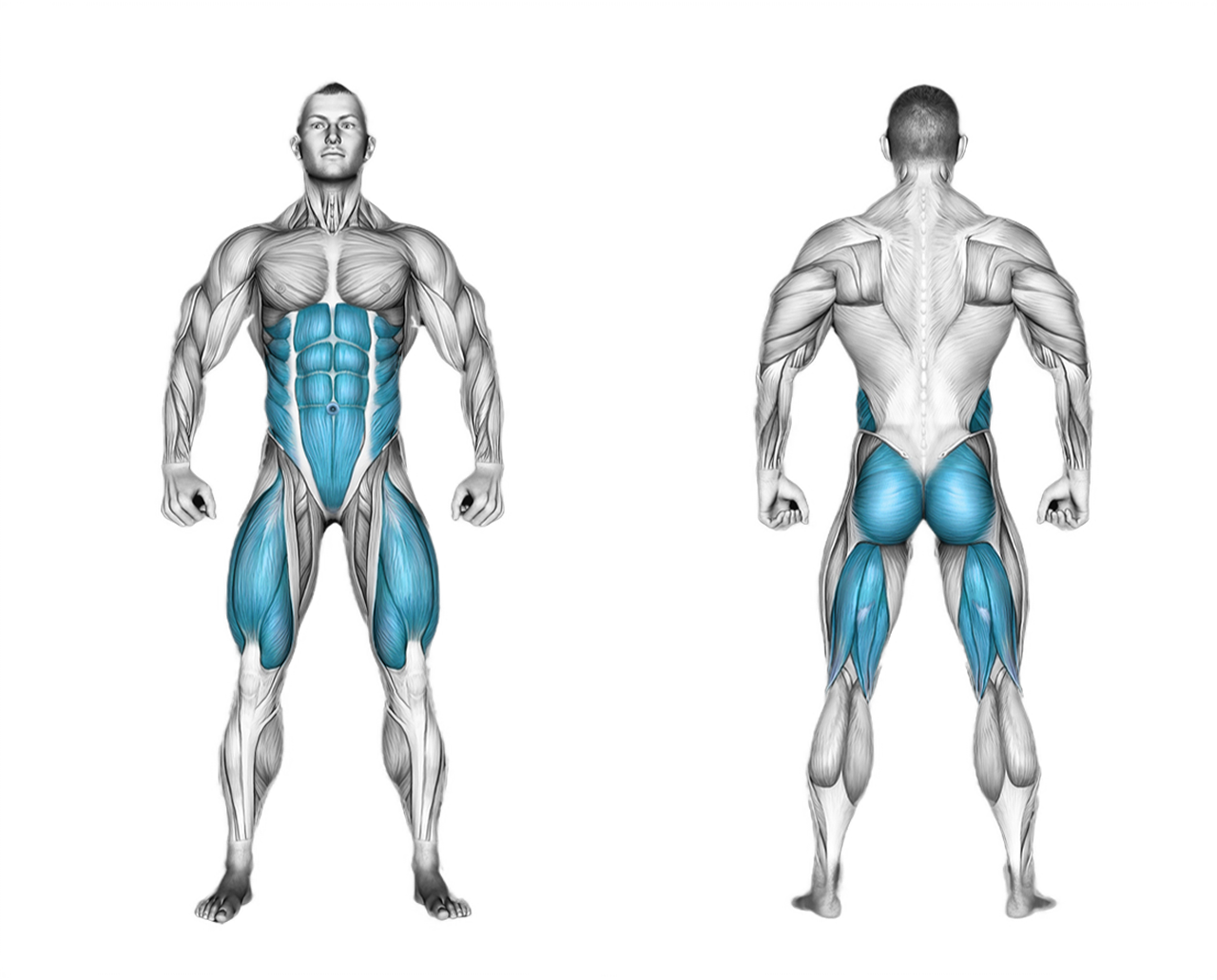
The barbell one leg squat is an advanced unilateral exercise designed to target the quadriceps, glutes, and adductors while heavily challenging core stability. It is best suited for intermediate to advanced lifters looking to fix strength imbalances and is typically performed after primary bilateral lower-body lifts.
How to do it
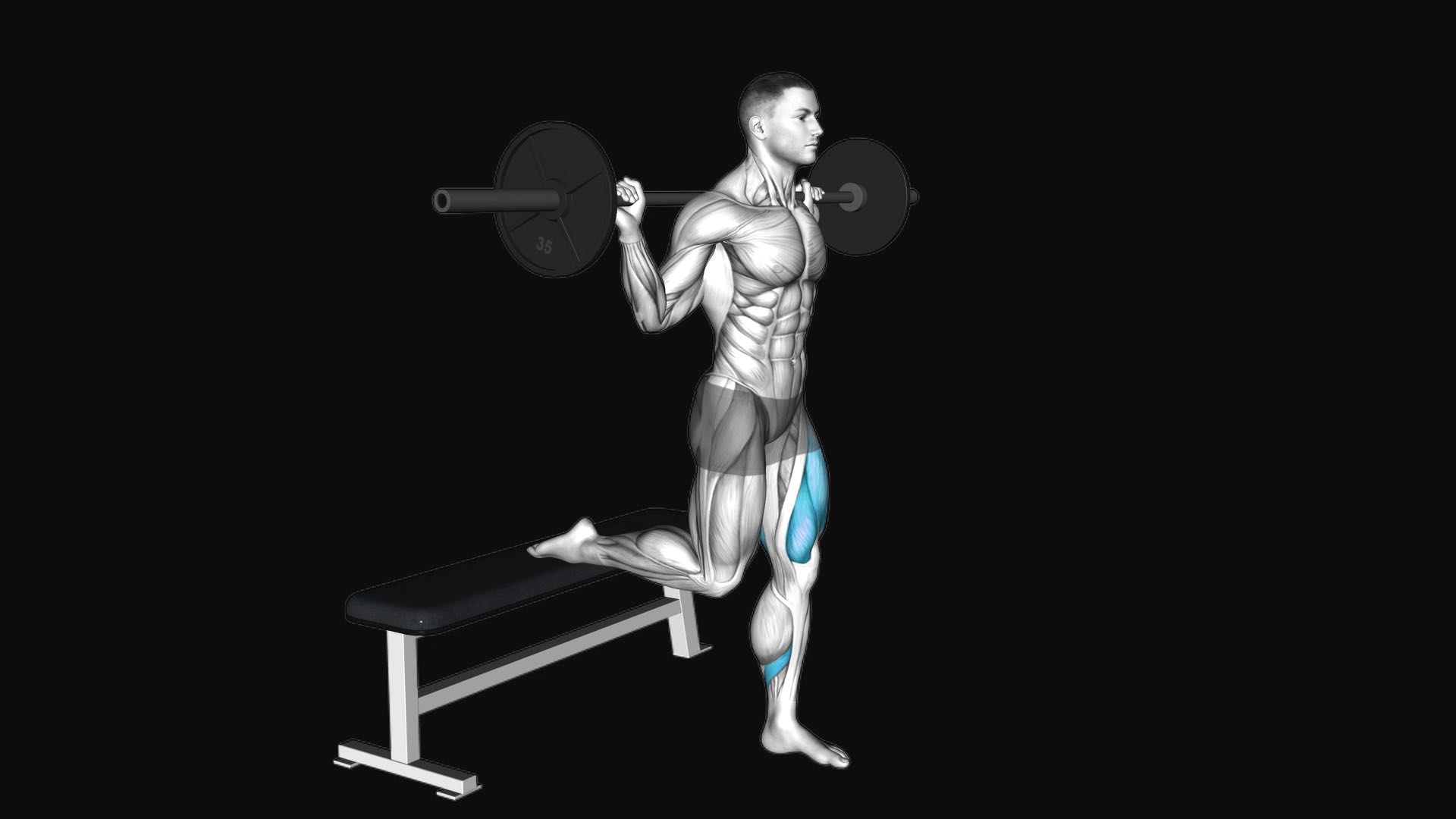
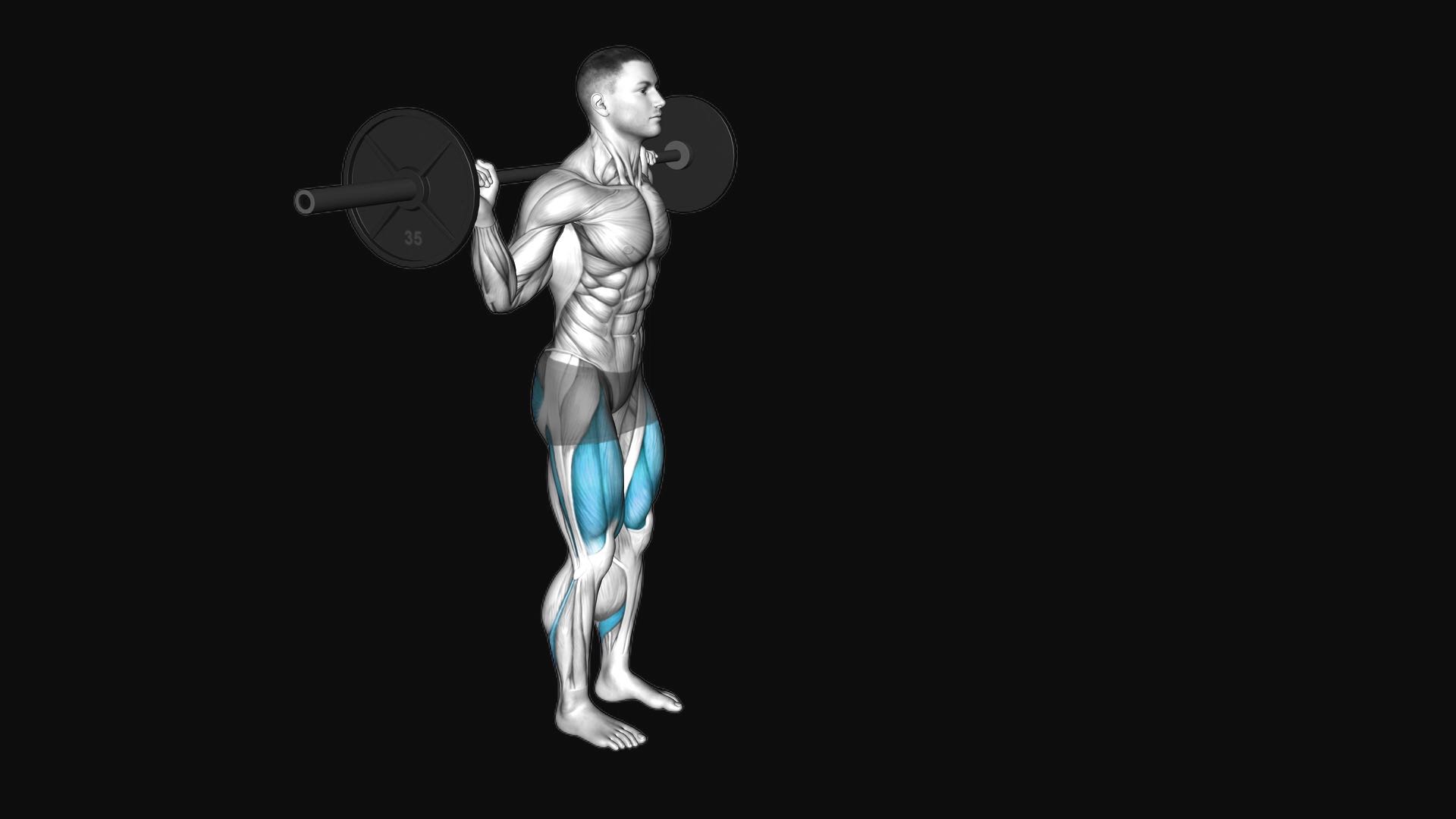
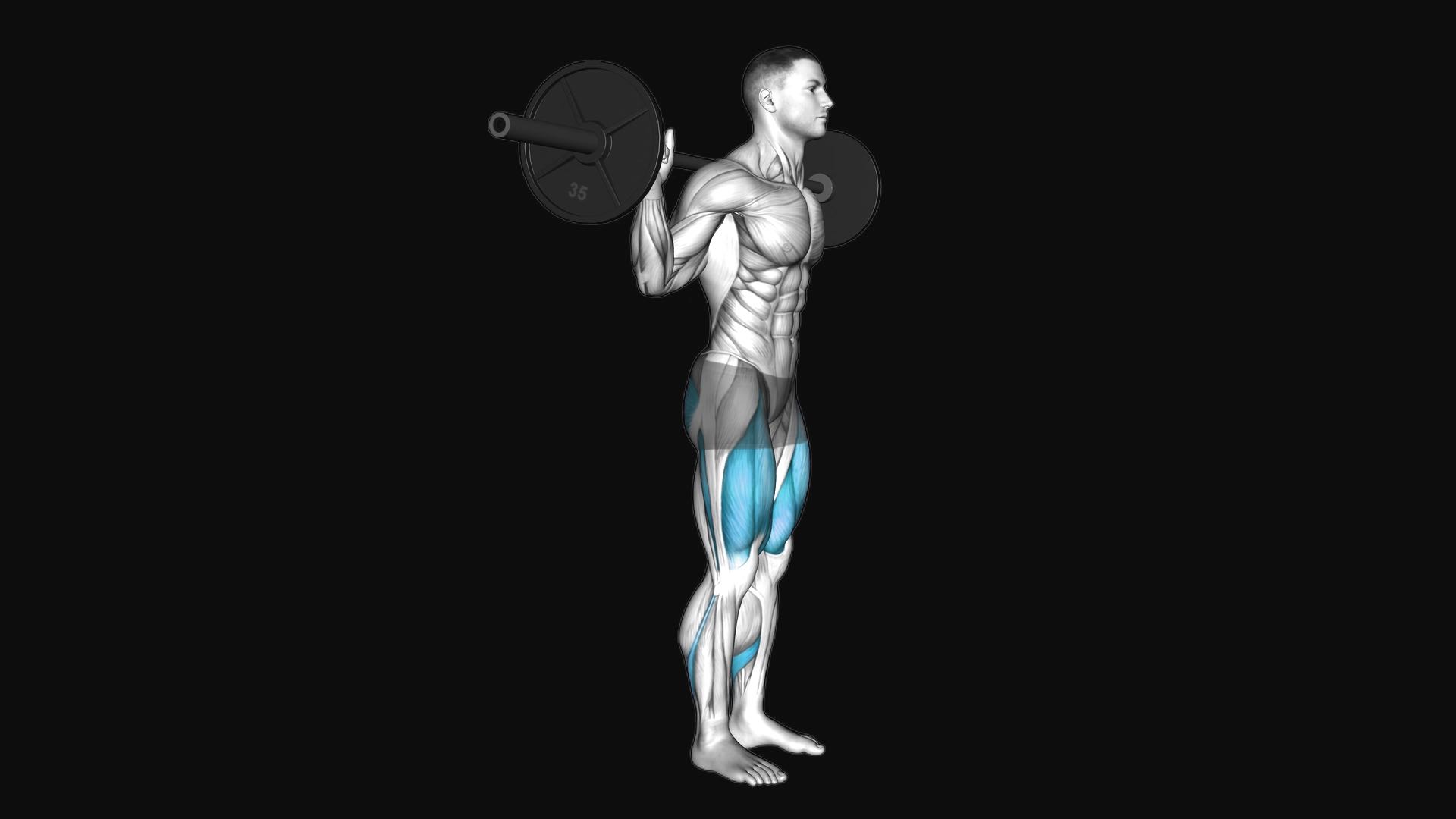
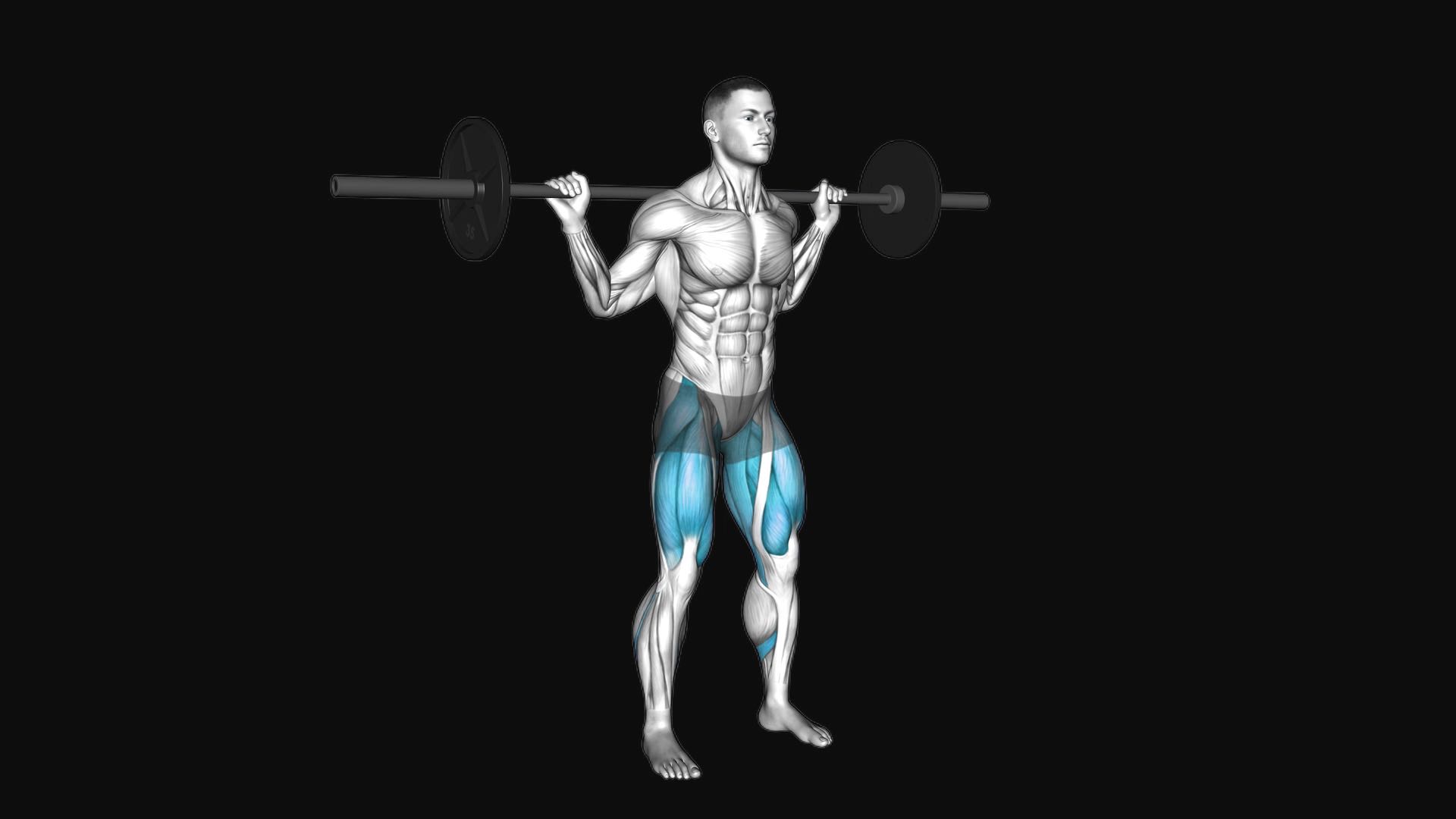
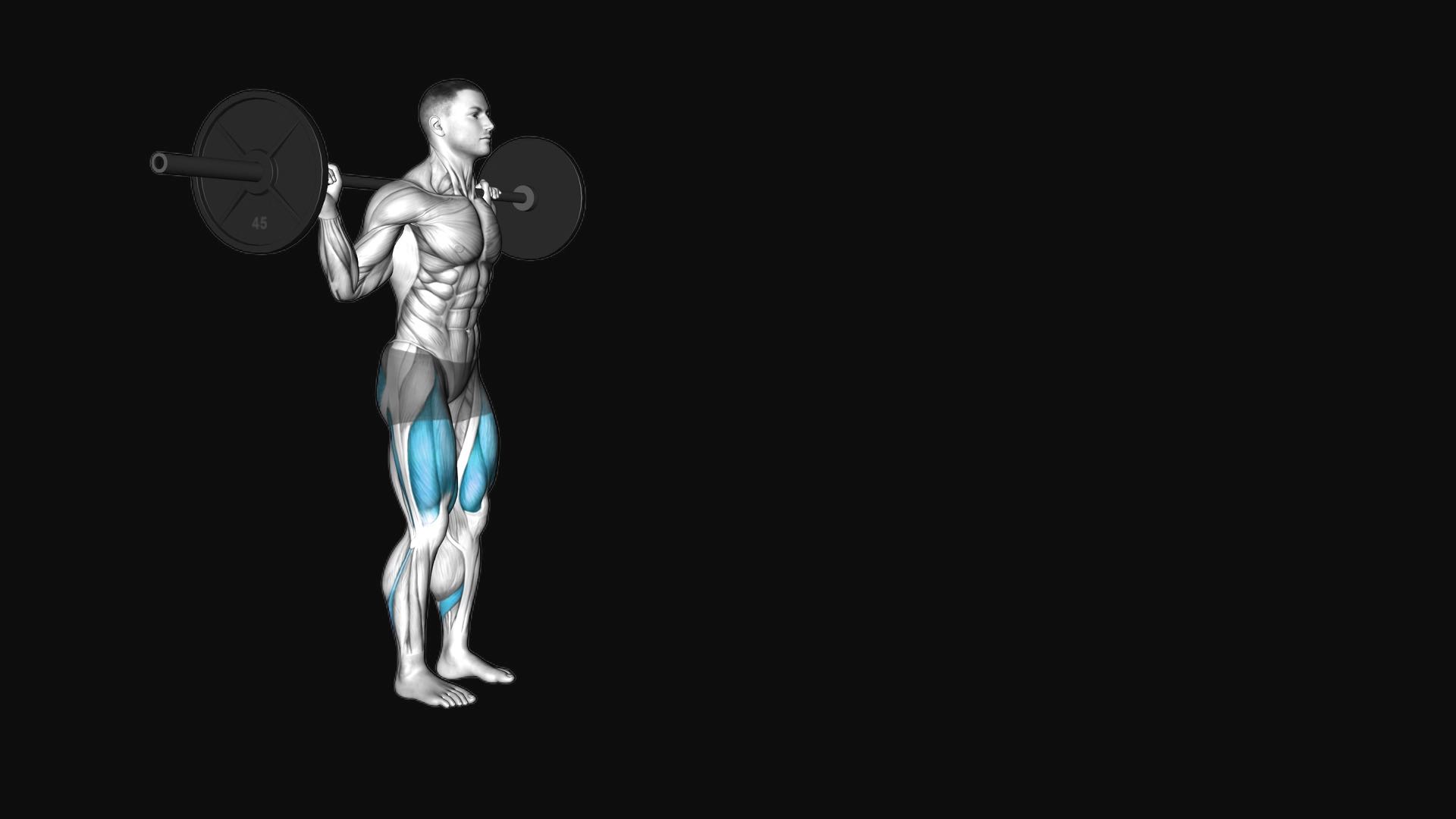
- Stand with your back to a bench and place a barbell across your upper back, gripping it with hands wider than shoulder-width.
- Place one foot back on the bench, balancing on the other leg in front of the bench.
- Keep your torso upright, core engaged, and back straight.
- Inhale as you lower your body by bending the knee of your front leg. Ensure the knee does not go past your toes and your back leg is bent at the knee, lowering the body.
- Lower yourself until the thigh of your front leg is parallel to the ground.
- Exhale as you push back up to the starting position, focusing on the muscles of your front leg.
Common mistakes
- Placing the front foot too close to the bench causes excessive forward knee travel and unnecessary joint shear.
- Shifting too much body weight onto the rear foot reduces the training stimulus on the working front leg.
- Allowing the working knee to cave inward compromises joint alignment and increases the risk of injury.
- Rounding the spine while descending under axial load places excessive mechanical stress on the lower back.
Tips
- Find your optimal stance width and balance using an empty bar inside a power rack before adding weight.
- Drive through the midfoot and heel of the front leg while maintaining a rigid core and a slight natural forward torso lean.
- Rest the laces of the rear foot flat on the bench rather than propping up on the toes to avoid pushing off the back leg.
Sets and reps
Perform 3 to 4 sets of 6 to 10 repetitions per leg for muscle mass and unilateral strength. Rest 90 to 120 seconds between legs or sets to account for high cardiovascular and nervous system demands.
Muscles worked
Your coach guides every set
Turn on the coach in Gloox: it asks how you feel, picks the weight from your history and cues technique and rest. Rate each set and the next one is tuned to you.

On a computer? Point your phone's camera here to get the app.
Questions
How does using a barbell compare to using dumbbells for this exercise?
The barbell raises your center of mass, demanding far more core stabilization and balance, though it is harder to safely bail out of than dumbbells if you reach muscular failure.
What should you do if you feel sharp pain in the front knee or hip?
Stop the movement immediately and check your foot placement; if pain persists, avoid the exercise and consult a qualified medical professional.