
Back · Pull-up bar
Assisted Pull-Up
The assisted pull-up is a compound vertical pulling exercise that develops the latissimus dorsi, upper back, and biceps with reduced body weight. It is ideal for lifters working toward unassisted pull-ups and fits into the primary pulling slot of a back or upper-body routine.
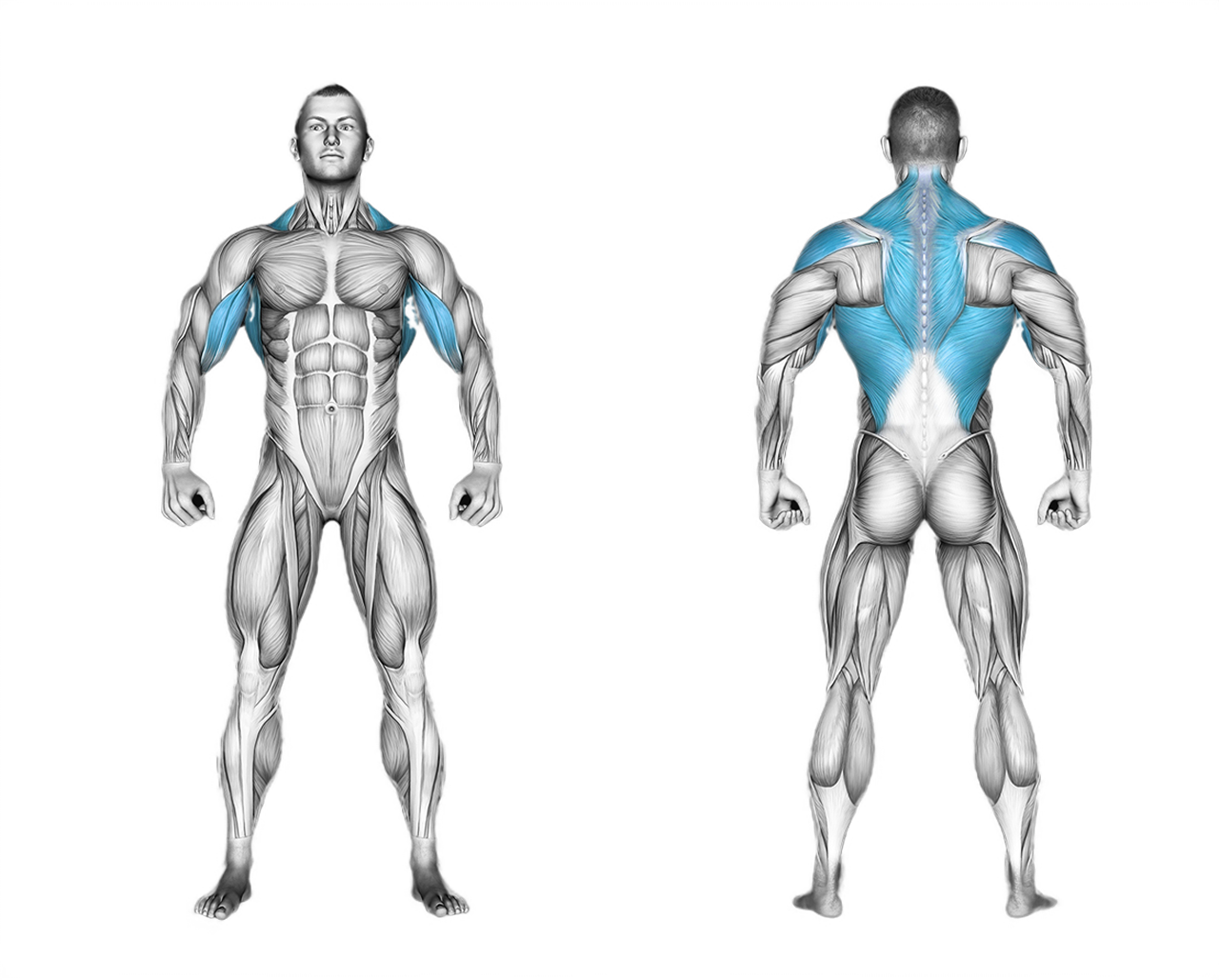
- Muscles
- Back
- Equipment
- Pull-up bar
- Type
- Strength
- Animation
- Men and women
How to do it
- Step onto the assisted pull-up machine and place your knees on the pad, or use the band for assistance if using a regular pull-up bar.
- Grip the pull-up bar with your palms facing forward, hands slightly wider than shoulder-width apart.
- Inhale as you lower your body, keeping your core engaged and spine straight.
- Exhale as you pull yourself up, aiming to bring your chin above the bar by flexing your elbows and pulling your shoulder blades together.
- Slowly lower back down in a controlled movement as you inhale.
Common mistakes
- Bouncing off the knee pad or kicking with the legs shifts tension away from the back and destabilizes the shoulders.
- Using a partial range of motion limits muscle recruitment at both peak contraction and the stretch position.
- Craning the neck upward to get the chin over the bar creates excessive strain on the cervical spine.
- Arching the lower back excessively compromises core tension and alters the pull angle.
Tips
- Depress and retract your shoulder blades before initiating the pull with your arms.
- Drive your elbows down and back toward your ribs rather than pulling with your forearms.
- Lower yourself under control for two to three seconds to maximize tension on the lats.
Sets and reps
Perform 3 to 4 sets of 6 to 10 reps with 2 to 3 minutes of rest between sets to build strength and muscle, progressively lowering the assistance weight. For muscular endurance, use 3 sets of 12 to 15 reps with 60 to 90 seconds of rest.
Muscles worked
Your coach guides every set
Turn on the coach in Gloox: it asks how you feel, picks the weight from your history and cues technique and rest. Rate each set and the next one is tuned to you.

On a computer? Point your phone's camera here to get the app.
Questions
Is a machine counterbalance better than a resistance band?
A machine provides consistent assistance throughout the entire range of motion, whereas a band offers heavy help at the bottom and very little at the top.
Will assisted pull-ups transfer directly to strict bodyweight pull-ups?
Yes, by gradually decreasing the counterweight over time, you build the specific pulling strength needed for bodyweight repetitions.
Similar exercises
Assisted Parallel Close Grip Pull upPull-up bar
Assisted Parallel Close Grip Pull-upPull-up bar
Pull-up Wide GripPull-up bar
Pull-upPull-up bar
Cable Lateral Pulldown with Mag GripCable machine
Cable Lateral Pulldown with Mag GripCable machine
Cable High RowCable machine
Cable Single Arm High RowCable machine