
Back · Pull-up bar
Pull-up
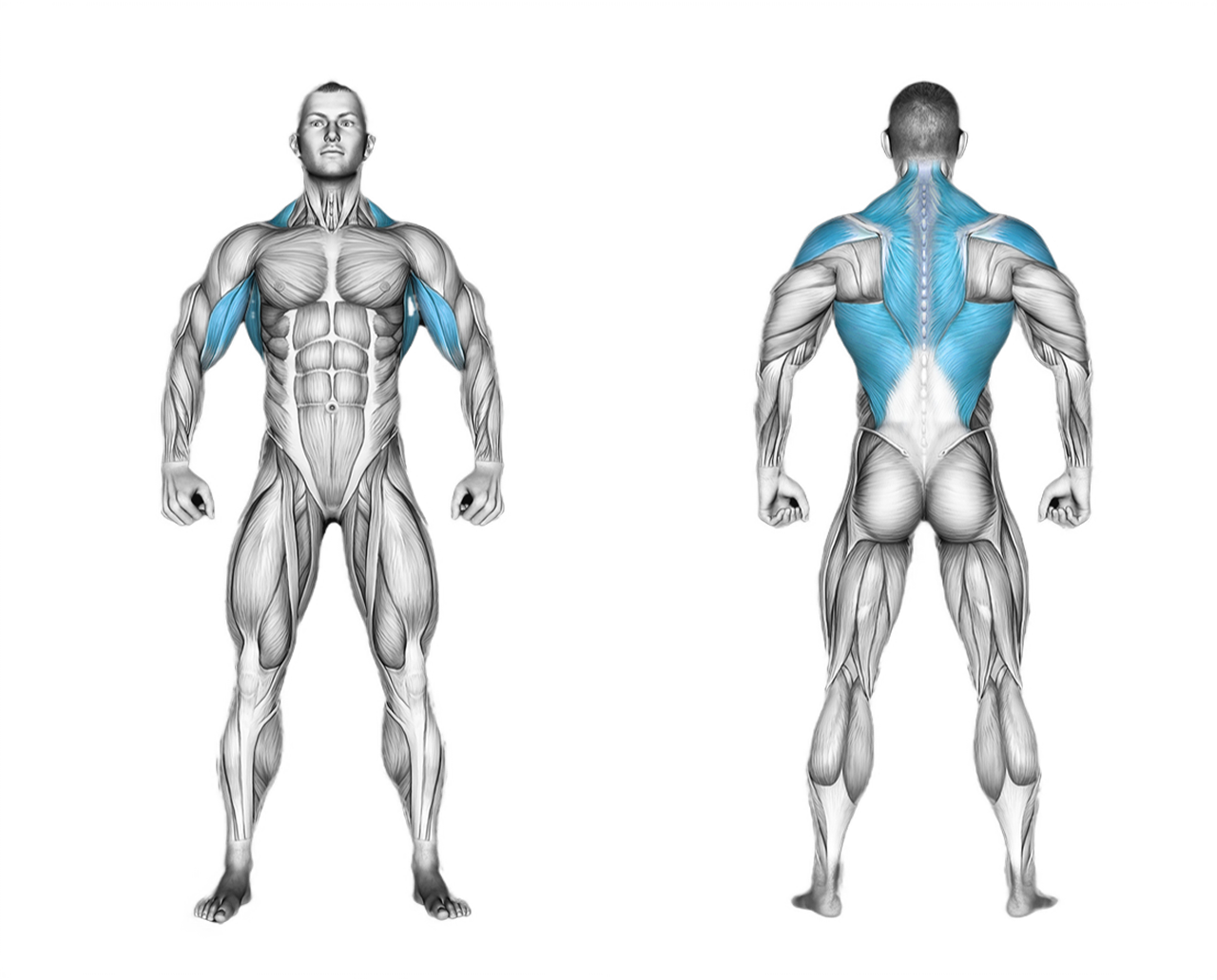
The pull-up is a fundamental upper-body compound exercise that primarily targets the latissimus dorsi, upper back, and biceps using your body weight. It suits lifters of all experience levels and is best programmed at the beginning of a pull or upper-body workout as a primary strength movement.
- Equipment
- Pull-up bar
- Type
- Strength
- Animation
- Men and women
How to do it
- Approach a pull-up bar and grasp it with an overhand grip, hands about shoulder-width apart.
- Hang from the bar with your arms fully extended, legs straight or slightly bent if needed.
- Inhale and brace your core. Exhale as you pull yourself up, aiming to bring your chin above the bar.
- Focus on using your back and biceps muscles to lift your body.
- Keep your movements controlled, avoiding swinging or kicking.
- Pull up until your chin is over the bar or your chest is close to it.
- Slowly lower yourself back to the starting position, fully extending your arms.
Common mistakes
- Kicking the legs or swinging the torso reduces muscular tension on the back and places unnecessary stress on the shoulder joints.
- Cutting the range of motion short by not reaching a full dead hang or failing to clear the bar with the chin limits muscle activation.
- Craning the neck upward to get over the bar places excessive compression on the cervical spine.
- Rolling the shoulders forward at the top of the rep shifts load onto the anterior deltoids and disengages the lats.
Tips
- Initiate each rep by depressing and retracting your shoulder blades before you start bending your elbows.
- Brace your core and squeeze your glutes to maintain a stable hollow-body position and prevent swinging.
- If you cannot perform strict reps yet, build baseline strength using resistance bands or slow eccentric lowering phases.
Sets and reps
For strength and muscle growth, perform 3 to 4 sets of 5 to 10 repetitions with 2 to 3 minutes of rest, adding external weight once bodyweight reps become easy. For muscular endurance, aim for 3 to 4 sets near technical failure with 60 to 90 seconds of rest.
Muscles worked
Your coach guides every set
Turn on the coach in Gloox: it asks how you feel, picks the weight from your history and cues technique and rest. Rate each set and the next one is tuned to you.

On a computer? Point your phone's camera here to get the app.
Questions
What is the difference between a pull-up and a chin-up?
A pull-up uses an overhand pronated grip that shifts emphasis toward the lats and forearms, while a chin-up uses an underhand grip that relies more heavily on the biceps.
What should you do if pull-ups cause shoulder or elbow pain?
Stop the exercise immediately to evaluate your grip width, and consult a medical professional if the joint discomfort persists.
Similar exercises
Assisted Parallel Close Grip Pull upPull-up bar
Assisted Pull-UpPull-up bar
Assisted Parallel Close Grip Pull-upPull-up bar
Pull-up Wide GripPull-up bar
Hammer Grip Pull-up on Dip CageMachines
Resistance Band Bent over Row (Version 2)Resistance bands
Band Bent over RowResistance bands
Cable Bent Over Reverse Grip RowCable machine