Back · Machines
90-Degree Hyperextension
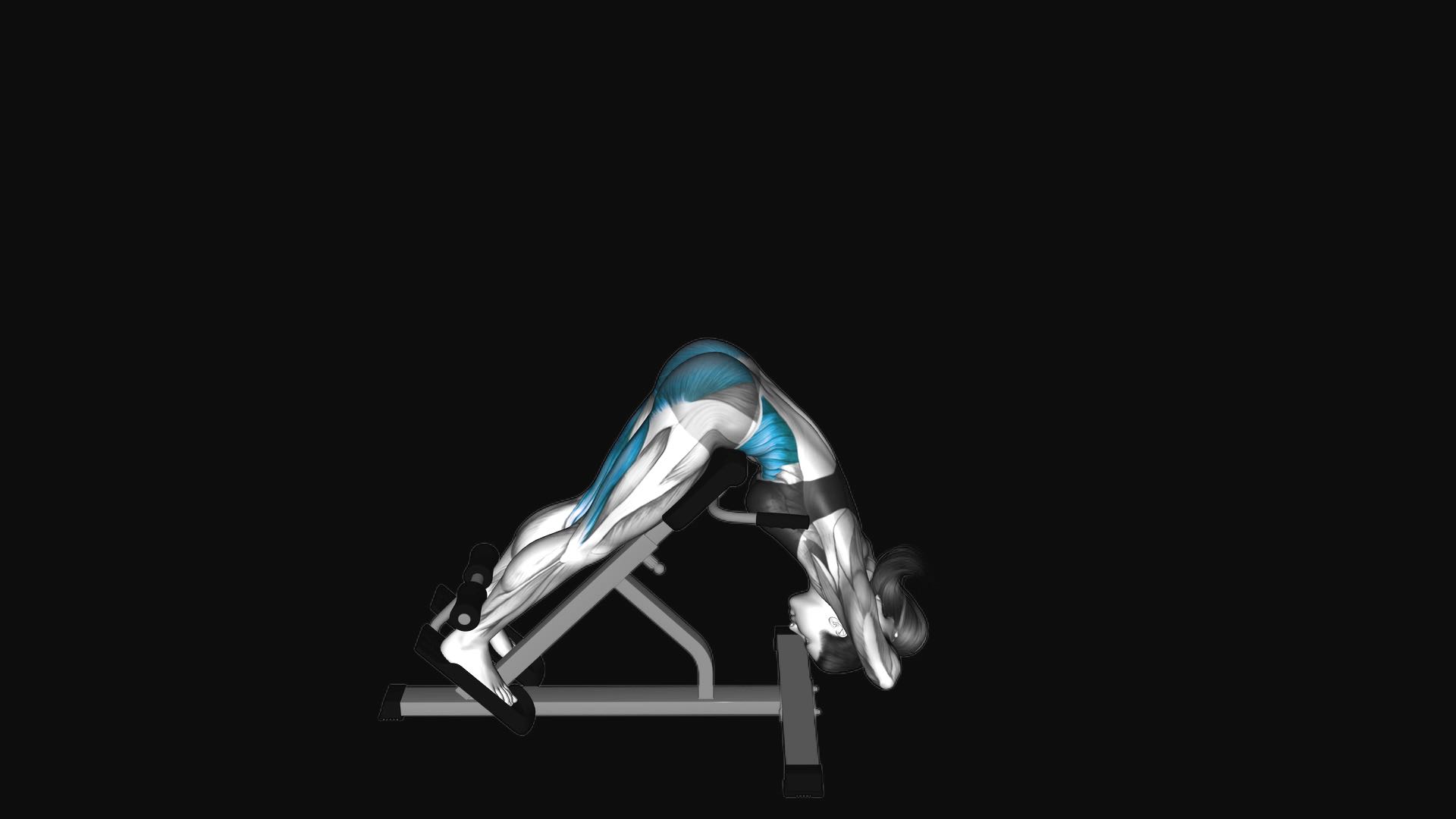
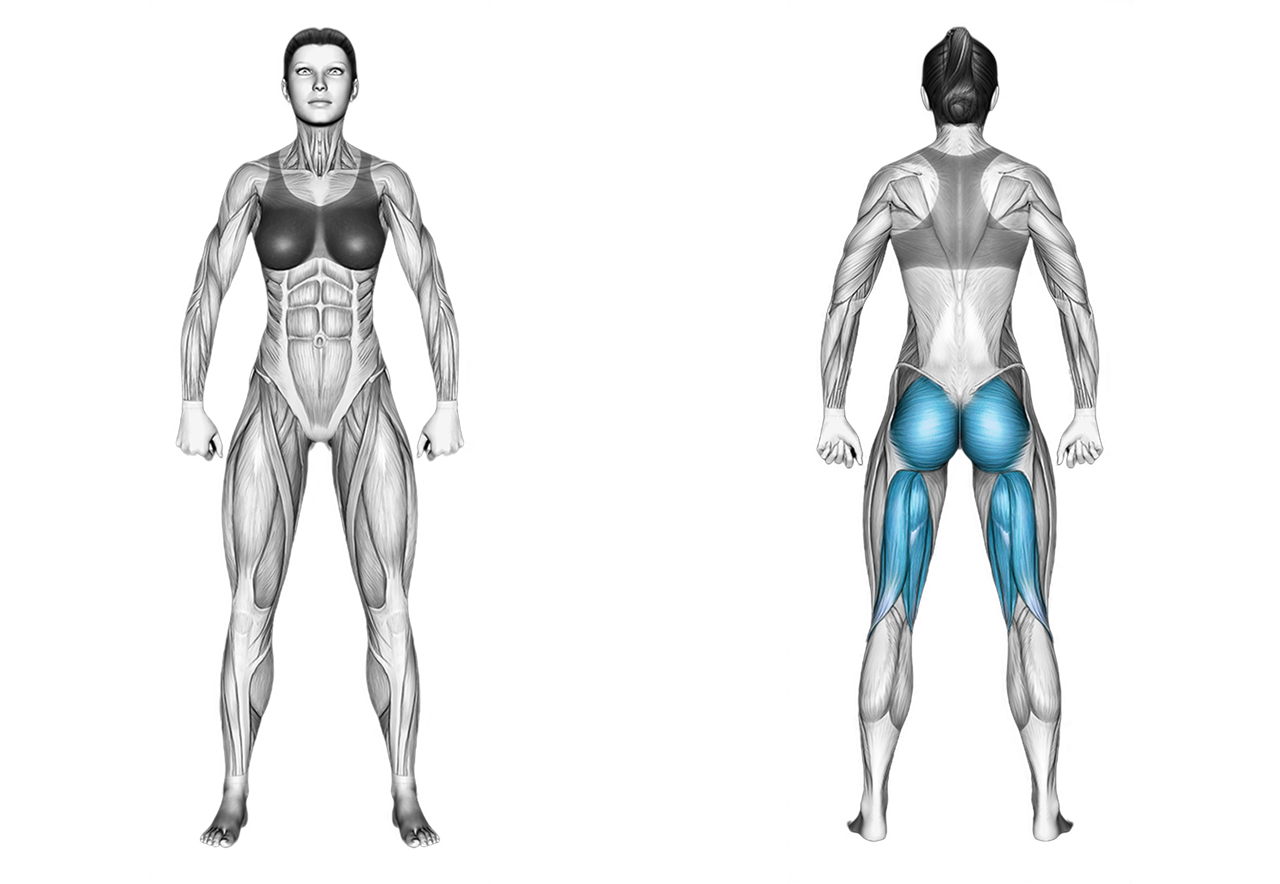
The 90-degree hyperextension is a posterior-chain movement performed on a horizontal bench to build the spinal erectors, glutes, and hamstrings. It suits lifters of all experience levels and fits well as a warm-up for heavy hinging or as an accessory finisher on back and leg days.
- Equipment
- Machines
- Type
- Strength
- Animation
- Women
How to do it
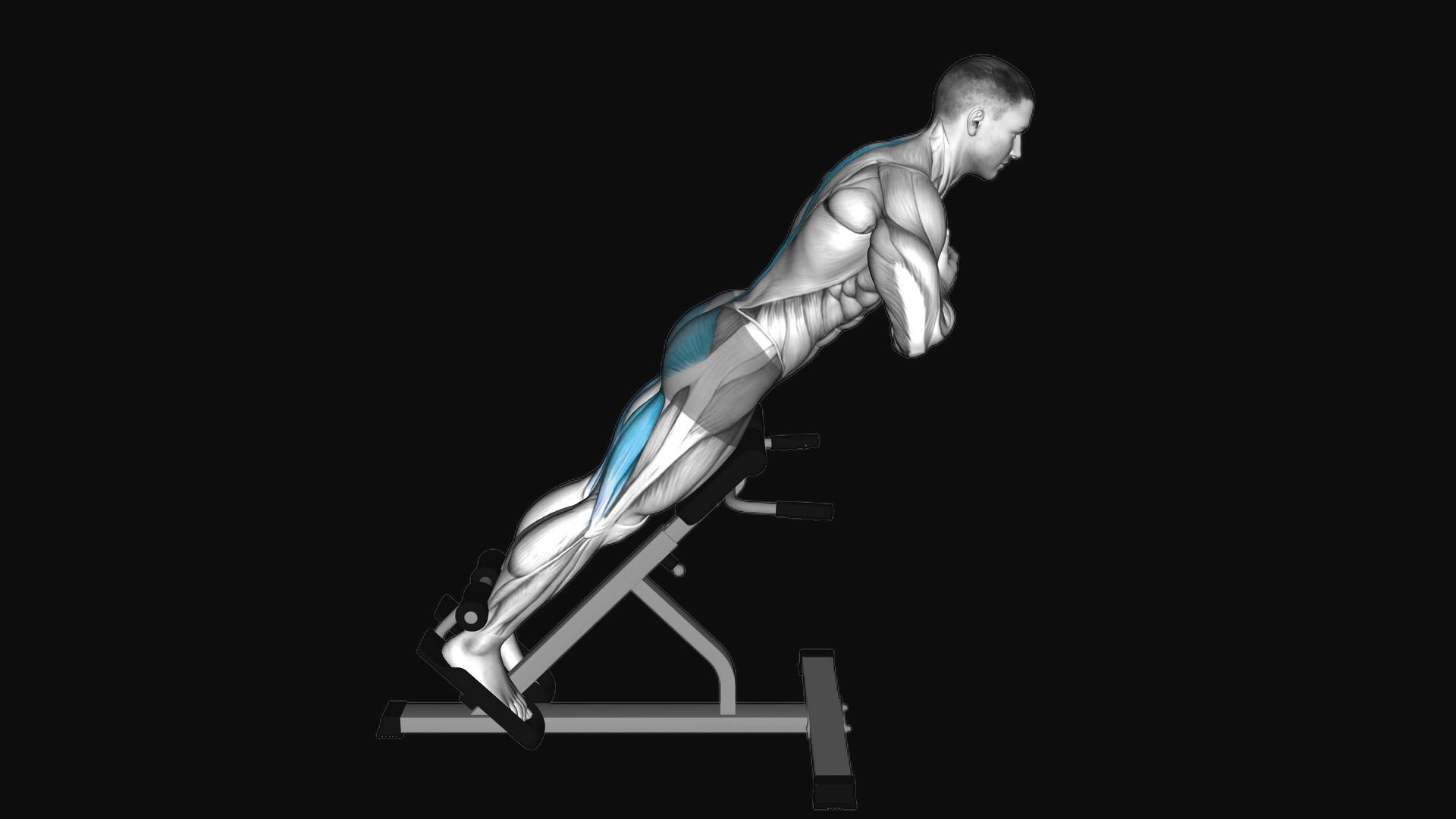
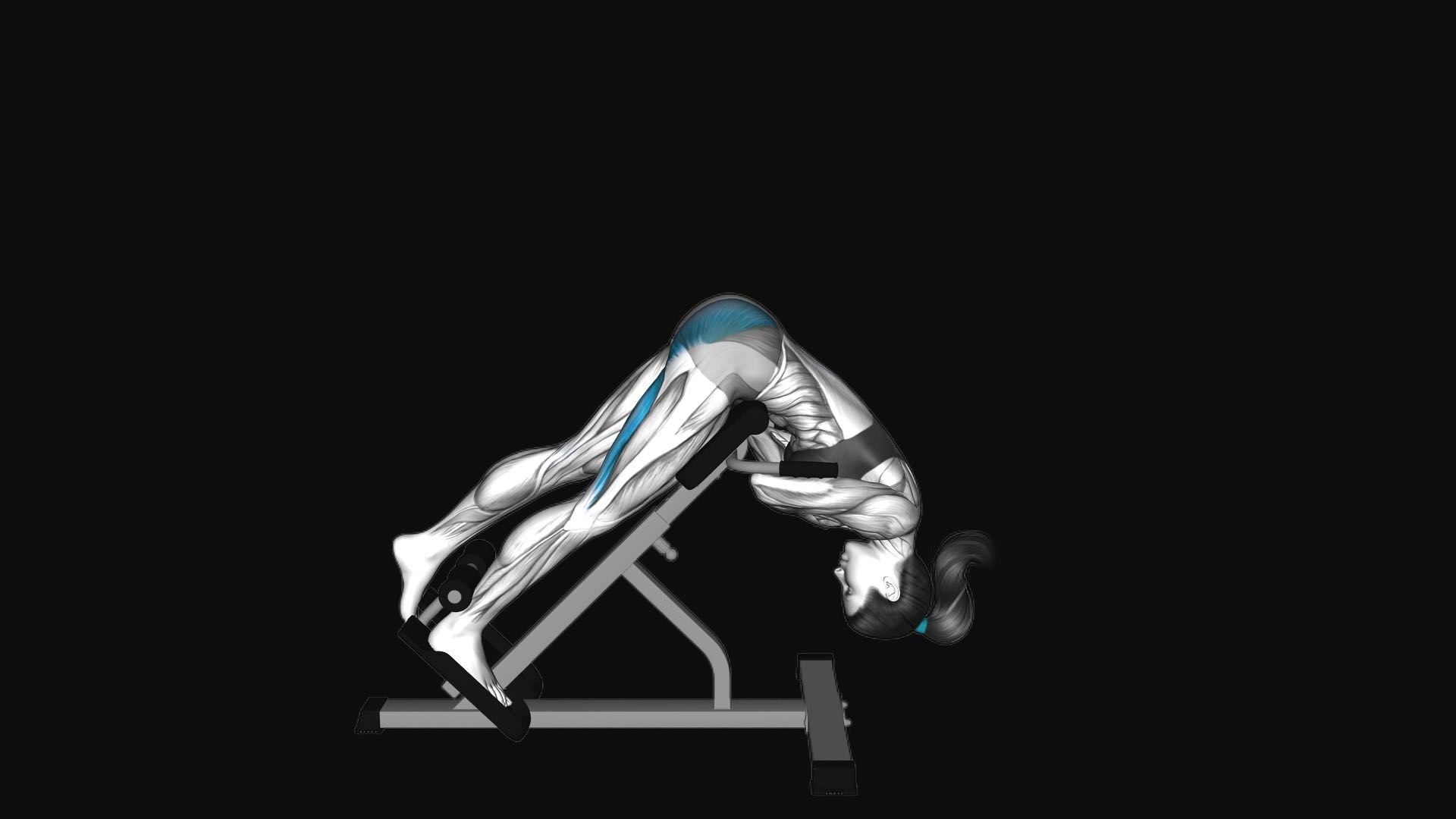
- Position yourself on a 90-degree hyperextension bench with your hips at the edge.
- Secure your feet under the foot pads and cross your arms over your chest.
- Slowly lower your torso until it's perpendicular to your legs.
- Engage your glutes and hamstrings to lift your torso back to the starting position.
- Keep your back straight throughout the movement.
Common mistakes
- Hyperextending the lumbar spine past neutral at the top places unnecessary compressive stress on the spinal discs.
- Swinging the torso with momentum eliminates muscle tension and increases the risk of lower-back strain.
- Setting the support pad too high locks the pelvis and forces the spine to round instead of hinging at the hips.
- Cranking the neck upward during the ascent creates tension in the cervical spine and disrupts neutral alignment.
Tips
- Adjust the thigh pad just below your hip crease so your hips can hinge without restriction.
- Stop the upward movement once your torso forms a straight line with your legs, squeezing your glutes at the top.
- Lower your upper body under control over two to three seconds rather than dropping freely into the stretch.
Sets and reps
Perform 3 to 4 sets of 10 to 15 controlled repetitions with 60 to 90 seconds of rest. Add external resistance across the chest only after mastering strict bodyweight form.
Muscles worked
Your coach guides every set
Turn on the coach in Gloox: it asks how you feel, picks the weight from your history and cues technique and rest. Rate each set and the next one is tuned to you.

On a computer? Point your phone's camera here to get the app.
Questions
What is the difference between a 90-degree and a 45-degree hyperextension?
The 90-degree setup creates peak gravitational resistance at full horizontal lockout, demanding more glute and spinal erector engagement at the top than a 45-degree bench.
Is the 90-degree hyperextension safe for someone with back pain?
If you experience sharp pain or discomfort, stop immediately and consult a physician or physical therapist. When performed pain-free with a neutral spine, it can help build endurance in the stabilizing muscles of the lower back.