Back · Machines
Hammer Grip Pull up on Dip Cage
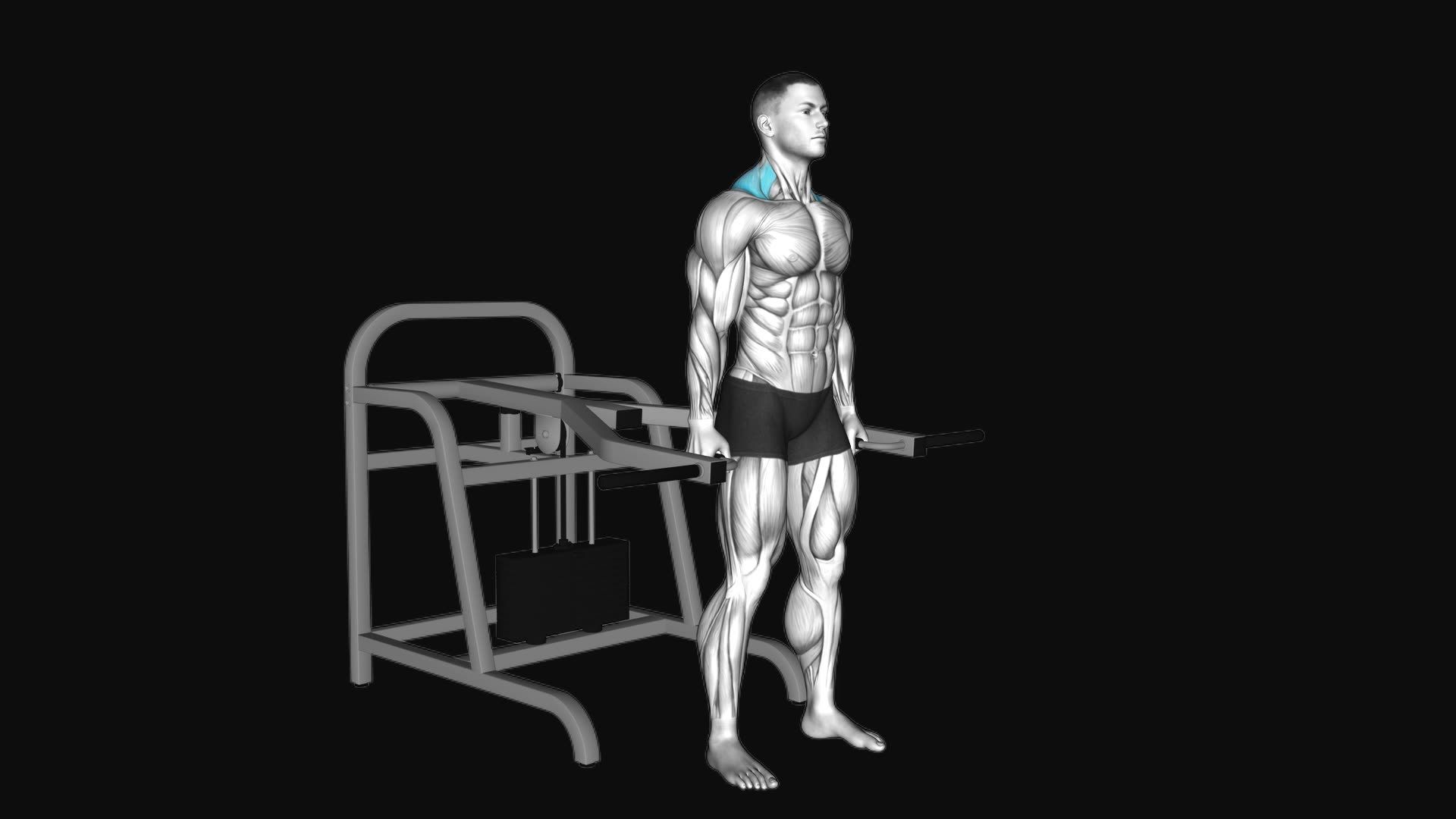
The hammer grip pull-up on a dip cage is a compound vertical pull performed with hands facing inward. It places intense demand on the latissimus dorsi and brachialis while providing a joint-friendly path for the shoulders, making it a staple for the start or middle of an upper-body workout.
How to do it
- Grab the parallel bars of a dip cage with palms facing each other (neutral grip).
- Hang with arms fully extended.
- Pull yourself up until your chin clears the bars, keeping your elbows close to your body.
- Squeeze your back muscles at the top.
- Lower yourself back down with control to full arm extension.
Common mistakes
- Using momentum and swinging your legs takes the tension off your lats and strains your shoulder joints.
- Cutting the range of motion short without fully extending your arms at the bottom limits muscle stretch and decreases overall growth.
- Flaring your elbows out instead of driving them down beside your torso shifts the load away from the lats onto smaller upper-back stabilizers.
Tips
- Depress and retract your shoulder blades before initiating the arm bend to ensure your back initiates the lift.
- Cross your ankles and brace your core throughout the movement to eliminate swaying.
- Control your descent for two to three seconds to maximize eccentric loading on the lats.
Sets and reps
Perform 3–4 sets of 6–10 repetitions with 2–3 minutes of rest for strength and muscle growth. If using added weight on a dip belt, lower the range to 4–6 heavy reps per set.
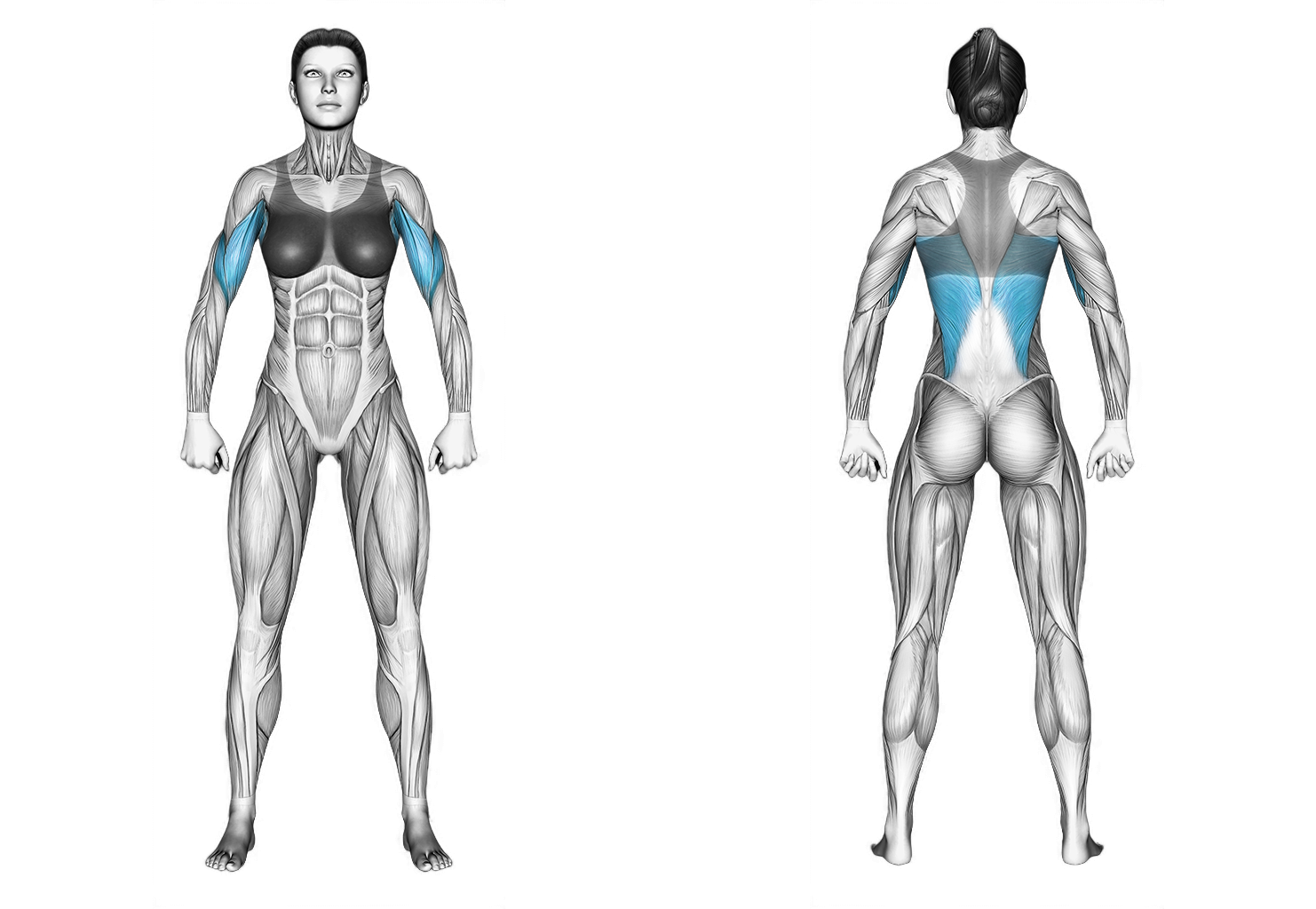
Muscles worked
Your coach guides every set
Turn on the coach in Gloox: it asks how you feel, picks the weight from your history and cues technique and rest. Rate each set and the next one is tuned to you.

On a computer? Point your phone's camera here to get the app.
Questions
Why choose a hammer grip over a standard overhand grip?
A neutral grip places the shoulders and wrists in an anatomically neutral alignment, reducing joint stress while providing strong mechanical leverage for the lats and brachialis.
How can this exercise be modified if bodyweight is too heavy?
Loop a heavy resistance band over the handles to assist with the ascent, or focus exclusively on slow eccentric negatives from the top position.