Back · Machines
45-Degree Single-Leg Hyperextension
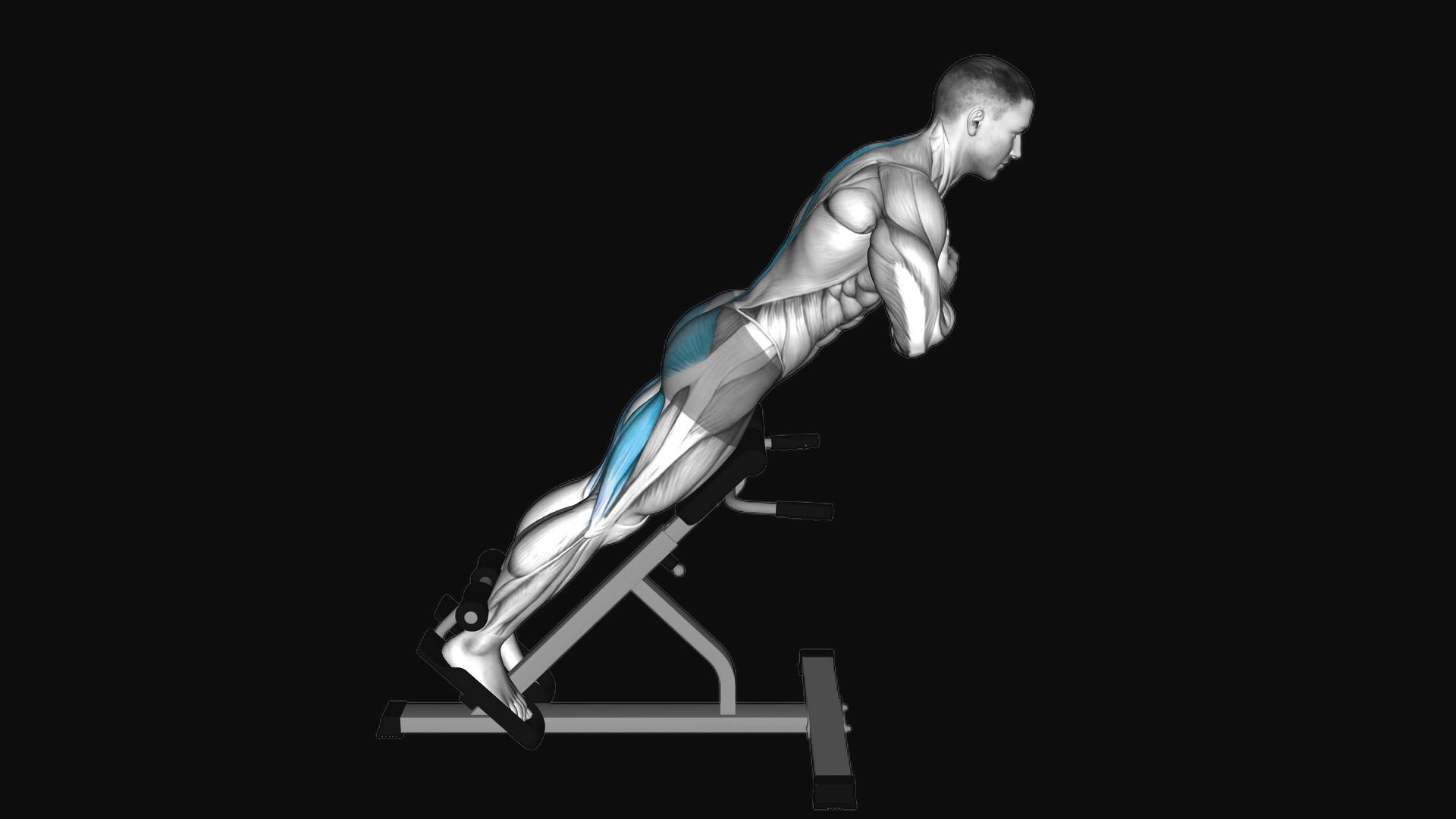
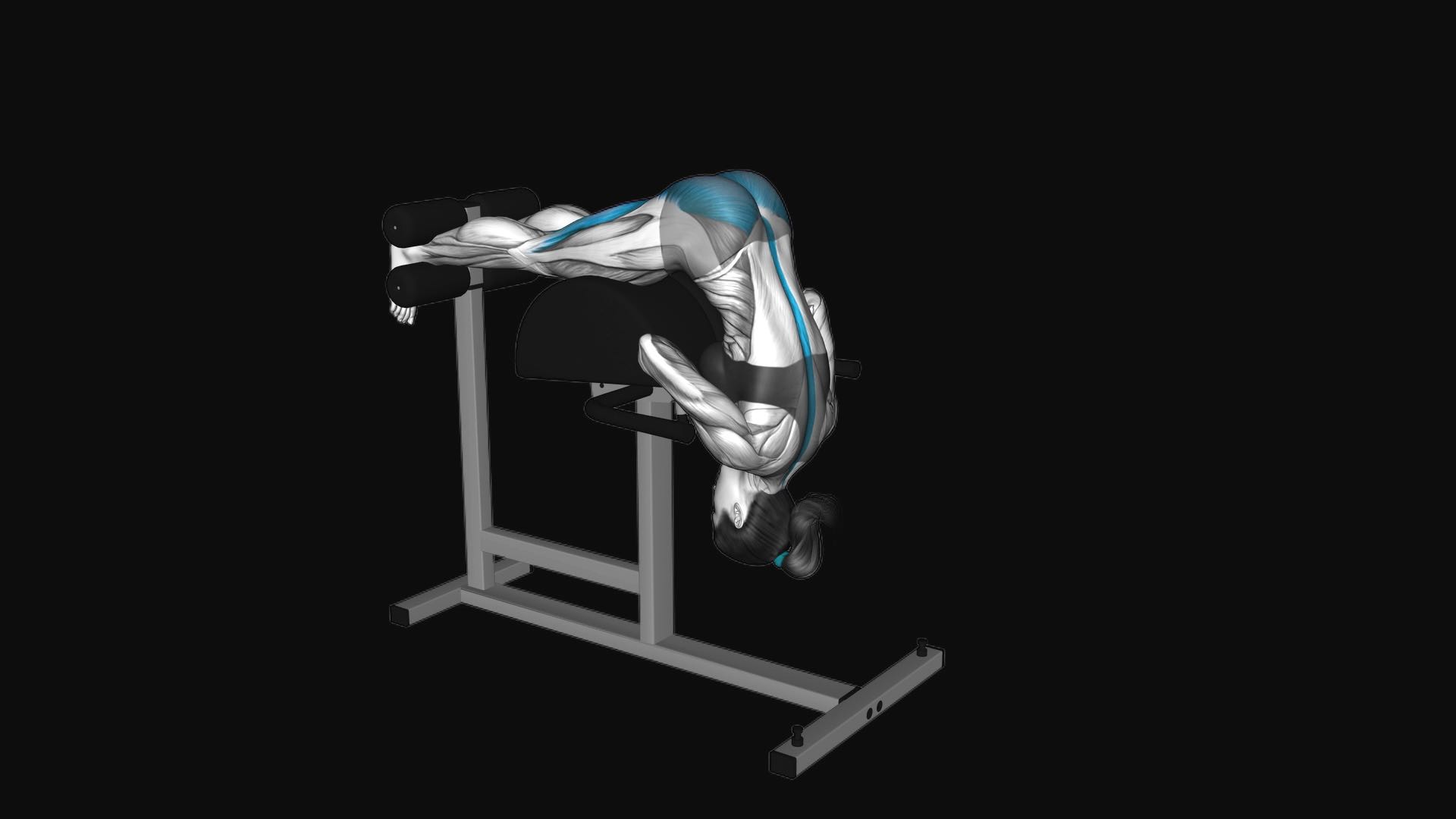
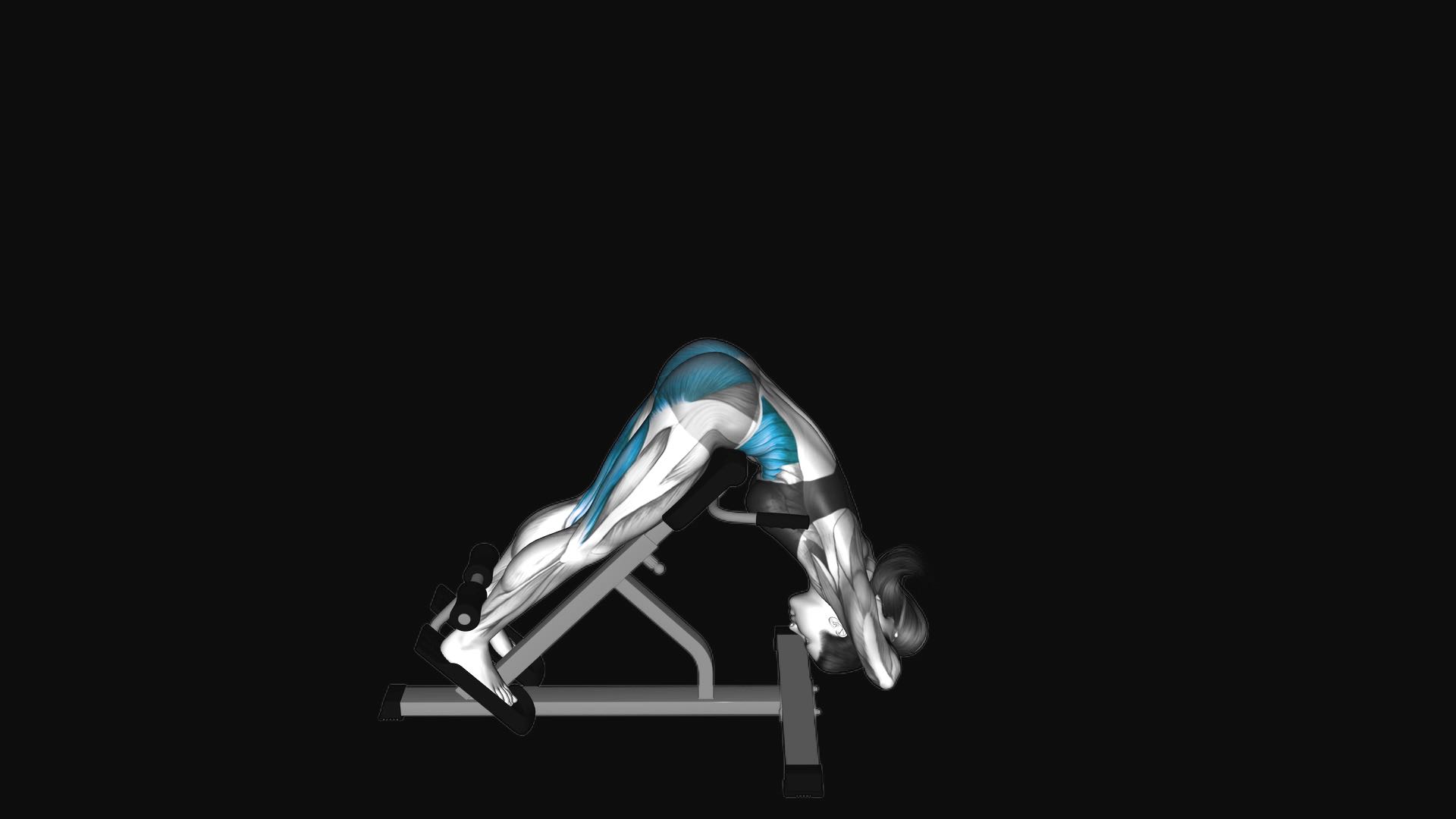
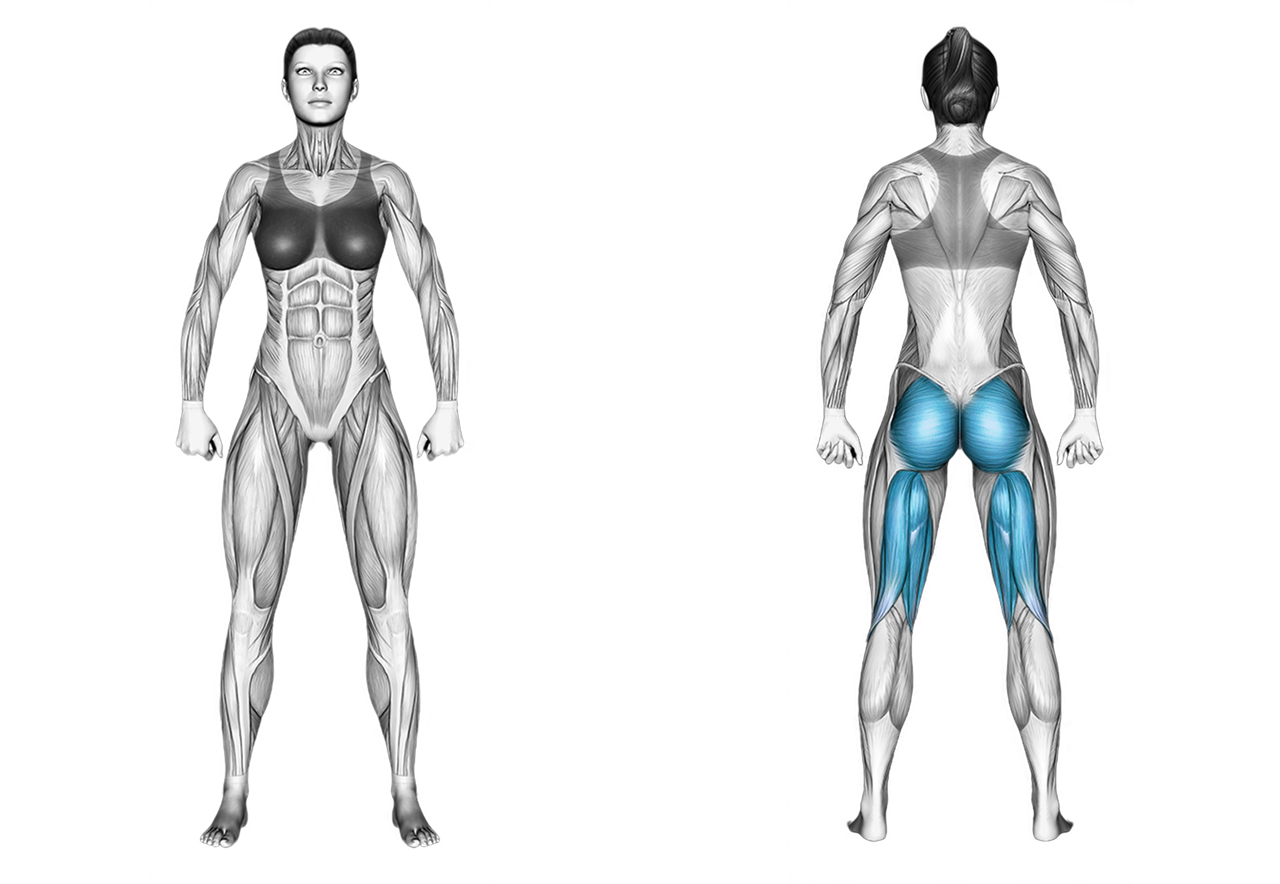
The 45-degree single-leg hyperextension is a unilateral movement designed to isolate the glutes, hamstrings, and erector spinae. It effectively corrects strength discrepancies between limbs and serves as a valuable accessory exercise in lower-body workouts.
- Equipment
- Machines
- Type
- Strength
- Animation
- Women
How to do it
- Position yourself on a 45-degree hyperextension bench with one foot secured under the foot pad.
- Keep the other leg lifted and bent at the knee.
- Cross your arms over your chest or place hands behind your head.
- Slowly lower your torso until you feel a stretch in your hamstrings and glutes.
- Engage your glutes and hamstrings to lift your torso back to the starting position.
Common mistakes
- Hyperextending the lower back at the top shifts tension away from the glutes and places unnecessary stress on the spine.
- Rotating the pelvis toward the unsupported leg reduces tension on the working glute and compromises stability.
- Using momentum to swing the torso up minimizes muscle activation and increases injury risk.
Tips
- Set the thigh pads just below your hip crease to allow a full, unrestricted range of motion.
- Keep both hip bones square to the pad rather than letting the free hip drop or turn outward.
- Hold the peak contraction for one second at the top, focusing on squeezing the working glute before descending.
Sets and reps
Perform 3 to 4 sets of 10 to 15 reps per leg, focusing on muscle control. Rest 60 to 90 seconds between legs or sets.
Muscles worked
Your coach guides every set
Turn on the coach in Gloox: it asks how you feel, picks the weight from your history and cues technique and rest. Rate each set and the next one is tuned to you.

On a computer? Point your phone's camera here to get the app.
Questions
Why choose the single-leg variation over regular hyperextensions?
It targets each side independently to fix muscular imbalances and achieves high glute activation without needing heavy weights.
Is this exercise safe if you have lower back issues?
It is generally safe when movement comes from hip hinge mechanics rather than spinal bending. If you experience sharp pain, stop immediately and consult a medical specialist.