
Abs · Bodyweight
Twisting Crunch
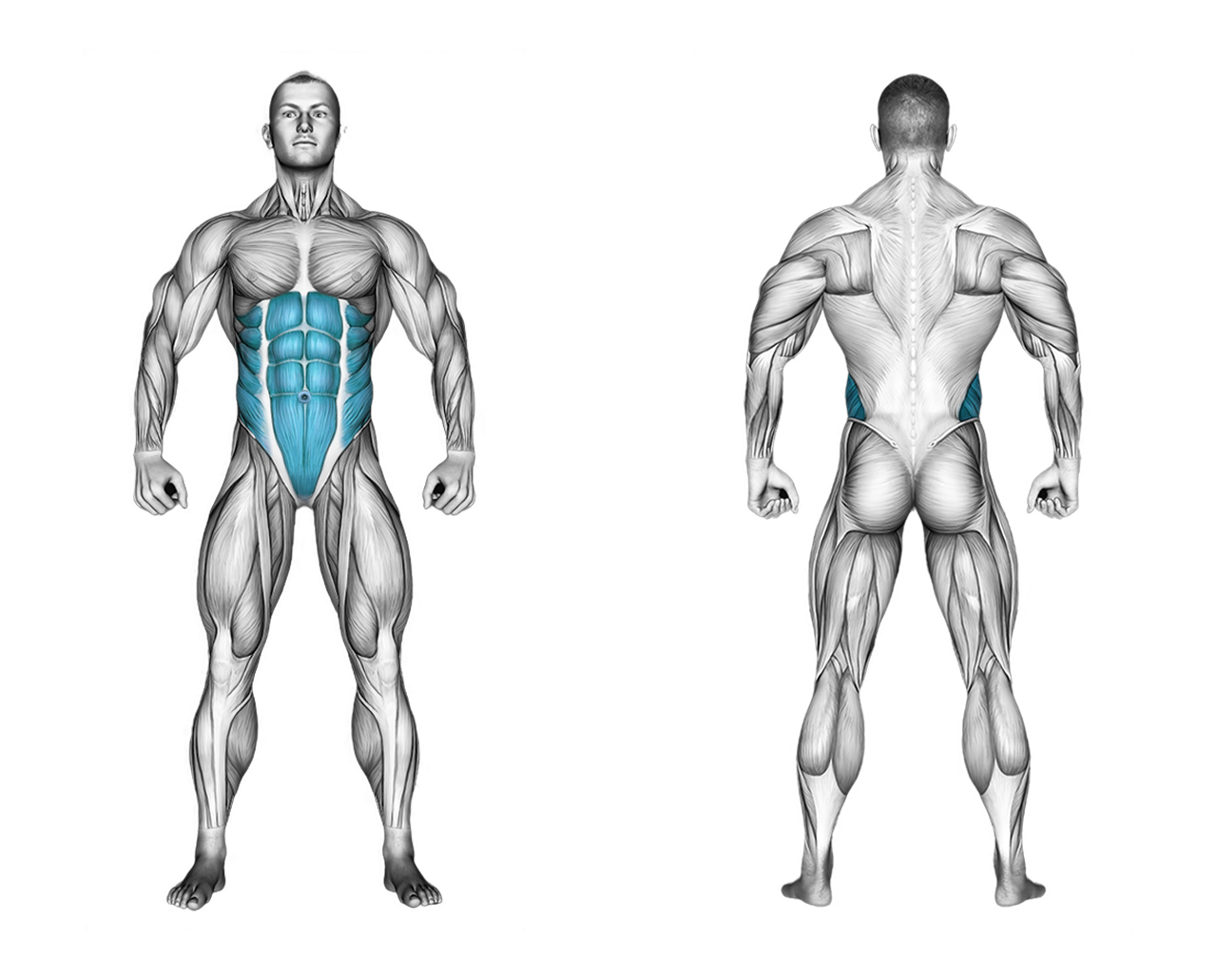
The twisting crunch is a bodyweight core exercise that targets the internal and external obliques alongside the rectus abdominis. It builds rotational trunk strength and endurance, fitting well at the end of a workout or within an abdominal circuit.
- Muscles
- Abs
- Equipment
- Bodyweight
- Type
- Strength
- Animation
- Men
How to do it
- Lie on your back with your knees bent and hands behind your head.
- Keep your feet flat on the floor and core engaged.
- Crunch up while simultaneously twisting your torso to one side.
- Bring your elbow toward the opposite knee.
- Return to the starting position and alternate sides.
Common mistakes
- Pulling on the head or neck with your hands strains the cervical spine and disengages the abdominal muscles.
- Collapsing the elbow inward to touch the knee cheats the movement and avoids the thoracic rotation required to work the obliques.
- Lifting your lower back off the floor places unnecessary shear stress on the lumbar spine.
- Rushing through the reps with momentum removes mechanical tension from the target muscles.
Tips
- Keep your elbows flared out wide and focus on driving your shoulder toward the opposite knee rather than just your elbow.
- Exhale fully as you crunch and rotate to achieve a deeper contraction of the abdominal wall.
- Keep your lower back glued to the floor throughout the entire repetition.
Sets and reps
Perform 3 to 4 sets of 15 to 25 reps per side to develop core endurance and muscular tone. Rest 45 to 60 seconds between sets.
Muscles worked
Your coach guides every set
Turn on the coach in Gloox: it asks how you feel, picks the weight from your history and cues technique and rest. Rate each set and the next one is tuned to you.

On a computer? Point your phone's camera here to get the app.
Questions
Is the twisting crunch safe if you have lower back issues?
It is generally safe when the lower back stays anchored to the floor, but combining flexion with rotation can irritate vulnerable spinal discs. If you feel any sharp discomfort or pain, stop immediately and consult a healthcare professional.
How does the twisting crunch differ from the bicycle crunch?
The twisting crunch keeps both feet grounded, providing a more stable base of support and isolating rotation. The bicycle crunch involves suspended alternating leg extensions, demanding higher overall core stability.







