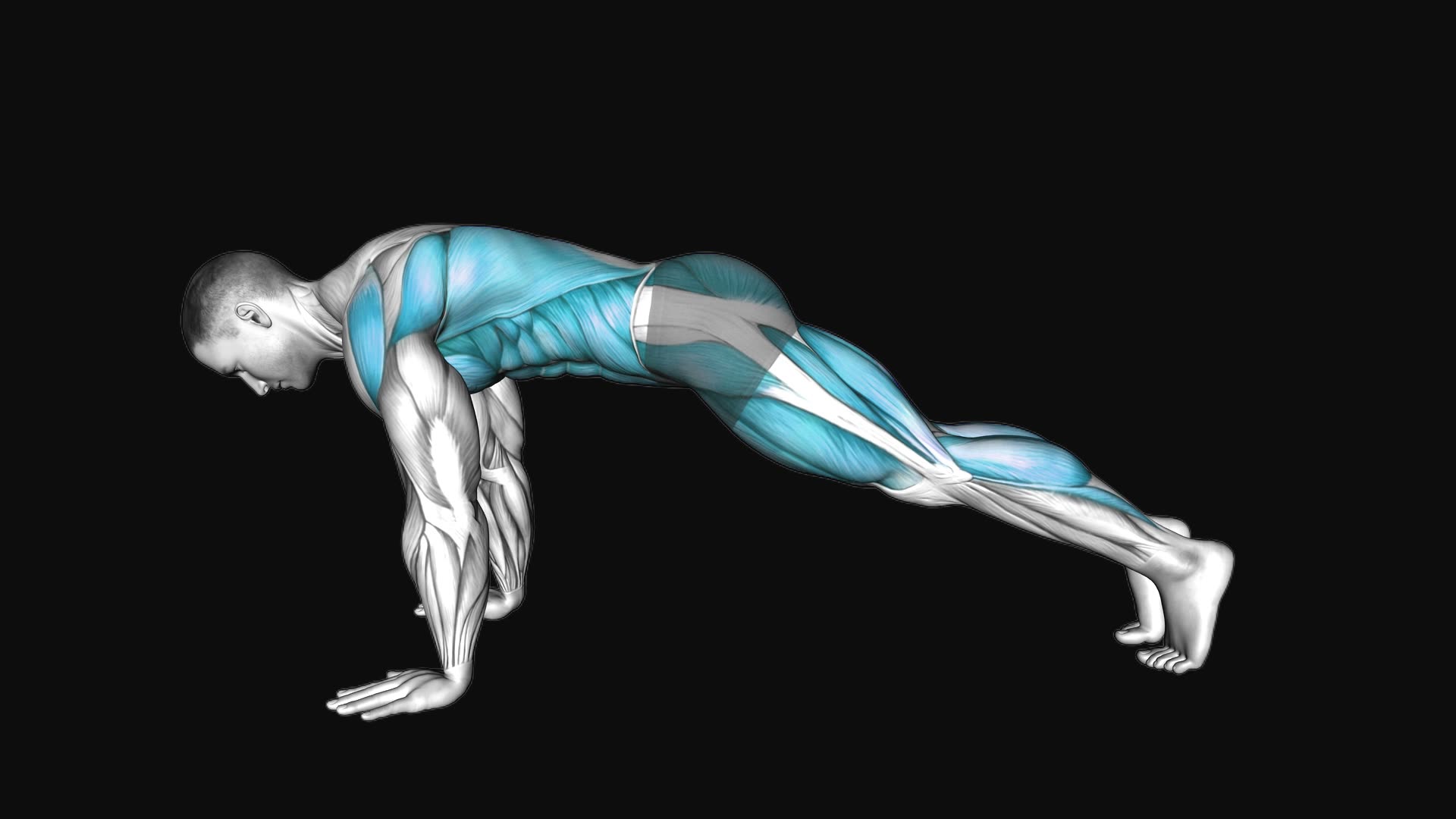
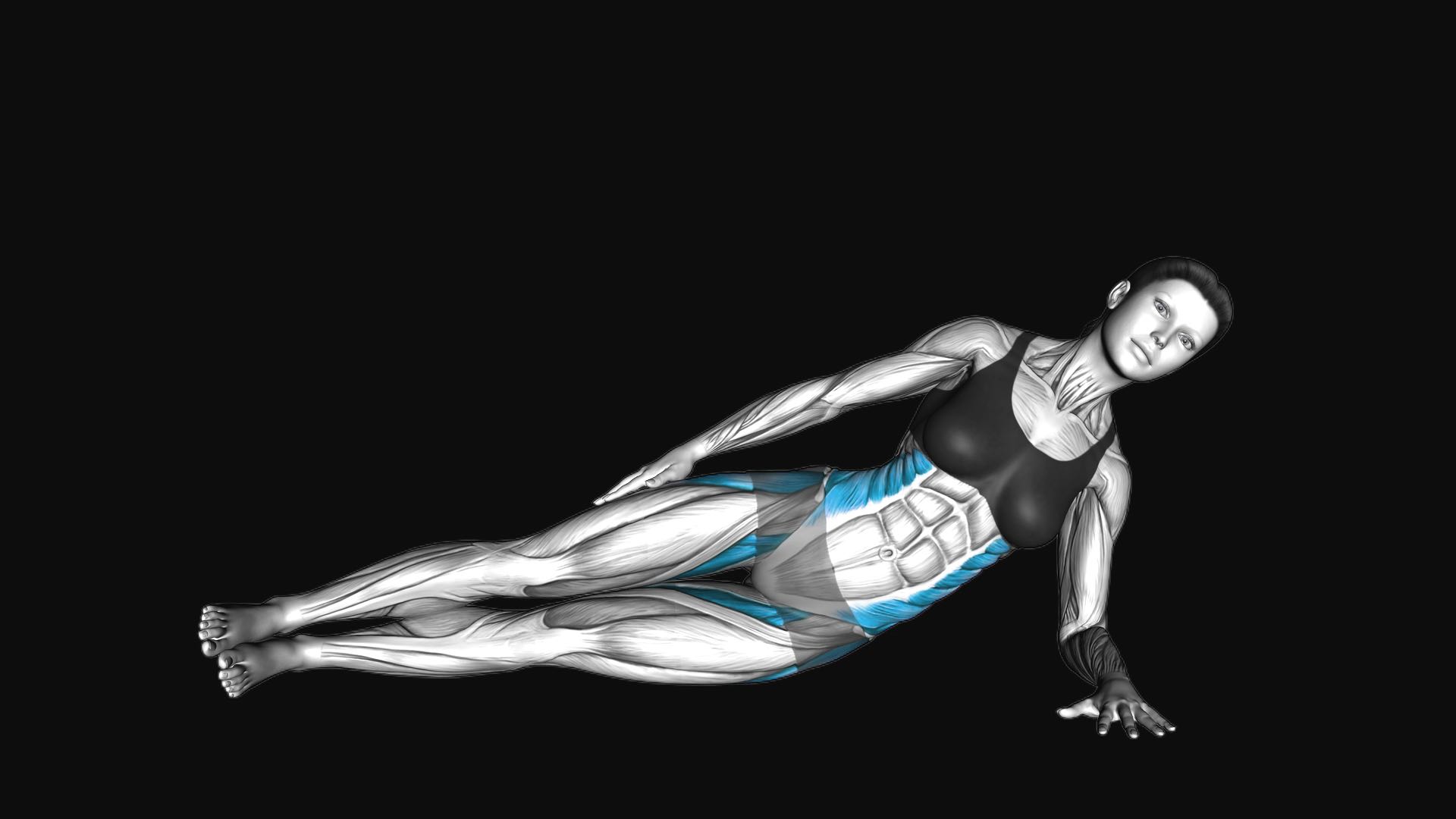
Abs · Bodyweight
Sit-up Stand up
The sit-up stand up is a functional bodyweight movement that combines an abdominal sit-up with a transition into a full standing squat. It strengthens the core, quadriceps, and glutes while enhancing dynamic mobility and coordination during conditioning circuits.
- Equipment
- Bodyweight
- Type
- Strength
- Animation
- Men
How to do it
- Lie flat on your back with your knees bent and feet flat on the ground.
- Perform a sit-up, bringing your torso up to a seated position.
- Continue the momentum to bring your feet under you and stand up completely.
- Reverse the motion by sitting back down and lowering yourself back to the starting position.
Common mistakes
- Lifting your heels off the ground during the transition places excessive strain on the knees and disrupts balance.
- Dropping onto your back without eccentric control subjects the spine to unnecessary impact against the floor.
- Allowing the knees to collapse inward when standing up increases the risk of joint and ligament strain.
- Yanking the head and neck forward to build momentum stresses the cervical spine instead of engaging the abdominal muscles.
Tips
- Pull your heels as close to your hips as possible at the top of the sit-up to make the transition onto your feet easier.
- Control the descent by executing a deliberate squat down before rolling smoothly onto your back.
- Keep your chest lifted and drive through your midfoot and heels as you rise to a standing position.
Sets and reps
Perform 3 to 4 sets of 8 to 12 repetitions to build dynamic core endurance and lower-body mobility. Rest 60 to 90 seconds between sets.
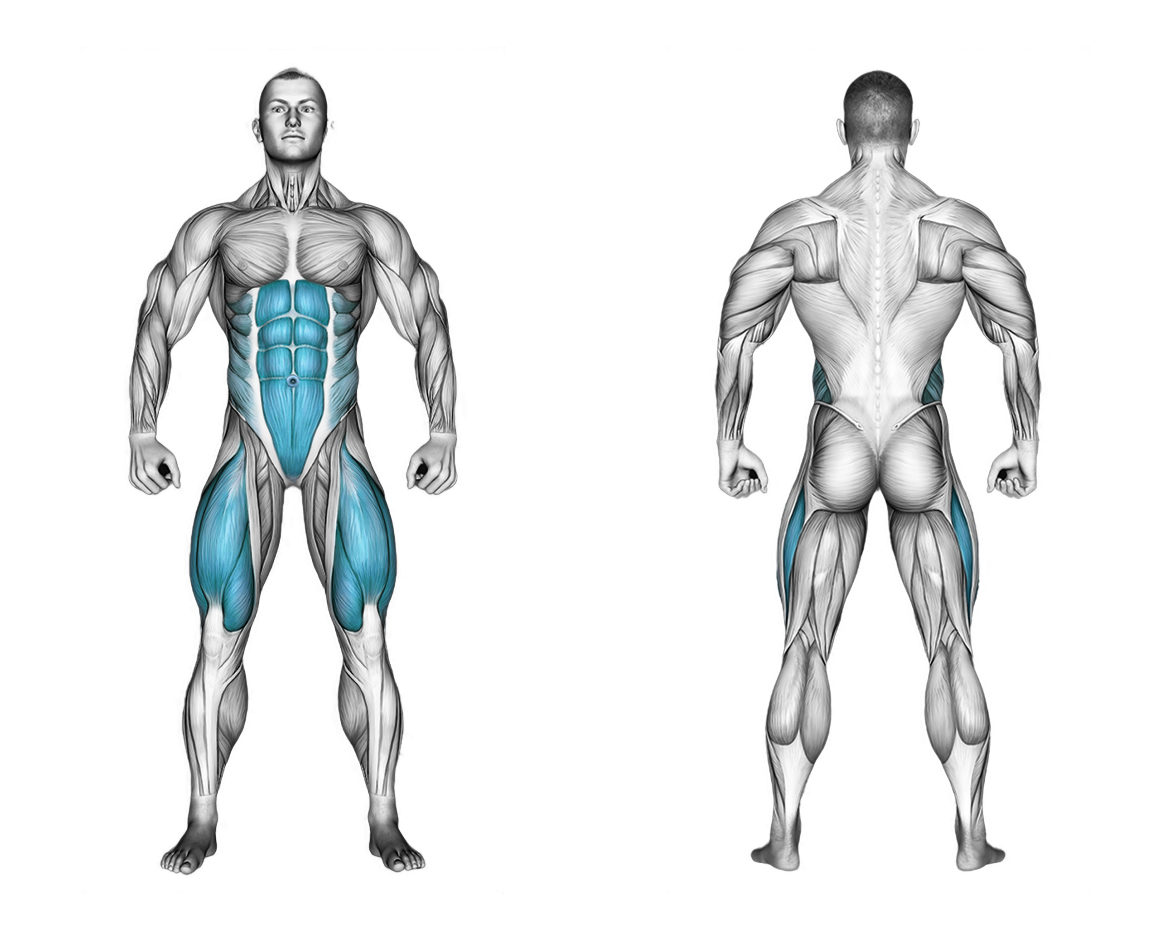
Muscles worked
Your coach guides every set
Turn on the coach in Gloox: it asks how you feel, picks the weight from your history and cues technique and rest. Rate each set and the next one is tuned to you.

On a computer? Point your phone's camera here to get the app.
Questions
Can you use your hands if you cannot stand up without help?
Placing one hand lightly on the floor is an effective modification while building ankle mobility and core strength. Work toward removing the hand support as your movement mechanics improve.
Is this exercise safe for the lower back?
It is safe when performed on a padded surface with a controlled, smooth spinal roll rather than a flat landing. If you experience back pain, stop immediately and consult a healthcare professional.