
Shoulders · Resistance bands
Resistance Band Y Press
The resistance band Y press is an overhead movement that presses the arms upward and outward into a wide Y shape. It strengthens the deltoids while actively engaging the lower trapezius and serratus anterior, making it a valuable addition to shoulder warm-ups, stability routines, or hypertrophy finishers.
- Muscles
- Shoulders
- Equipment
- Resistance bands
- Type
- Strength
- Animation
- Men
How to do it
- Stand on the bottom of the loop band with both feet, hip-width apart, and grip a side of the band in each hand at shoulder height.
- Keep your back straight, chest up, and core braced.
- Inhale, then as you exhale, press your arms up and slightly outward until they are fully extended and your body forms a Y shape.
- Hold the top position for a second without arching your lower back.
- Inhale and slowly lower your hands back to shoulder height.
Common mistakes
- Arching the lower back during the press shifts the load from the shoulders to the lumbar spine.
- Shrugging the shoulders toward the ears restricts normal scapular rotation and overactivates the upper traps.
- Allowing the band to snap the arms back down sacrifices the eccentric phase and puts unnecessary stress on the joints.
Tips
- Keep your core and glutes firmly braced throughout the set to maintain a neutral spine.
- Press outward at roughly a 30- to 45-degree angle from vertical to form a clear Y shape at the top.
- Choose a light to moderate band tension that permits a brief pause at full extension without compensations.
Sets and reps
For shoulder hypertrophy and scapular endurance, perform 3 to 4 sets of 12 to 15 controlled reps with 60 to 90 seconds of rest between sets.
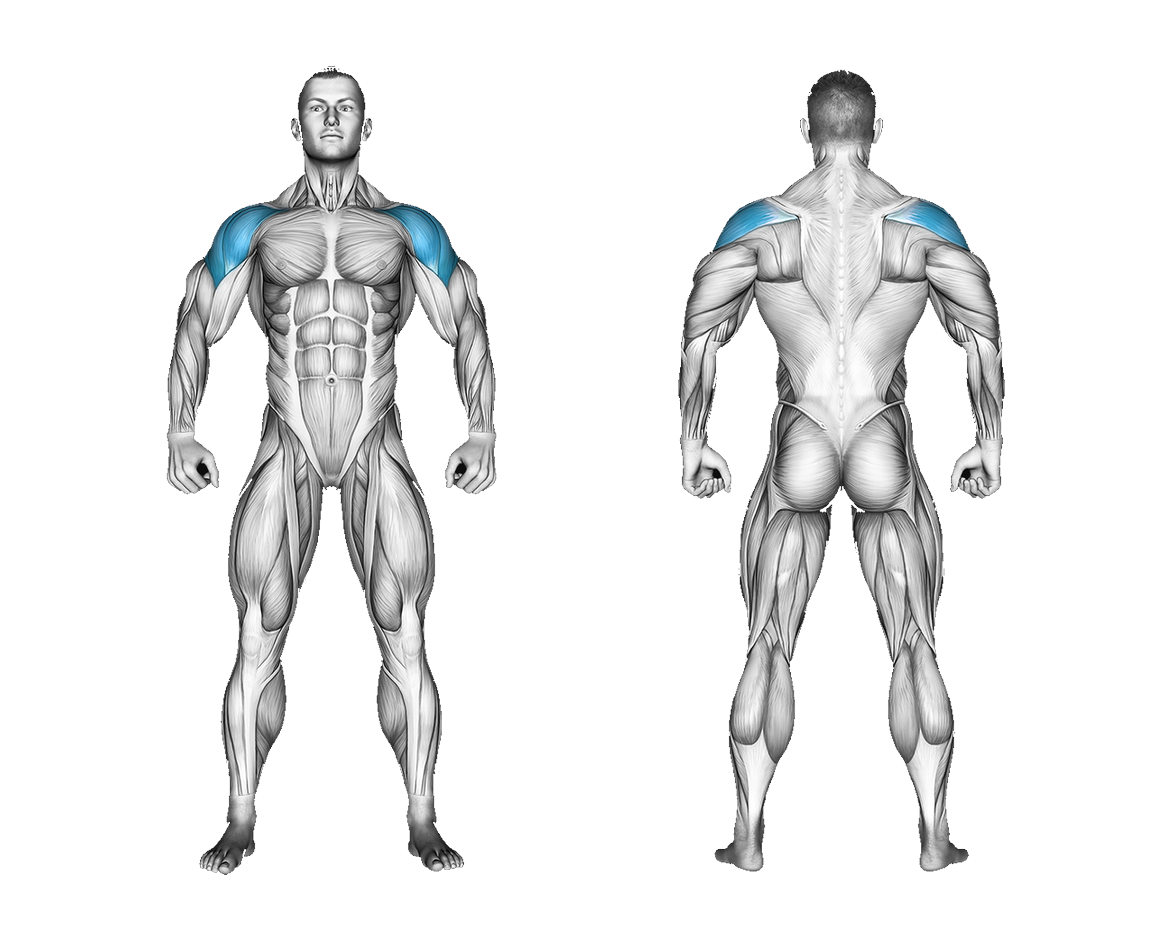
Muscles worked
Your coach guides every set
Turn on the coach in Gloox: it asks how you feel, picks the weight from your history and cues technique and rest. Rate each set and the next one is tuned to you.

On a computer? Point your phone's camera here to get the app.
Questions
Which muscles does the resistance band Y press work?
It targets the anterior and lateral deltoids along with the lower trapezius and serratus anterior, promoting healthier overhead mechanics.
What should you do if this exercise causes shoulder pain?
Stop the exercise immediately and consult a healthcare professional, or try using a lighter band with a narrower pressing angle.
Similar exercises
Resistance Band 90 Degrees External RotationResistance bands
Resistance Band Standing 90 Degrees Shoulder External RotationResistance bands
Resistance Band Standing Shoulder External RotationResistance bands
Resistance Band Standing Around the WorldResistance bands
Band Bent Over Rear Deltoid KickbackResistance bands
Resistance Band Lying Shoulder AbductionResistance bands
Resistance Band Single Arm Lateral RaiseResistance bands
Resistance Band Standing Single Arm Lateral Shoulder RaiseResistance bands