
Back · Resistance bands
Resistance Band Seated Wide Row
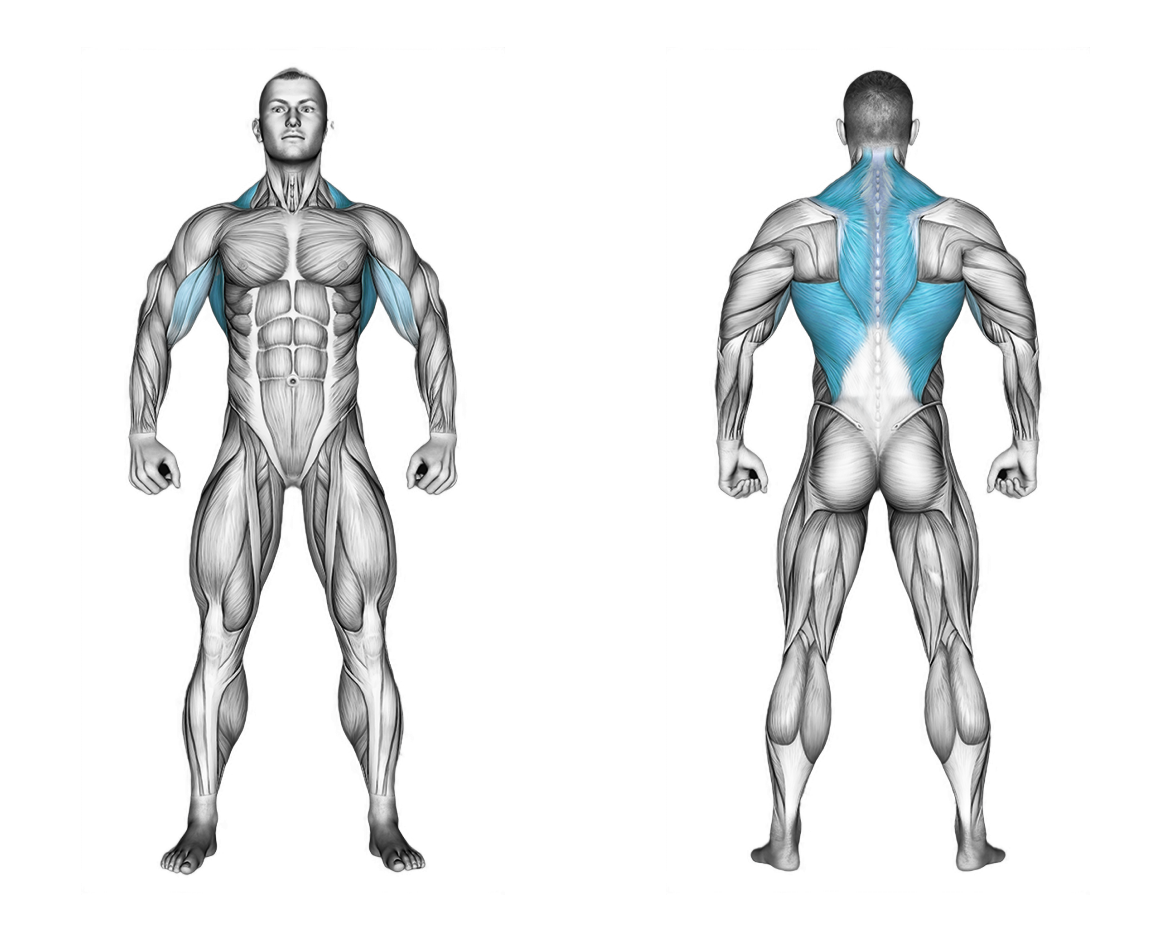
The resistance band seated wide row is a horizontal pull designed to build the upper back, rear deltoids, and rhomboids. It is accessible for lifters of any experience level and works well as a primary pull or assistance exercise in upper-body routines.
- Muscles
- Back
- Equipment
- Resistance bands
- Type
- Strength
- Animation
- Men
How to do it
- Sit on the ground with your legs extended in front of you.
- Wrap a resistance band around your feet and hold the ends with a wide grip.
- Keep your back straight and core engaged.
- Pull the band towards your torso, driving your elbows back and out to the sides.
- Squeeze your back muscles at the peak contraction.
- Return to the starting position with control.
Common mistakes
- Rounding your spine compromises torso stability and places unnecessary stress on the lower back.
- Tucking your elbows close to your torso shifts tension to the lats, missing the intended focus on the upper back and rear delts.
- Leaning back and using body momentum to yank the band reduces muscular tension at the peak contraction.
- Shrugging your shoulders toward your ears overworks the upper traps and prevents proper scapular retraction.
Tips
- Keep your elbows flared out roughly level with your lower chest or shoulders throughout the pull.
- Pause for a deliberate second at full contraction to focus on actively pinching your shoulder blades together.
- Adjust tension by gripping the band closer to your feet or folding it in half for extra resistance.
Sets and reps
Aim for 3 to 4 sets of 12 to 20 controlled reps with 60 to 90 seconds of rest between sets to target muscle hypertrophy and endurance.
Muscles worked
Your coach guides every set
Turn on the coach in Gloox: it asks how you feel, picks the weight from your history and cues technique and rest. Rate each set and the next one is tuned to you.

On a computer? Point your phone's camera here to get the app.
Questions
Which muscles work most in a wide row compared to a narrow row?
Flaring your elbows shifts the workload away from the latissimus dorsi and emphasizes the rhomboids, rear delts, and middle trapezius.
Is this exercise safe if I have lower back tension?
It minimizes spinal loading, but you can soften your knees or sit on a low cushion if tight hamstrings pull on your lumbar spine; stop and consult a specialist if pain occurs.
Similar exercises
Band Kneeling One Arm PulldownResistance bands
Resistance Band Kneeling Cross Body Single Straight Arm PulldownResistance bands
Resistance Band Cross Body Single Straight Arm PulldownResistance bands
Band Bent over Lat PulldownResistance bands
Resistance Band Kneeling Cross Body Lat PulldownResistance bands
Resistance Band Standing Lat PulldownResistance bands
Band ShrugResistance bands
Band Narrow Grip High RowResistance bands