
Legs · Jump rope
Jump Rope
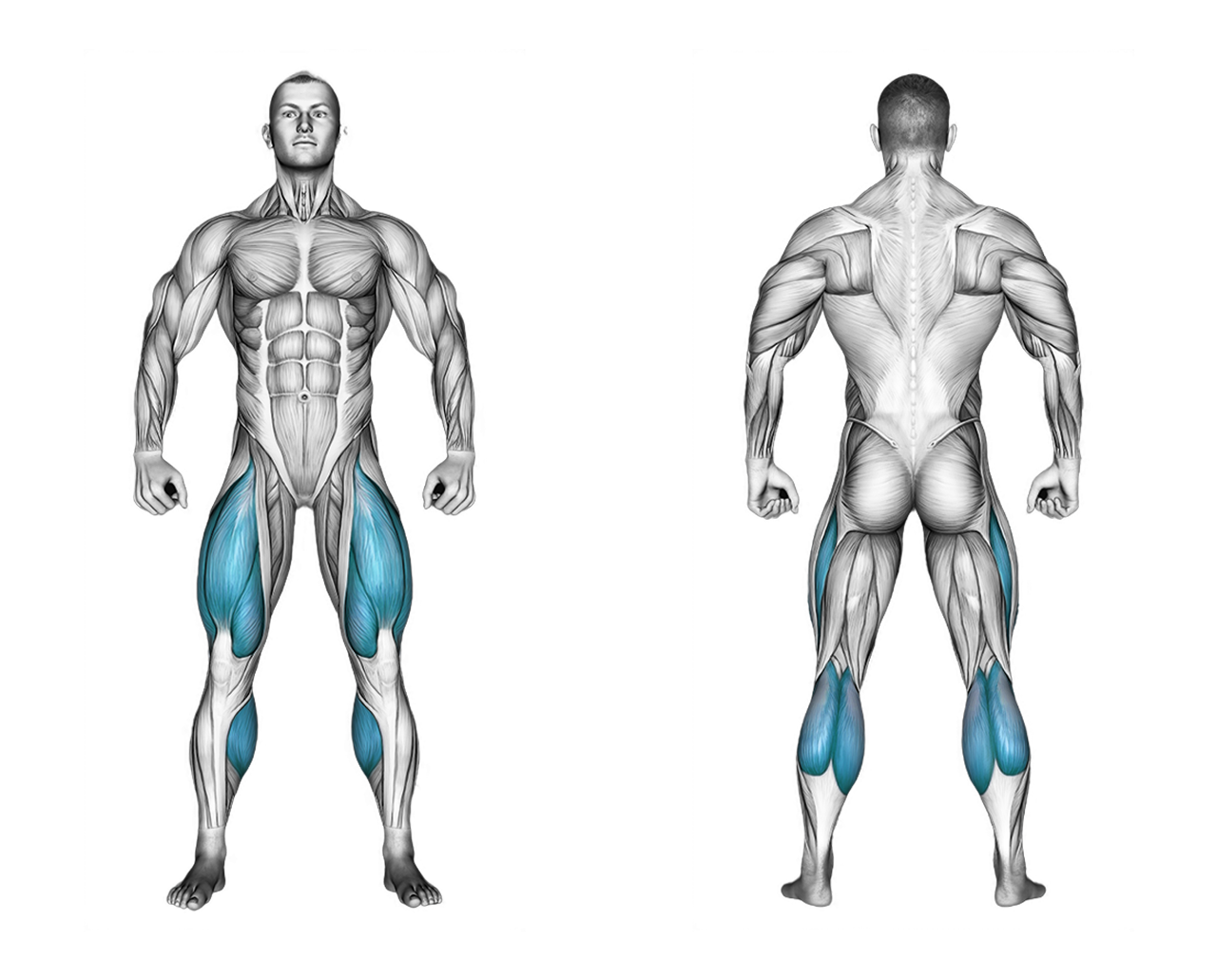
Jump rope is an efficient cardiovascular exercise designed to build lower-body endurance, foot speed, and coordination. It primarily targets the calves, quadriceps, and core stabilizers, fitting naturally into warm-ups, conditioning circuits, or standalone cardio sessions.
- Equipment
- Jump rope
- Type
- Cardio / timed
- Animation
- Men and women
How to do it
- Hold the jump rope handles with your hands at hip level.
- Keep your elbows close to your sides and core engaged.
- Rotate the rope using your wrists, not your arms.
- Jump with both feet together, landing softly on the balls of your feet.
- Maintain a steady rhythm and breathe consistently.
Common mistakes
- Jumping too high off the floor wastes energy and generates excessive impact forces on the ankles and knees.
- Rotating the rope from the elbows or full arms rather than the wrists slows down cadence and prematurely fatigues the shoulders.
- Landing flat-footed or on the heels transfers harmful shock directly into the shins, knees, and lumbar spine.
Tips
- Keep jumps low, clearing the floor by only an inch or two so the rope can pass smoothly beneath your feet.
- Size the rope correctly by stepping on its center; the tops of the handles should align roughly with your armpits.
- Perform jumps on a shock-absorbing surface like a gym mat or wooden floor while wearing cushioned athletic shoes.
Sets and reps
For warm-ups and steady-state conditioning, complete 3 to 5 rounds of 1 to 3 minutes with 30 to 60 seconds of rest between bouts. For high-intensity intervals, alternate 20 to 30 seconds of maximum-speed jumping with 10 to 15 seconds of rest for 6 to 10 rounds.
Muscles worked
Your coach guides every set
Turn on the coach in Gloox: it asks how you feel, picks the weight from your history and cues technique and rest. Rate each set and the next one is tuned to you.

On a computer? Point your phone's camera here to get the app.
Questions
Is jumping rope bad for your knees and lower back?
When done with proper technique on the balls of your feet and slightly bent knees, it produces lower joint impact than outdoor running. If you experience persistent joint or back discomfort, stop jumping and consult a healthcare professional.
Can you jump rope barefoot at home?
Jumping barefoot on hard surfaces significantly increases stress on the plantar fascia and Achilles tendons, which can cause overuse injuries. Always use supportive cross-training shoes or at least place a dense rubber mat beneath you.
Similar exercises
Run on TreadmillCardio machines
Burpee with Jumping JacksBodyweight
Resistance Band Side Walk SquatResistance bands
Resistance Band Side LungeResistance bands
Resistance Band Lateral Step and SquatResistance bands
Smith Split SquatSmith machine
Dumbbell Single Leg Split SquatDumbbells
Assisted Dumbbell Bulgarian Split SquatDumbbells