
Calves · Dumbbells
Dumbbell Seated Calf Raise
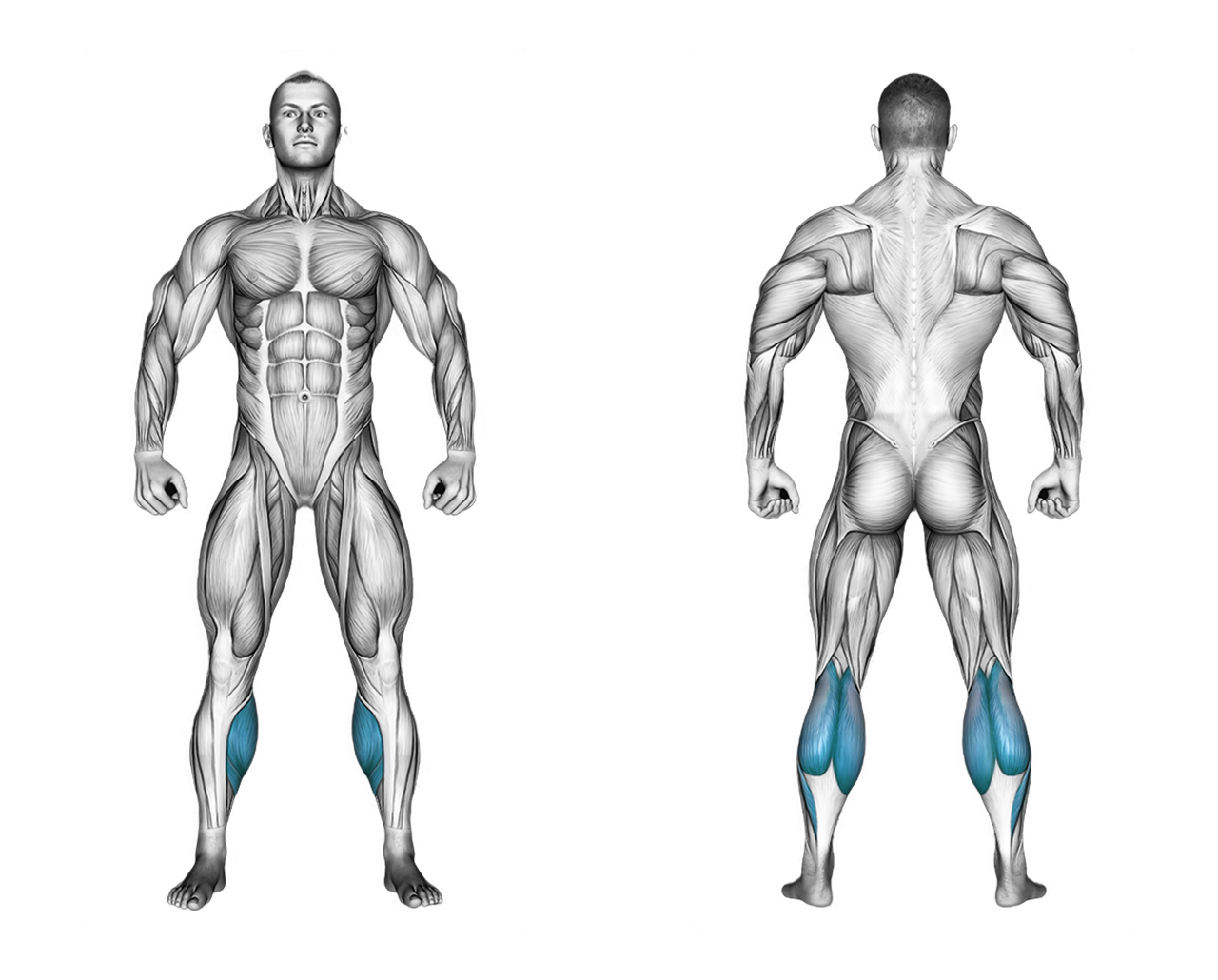
The dumbbell seated calf raise is an isolation movement that targets the soleus muscle, which bears the brunt of the work when the knees are bent. It is suitable for lifters of all levels and fits best toward the end of a lower-body session.
How to do it
- Sit on a bench with your feet flat on the floor, holding a dumbbell on each thigh just above your knees.
- Place the balls of your feet on a raised platform or weight plate, allowing your heels to hang off the edge.
- Keep your back straight and core engaged throughout the movement.
- Raise your heels as high as possible by contracting your calf muscles, lifting the dumbbells with your legs.
- Pause at the top position and squeeze your calves for maximum contraction.
- Slowly lower your heels below the platform level to get a full stretch in your calf muscles.
Common mistakes
- Bouncing out of the bottom stretch, which relies on tendon elasticity rather than active muscle contraction.
- Cutting the range of motion short, preventing full stretch at the bottom and complete contraction at the top.
- Placing the dumbbells too far back toward the hips, which reduces the effective resistance on the calves.
Tips
- Place a folded towel or gym mat across your lower thighs to cushion the pressure from the dumbbells.
- Pause for a full second at the peak of the movement to eliminate momentum and maximize tension.
- Press evenly through the entire ball of your foot, preventing your ankles from rolling inward or outward.
Sets and reps
Aim for 3–4 sets of 12–20 repetitions with a strict tempo, resting 60–90 seconds between sets to target the endurance-oriented soleus fibers.
Muscles worked
Your coach guides every set
Turn on the coach in Gloox: it asks how you feel, picks the weight from your history and cues technique and rest. Rate each set and the next one is tuned to you.

On a computer? Point your phone's camera here to get the app.
Questions
How does the seated calf raise differ from the standing calf raise?
Bending the knees mechanically shortens the gastrocnemius, shifting nearly all the tension to the underlying soleus muscle.
Can this exercise be done at home without a calf block?
Yes, you can elevate the balls of your feet using a sturdy wooden block, a step, or a couple of flat weight plates.
Similar exercises
Dumbbell Standing Calf RaiseDumbbells
Dumbbell Seated Calf RaiseDumbbells
Single Leg Dumbbell Calf RaiseDumbbells
Dumbbell Standing Single-Leg Calf RaiseDumbbells
Seated Calf Press MachineMachines
Resistance Band Calf Press Sitting on ChairResistance bands
Bodyweight Standing Calf Raise on a StepboxBodyweight
Bodyweight Standing Calf RaiseBodyweight