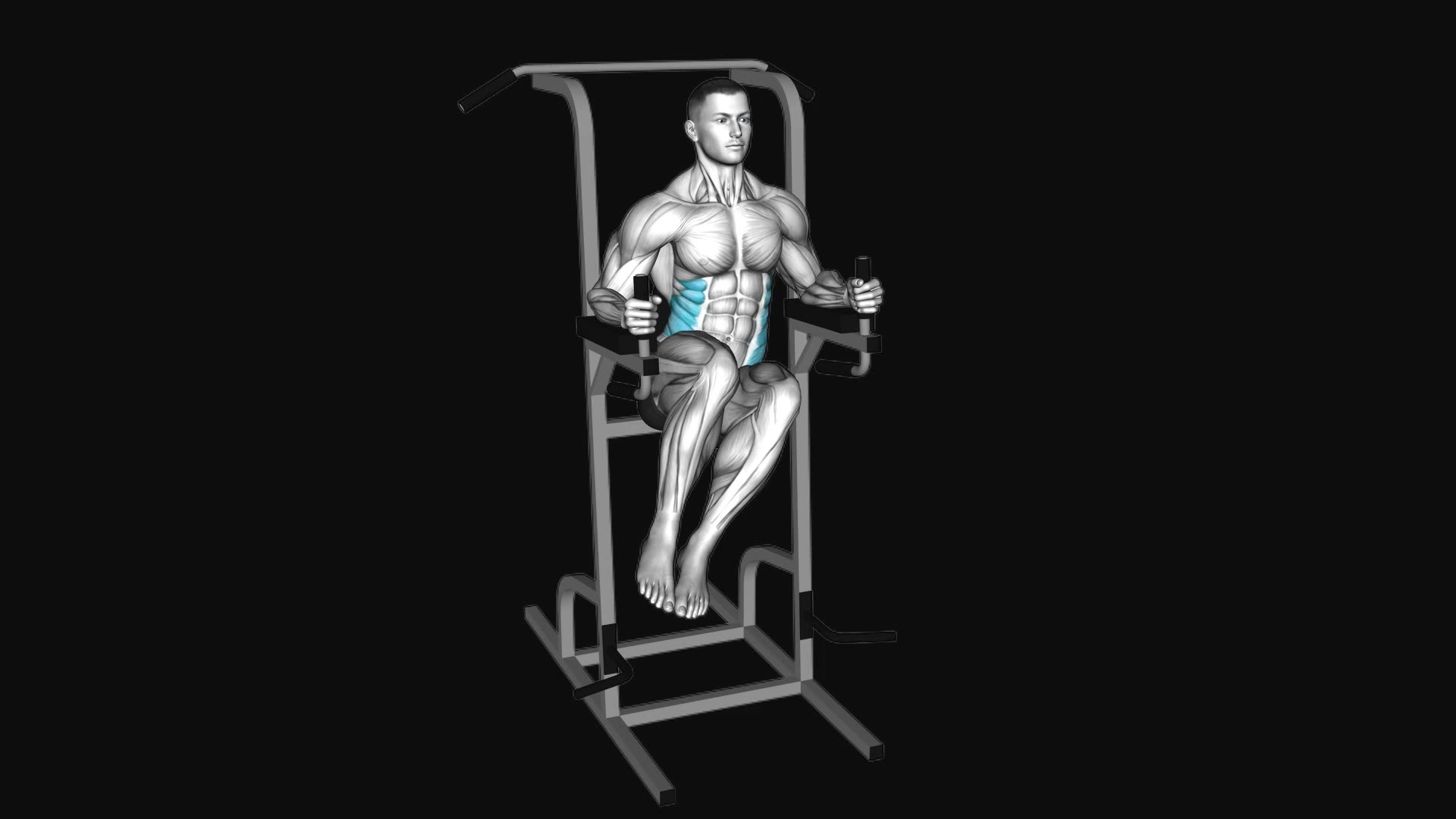
Abs · Barbell
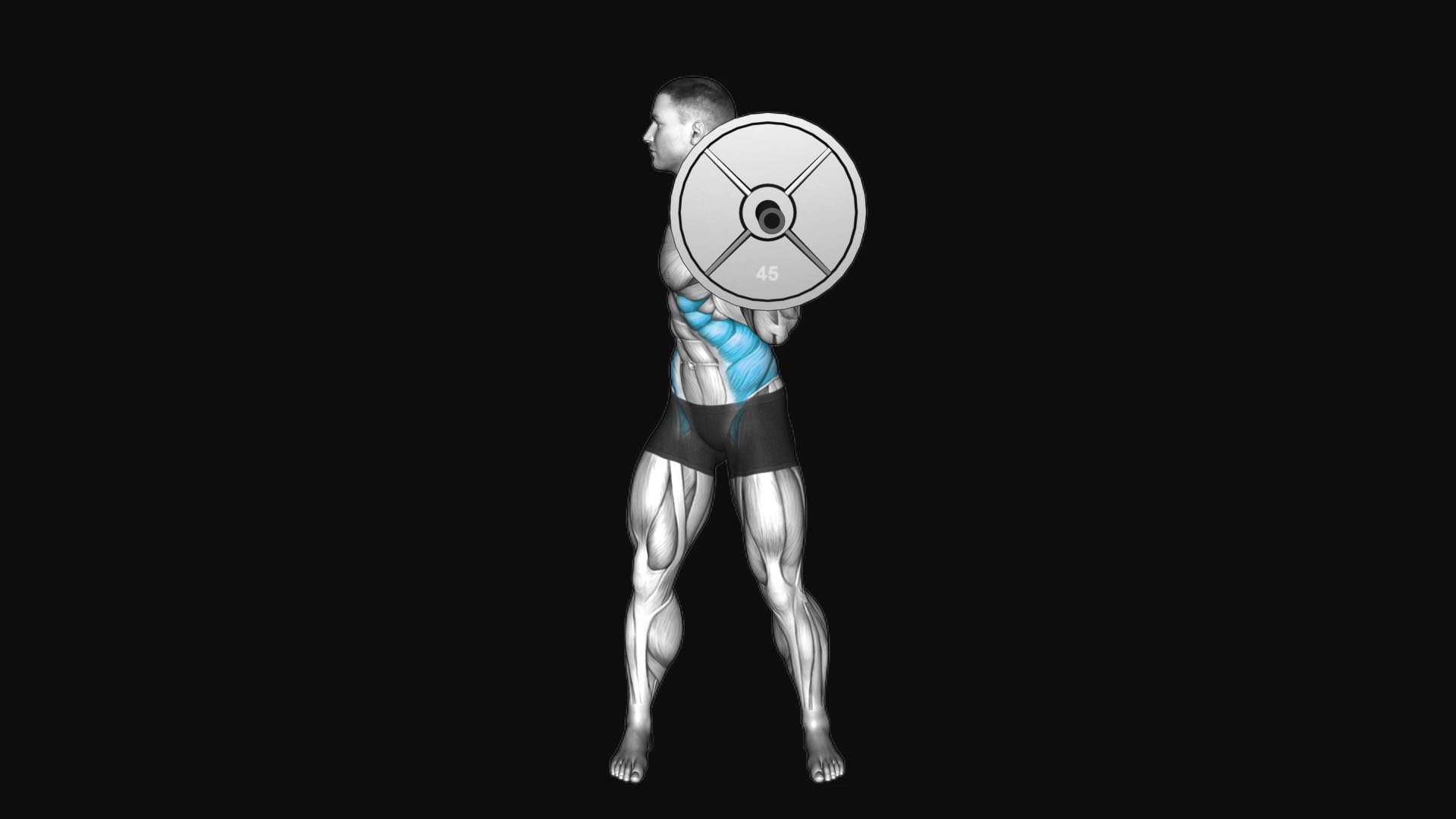
Barbell Seated Twist
The barbell seated twist is a rotational core exercise designed to strengthen the obliques and deep spinal stabilizers. It is best suited for intermediate lifters and fits well toward the end of an abdominal or core-focused workout.
- Muscles
- Abs
- Equipment
- Barbell
- Type
- Strength
- Animation
- Men
How to do it
- Sit on a bench with the barbell positioned across your upper back/shoulders.
- Keep your feet flat on the floor and core engaged.
- Rotate your torso to one side as far as comfortable, keeping your hips stationary.
- Return to center, then rotate to the opposite side.
- Maintain controlled movements throughout.
Common mistakes
- Using momentum and twisting aggressively places excessive shearing stress on the lumbar spine.
- Allowing the hips and knees to shift during the rotation takes tension away from the target abdominal muscles.
- Choosing a heavy barbell overloads the shoulders and cervical spine while ruining movement control.
Tips
- Keep your feet firmly planted on the floor and lock your pelvis against the bench throughout the movement.
- Pause for a brief moment at the end of each twist to maximize isometric tension on the obliques.
- Start with an empty bar or a light body bar to master rotational control before adding weight.
Sets and reps
Perform 3 to 4 sets of 15 to 25 controlled repetitions per side with 45 to 60 seconds of rest to build rotational endurance.
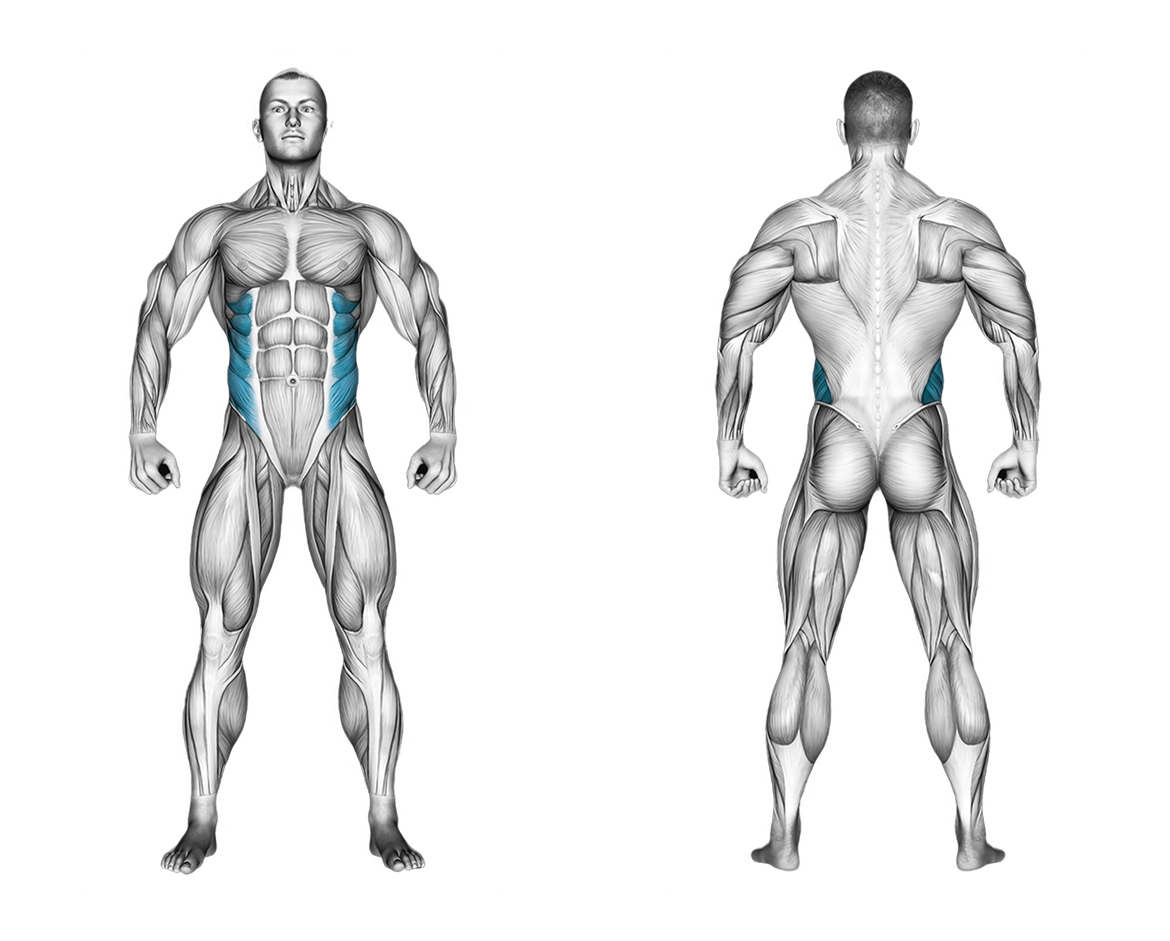
Muscles worked
Your coach guides every set
Turn on the coach in Gloox: it asks how you feel, picks the weight from your history and cues technique and rest. Rate each set and the next one is tuned to you.

On a computer? Point your phone's camera here to get the app.
Questions
Is the seated barbell twist safe for the lower back?
It is safe when done smoothly and without twisting past comfortable mobility, but if you experience any back pain, stop immediately and consult a specialist.
What can replace the barbell if it feels uncomfortable on the shoulders?
You can replace the barbell with a lightweight wooden dowel or perform seated cable rotations to achieve similar oblique engagement.