Abs · Other
45-Degree Side Bend
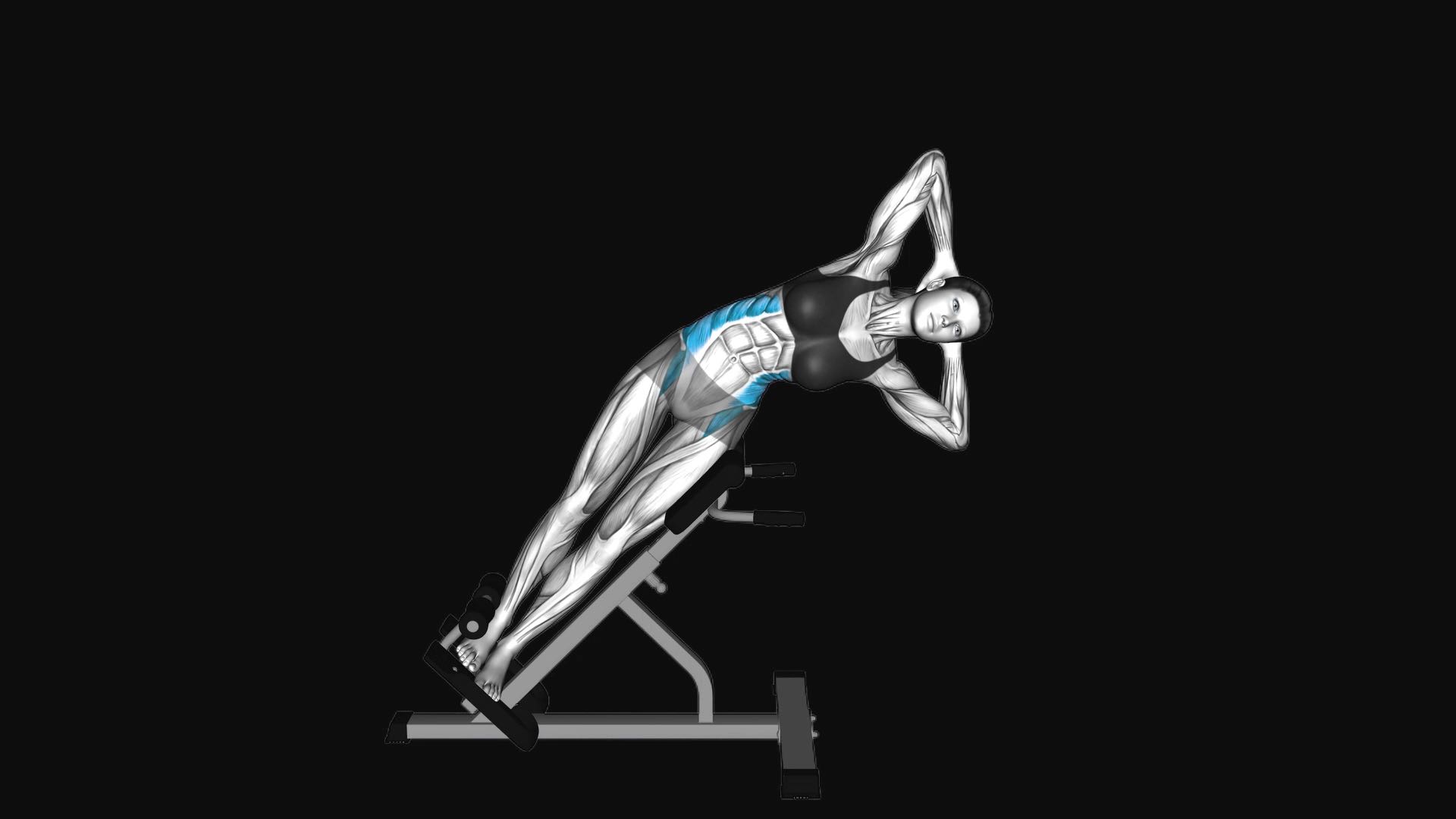
The 45-degree side bend is an isolation core exercise performed on a hyperextension bench that targets the obliques and quadratus lumborum. It helps build lateral trunk stability and rotational control, fitting best toward the end of an abdominal or lower-body workout.
- Muscles
- Abs
- Equipment
- Other
- Type
- Strength
- Animation
- Men
How to do it
- Position yourself sideways on a 45-degree hyperextension bench with your hip against the pad.
- Secure your feet under the foot pads and cross your arms over your chest or place hands behind your head.
- Keep your body straight and core engaged throughout the movement.
- Slowly lower your upper body sideways toward the floor, feeling a stretch in your obliques.
- Return to the starting position by contracting your oblique muscles on the working side.
- Complete all repetitions on one side before switching to the other side.
Common mistakes
- Rotating the torso forward or backward shifts tension away from the obliques and strains the lumbar spine.
- Bouncing out of the bottom position uses momentum instead of muscle contraction and risks lower-back strain.
- Setting the support pad too high restricts hip movement and compresses soft tissue against the pelvic bone.
- Bending too far past a comfortable stretch places unnecessary shear stress on spinal facet joints.
Tips
- Position the hip pad just below the crest of your pelvis so your torso can hinge freely sideways.
- Stop the upward phase when your body forms a straight line with your legs rather than over-crunching at the top.
- Add resistance by holding a light weight plate against your chest only after mastering bodyweight control.
Sets and reps
Perform 3 to 4 sets of 12 to 20 controlled repetitions per side, resting 60 to 90 seconds between sets to build local muscular endurance and core stability.
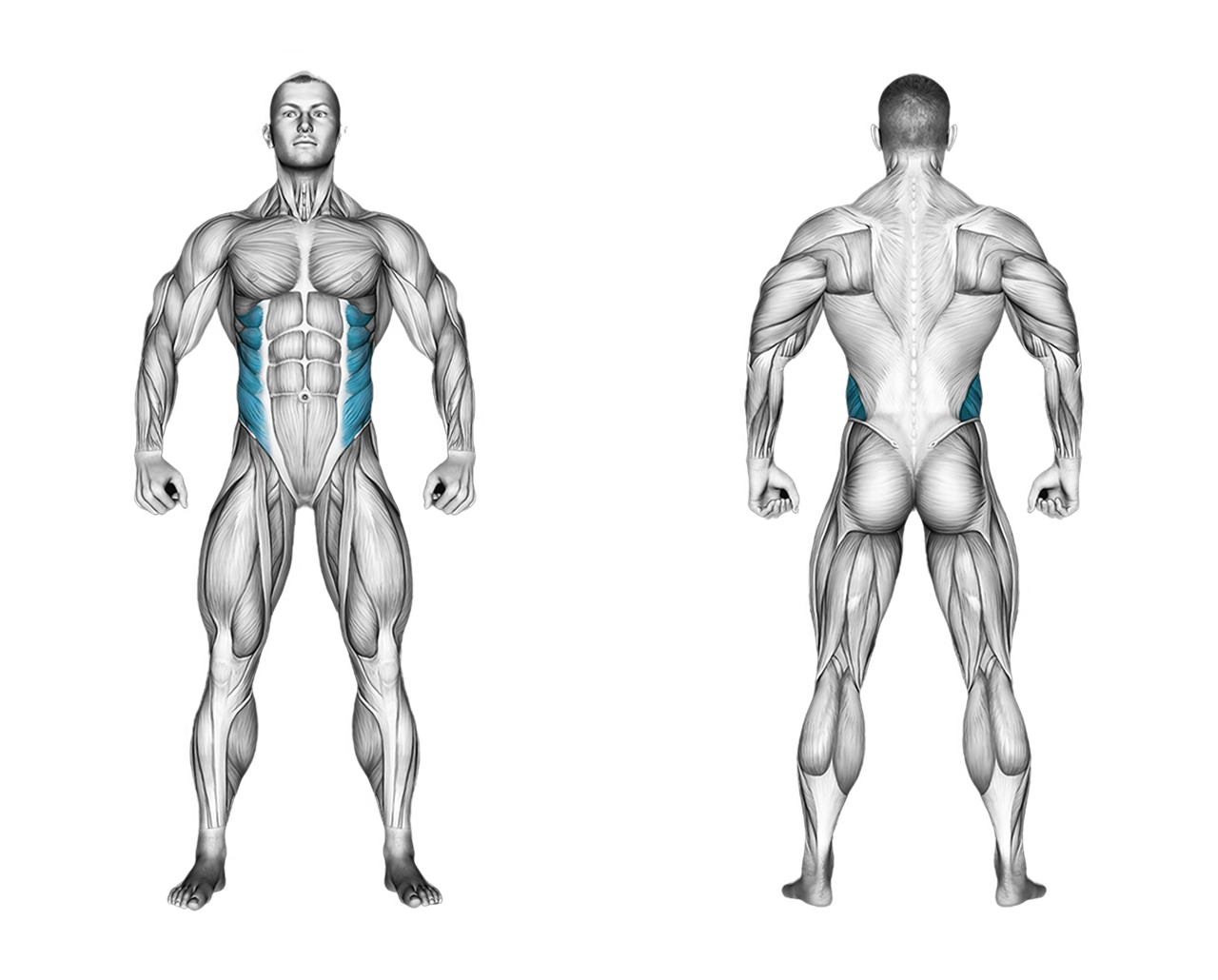
Muscles worked
Your coach guides every set
Turn on the coach in Gloox: it asks how you feel, picks the weight from your history and cues technique and rest. Rate each set and the next one is tuned to you.

On a computer? Point your phone's camera here to get the app.
Questions
Is the 45-degree side bend safe for the lower back?
It is generally safe when performed without torso twisting, but you should stop immediately and consult a doctor if you feel sharp spinal pain.
What muscles work during this movement?
The primary movers are the internal and external obliques on the working side, supported by the quadratus lumborum and deep core stabilizers.