
Back · Cardio machines
Rowing with rowing machine
Rowing with a rowing machine is a low-impact cardiovascular exercise that engages the legs, back, core, and arms in a single continuous movement. It works well as a dynamic warm-up, a primary endurance block, or high-intensity interval training for all fitness levels.
- Muscles
- Back
- Equipment
- Cardio machines
- Type
- Cardio / timed
- Animation
- Men and women
How to do it
- Sit on the rowing machine seat and secure your feet in the footrests using the straps.
- Grasp the handle with both hands, palms facing downward.
- Begin in the “catch” position: knees bent, arms extended forward, and torso leaning slightly forward.
- Push off with your legs, extending them fully while pulling the handle toward your chest. Keep your elbows close to your body and your back straight.
- Once your legs are extended, lean back slightly and complete the movement by pulling the handle to your sternum.
- Reverse the motion by extending your arms, leaning forward, and bending your knees to return to the starting position.
- Repeat for the desired duration or number of repetitions.
Common mistakes
- Bending your arms before your legs are fully extended reduces drive power and strains the biceps.
- Rounding your spine during the catch phase places excessive shearing force on the lumbar spine.
- Bending your knees too early on the recovery forces the handle to lift over your knees and disrupts the stroke flow.
- Leaning too far back at the finish wastes momentum and places unnecessary torque on the lower back.
Tips
- Follow the proper drive sequence by pushing through the legs first, swinging the torso back, and finishing with the arm pull.
- Reverse the sequence smoothly on the recovery by extending the arms, hinging forward at the hips, and then bending the knees.
- Maintain a loose, relaxed grip on the handle to prevent premature forearm and grip fatigue.
Sets and reps
For steady-state cardio, row continuously for 15–30 minutes at a moderate pace, or perform 4–6 intervals of 500 meters with 1–2 minutes of passive rest between bouts.
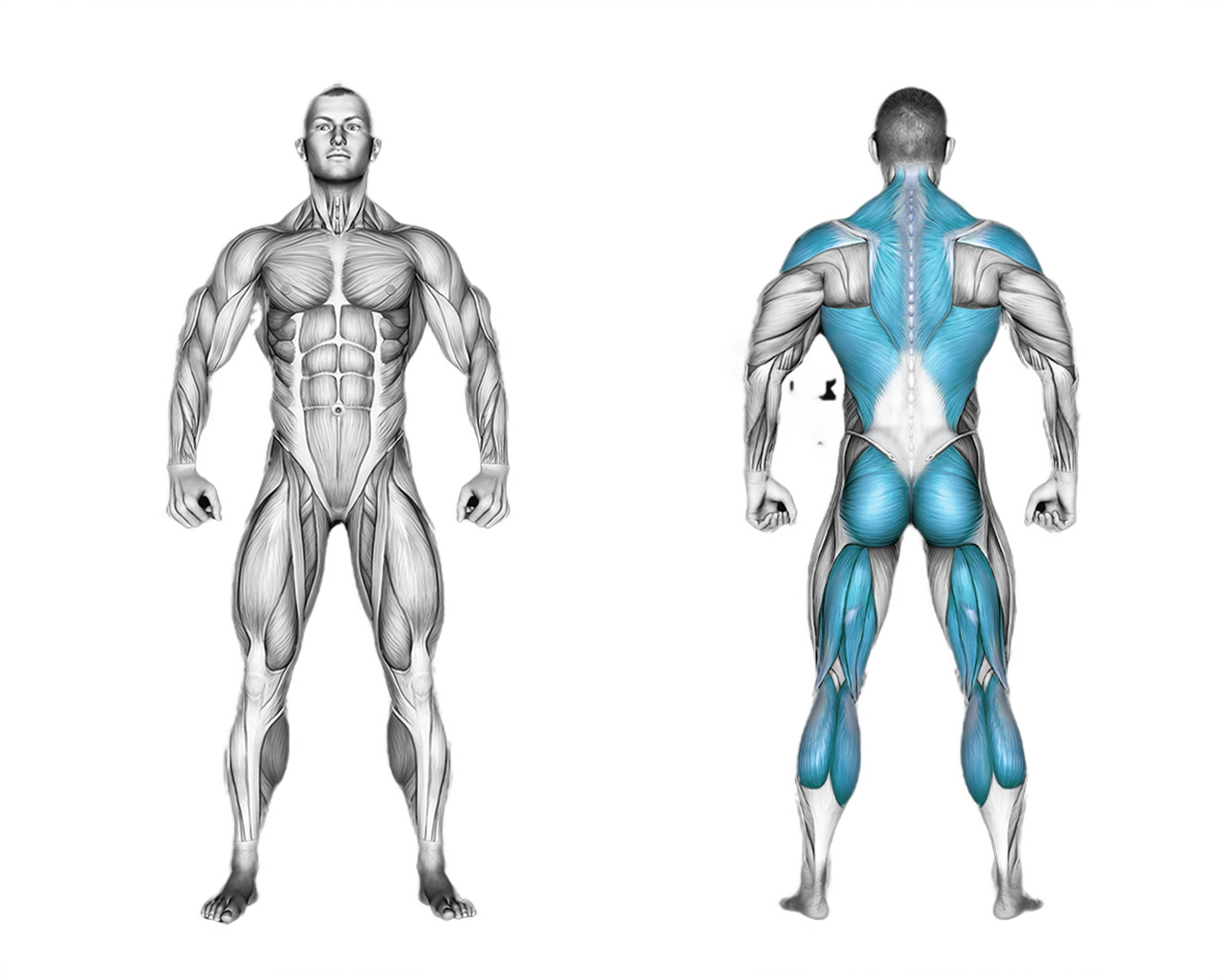
Muscles worked
Your coach guides every set
Turn on the coach in Gloox: it asks how you feel, picks the weight from your history and cues technique and rest. Rate each set and the next one is tuned to you.

On a computer? Point your phone's camera here to get the app.
Questions
Is rowing safe if you have lower back issues?
Rowing is low impact and safe when maintaining a neutral spine, but if you experience pain, stop immediately and consult a medical professional.
What muscles perform most of the work during rowing?
The legs generate roughly sixty percent of the power through the drive, with the core stabilizing the torso and the back and arms completing the final portion of the pull.
Similar exercises
Cable Lateral Pulldown with Mag GripCable machine
Cable Lateral Pulldown with Mag GripCable machine
Cable High RowCable machine
Cable Single Arm High RowCable machine
Cable High Row with Chest SupportCable machine
Barbell Seated Good MorningBarbell
Cable Standing Lat Pushdown (rope equipment)Cable machine
Dumbbell Bent Over Reverse RowDumbbells