
Abs · Resistance bands
Resistance Band Lying Leg Raise
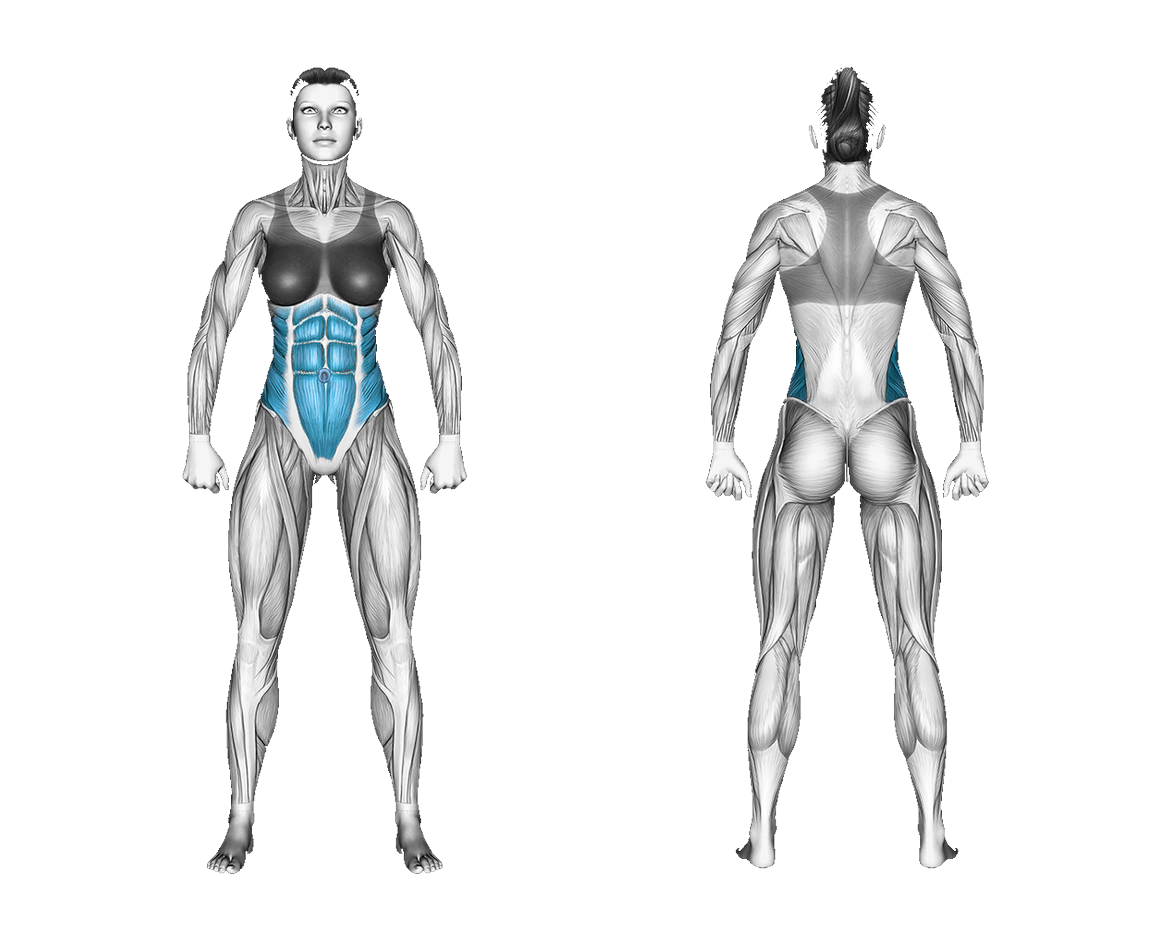
The resistance band lying leg raise is an advanced core exercise that challenges the rectus abdominis and hip flexors against progressive band tension. It is best suited for intermediate to advanced lifters looking to overload hip flexion toward the middle or end of a core workout.
- Muscles
- Abs
- Equipment
- Resistance bands
- Type
- Strength
- Animation
- Women
How to do it
- Loop one end of the resistance band around a sturdy low anchor behind your head and lie on your back, hooking the other end around both feet.
- Extend your legs and press your lower back into the floor, hands resting at your sides.
- Inhale and brace your core. As you exhale, raise your straight legs up against the band until they point toward the ceiling.
- Hold the top position briefly, keeping your lower back pressed down.
- Inhale and slowly lower your legs back toward the floor without letting them touch down.
Common mistakes
- Arching the lower back off the floor, which transfers mechanical stress to the lumbar spine and disengages the abdominal muscles.
- Bending the knees during the lift, which shortens the lever arm and reduces the tension provided by the band.
- Allowing the band to snap the legs back down uncontrollably, eliminating the eccentric phase and risking strain.
- Using momentum to jerk the hips off the floor at the top instead of relying on deliberate abdominal contraction.
Tips
- Actively brace your core and press your lumbar spine flush against the floor before lifting.
- Position yourself far enough from the anchor so the band maintains slight tension even in the bottom position.
- Lower your legs over a deliberate two- to three-second count to maximize time under tension.
Sets and reps
Perform 3–4 sets of 10–15 strict repetitions with 45–60 seconds of rest between sets to target core strength and endurance.
Muscles worked
Your coach guides every set
Turn on the coach in Gloox: it asks how you feel, picks the weight from your history and cues technique and rest. Rate each set and the next one is tuned to you.

On a computer? Point your phone's camera here to get the app.
Questions
Is this exercise safe if you experience lower back discomfort?
If you feel lower back pain, stop the exercise and consult a qualified specialist. You can temporarily reduce band resistance or slightly bend the knees to decrease spinal shear forces.
What can replace this movement if no low anchor is available?
You can perform hanging leg raises, standard lying leg raises with ankle weights, or hollow body holds to target the same abdominal movement patterns.
Similar exercises
Resistance Band Air BikeResistance bands
Band Half Kneeling ChopResistance bands
Resistance Band Standing Wood ChopperResistance bands
Band Side BendResistance bands
Band Overhead Side BendResistance bands
Resistance Band Reverse CrunchResistance bands
Band Standing Torso RotationResistance bands
Resistance Band Lying Bent Knee RaiseResistance bands