
Abs · Bodyweight
Kneeling plank
The kneeling plank is a modified isometric core hold that shortens the body's lever by resting on the knees. It builds baseline endurance in the abdominal wall and stabilizers, making it ideal for beginners or as an activation exercise before heavier lifts.
- Muscles
- Abs
- Equipment
- Bodyweight
- Type
- Cardio / timed
- Animation
- Men and women
How to do it
- Start on your hands and knees with your hands directly under your shoulders.
- Extend one leg back, then the other, but keep your knees on the ground.
- Keep your body in a straight line from head to knees.
- Engage your core and hold this position, avoiding sagging in your hips.
Common mistakes
- Sagging at the hips places compressive stress on the lumbar spine and completely disengages the abdominal muscles.
- Piking the hips upward shifts the load away from the core and reduces the training benefit of the hold.
- Looking up or letting the head drop forward strains the cervical spine and disrupts neutral posture.
- Holding your breath limits oxygen delivery and compromises deep abdominal engagement.
Tips
- Place an exercise mat or soft pad under your knees to prevent discomfort against the floor.
- Stack your hands directly beneath your shoulders and firmly push the ground away to stabilize your shoulder blades.
- Gently squeeze your glutes throughout the hold to keep your pelvis locked in a neutral alignment.
Sets and reps
Perform 3 to 4 sets, holding the position for 20 to 45 seconds with 30 to 60 seconds of rest between efforts. As your endurance develops, increase hold duration before transitioning to a full plank on your toes.
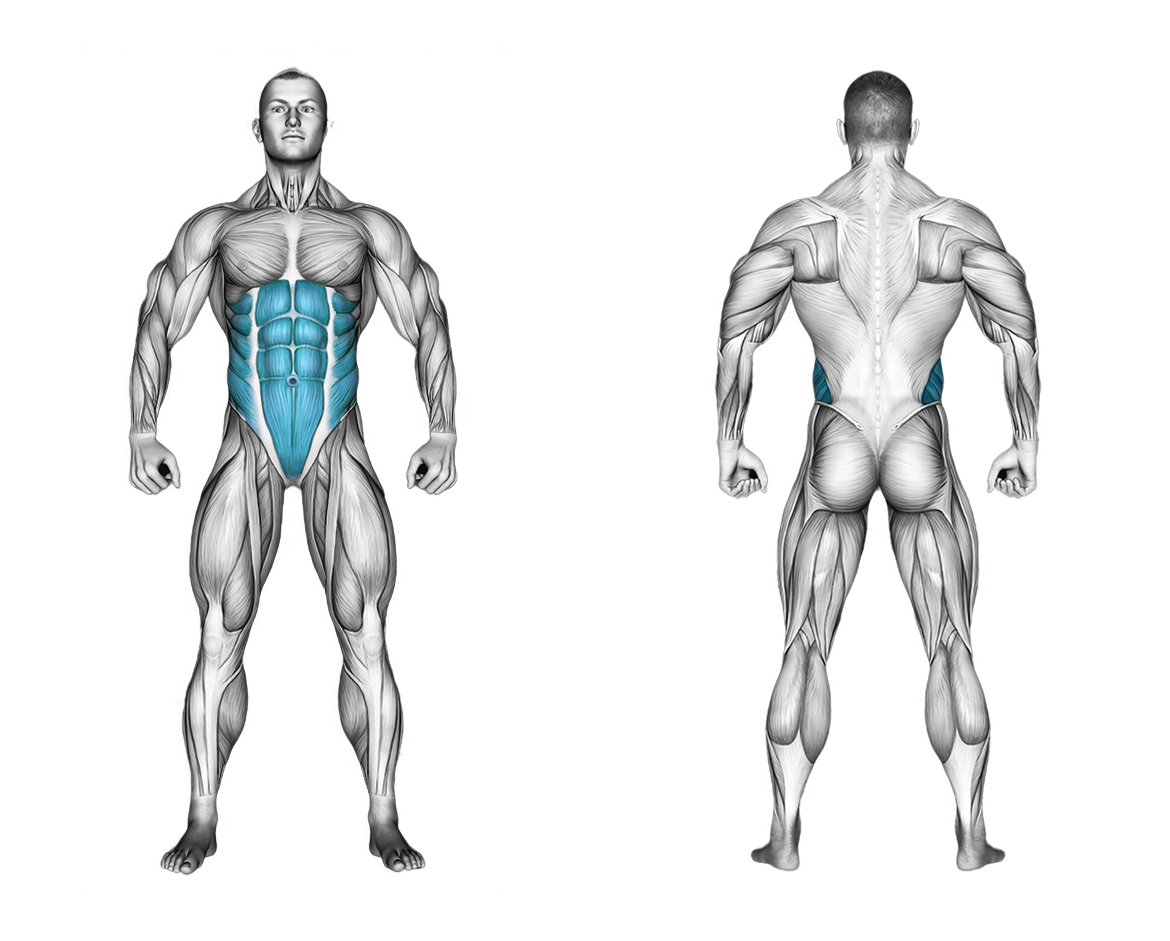
Muscles worked
Your coach guides every set
Turn on the coach in Gloox: it asks how you feel, picks the weight from your history and cues technique and rest. Rate each set and the next one is tuned to you.

On a computer? Point your phone's camera here to get the app.
Questions
Is the kneeling plank safe for people with lower back sensitivity?
Yes, shortening the lever arm reduces shear forces on the lumbar spine compared to a standard plank. If sharp pain occurs at any point, stop immediately and consult a healthcare professional.
When should you progress to a full plank on your toes?
Advance to the toe plank once you can maintain flawless form on your knees for 3 consecutive sets of 45 to 60 seconds.







