
Back · Cable machine
Cable Seated Single Arm Row
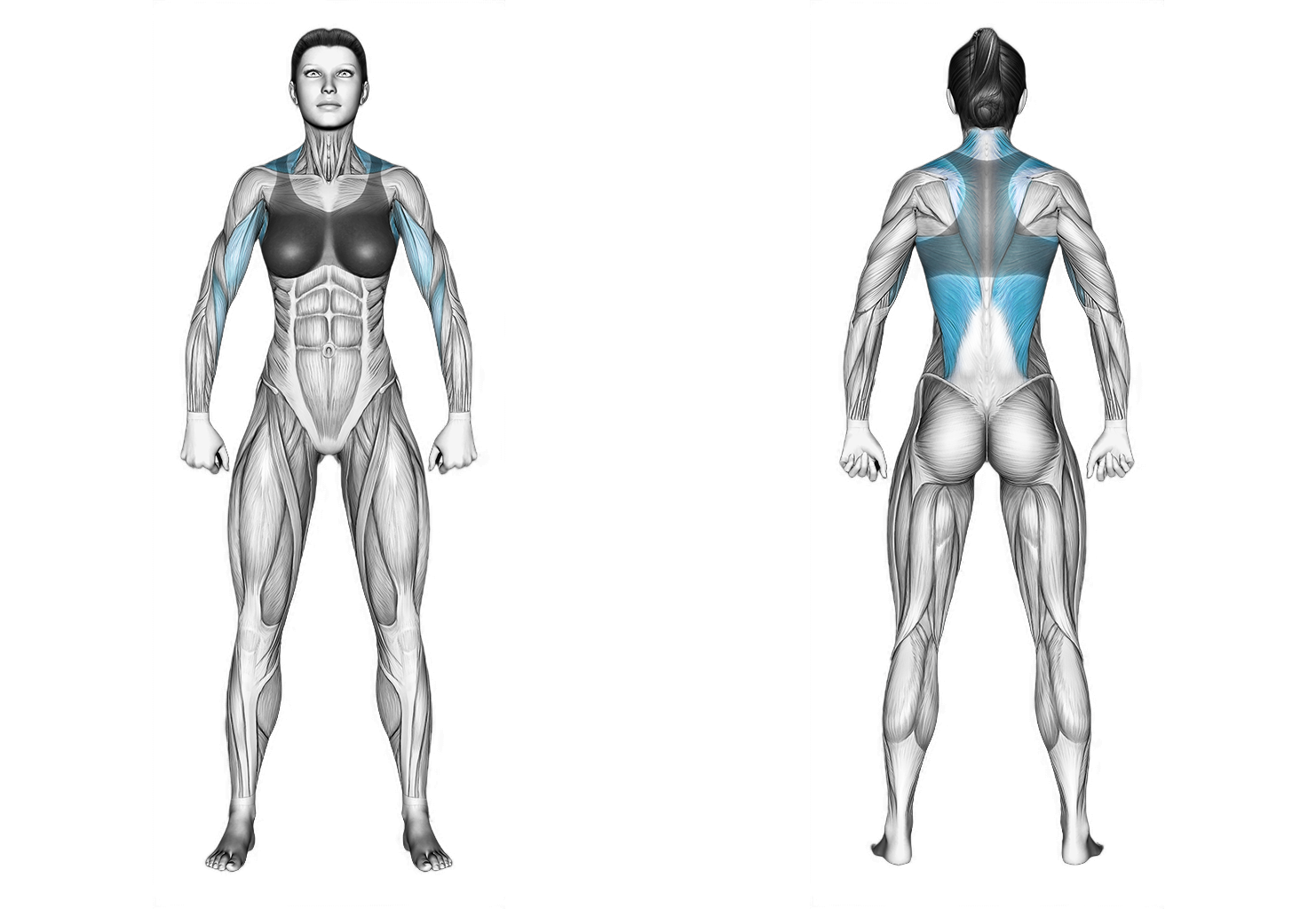
The cable seated single arm row is a unilateral horizontal pull that targets the latissimus dorsi, rhomboids, and rear deltoids. It is ideal for correcting left-to-right strength imbalances and fits well into the middle of a back or pull session.
- Muscles
- Back
- Equipment
- Cable machine
- Type
- Strength
- Animation
- Women
How to do it
- Sit at a cable row station with feet on the platform, knees slightly bent.
- Grab the handle with one hand, arm fully extended.
- Pull the handle toward your ribcage, driving your elbow back and squeezing your shoulder blade.
- Keep your torso upright and avoid rotating.
- Slowly extend your arm back to the starting position.
- Complete all reps on one side before switching.
Common mistakes
- Excessively twisting the torso shifts tension away from the lats and creates rotational shear on the spine.
- Pulling primarily with the arm rather than driving the elbow back overtaxes the bicep and leaves the back underworked.
- Shrugging the shoulder up toward the ear transfers the load to the upper trapezius and strains the neck.
- Letting the cable yank the arm forward on the return sacrifices time under tension and risks shoulder strain.
Tips
- Drive your elbow down and tight toward your hip rather than just pulling straight backward.
- Allow your working shoulder blade to drift forward at full extension to achieve a deep stretch in the lat.
- Keep your chest squared forward and brace through your feet to resist the pull of the cable.
Sets and reps
For hypertrophy and correcting muscular imbalances, perform 3 to 4 sets of 8 to 12 reps per side, resting 60 to 90 seconds between arms or sets.
Muscles worked
Your coach guides every set
Turn on the coach in Gloox: it asks how you feel, picks the weight from your history and cues technique and rest. Rate each set and the next one is tuned to you.

On a computer? Point your phone's camera here to get the app.
Questions
Why choose a single-arm cable row over a standard two-arm row?
Training one side at a time provides a longer range of motion and helps identify and fix strength discrepancies between your arms.
Which handle attachment works best for this movement?
A single D-handle is best because it permits a comfortable neutral grip and allows your wrist to rotate naturally through the pull.
Similar exercises
Cable Lateral Pulldown with Mag GripCable machine
Cable Lateral Pulldown with Mag GripCable machine
Cable High RowCable machine
Cable Single Arm High RowCable machine
Cable High Row with Chest SupportCable machine
Cable Standing Lat Pushdown (rope equipment)Cable machine
Lever Cross Lat PulldownCable machine
Cable Cross over Lateral PulldownCable machine