
Back · Cable machine
Cable Rear Pulldown
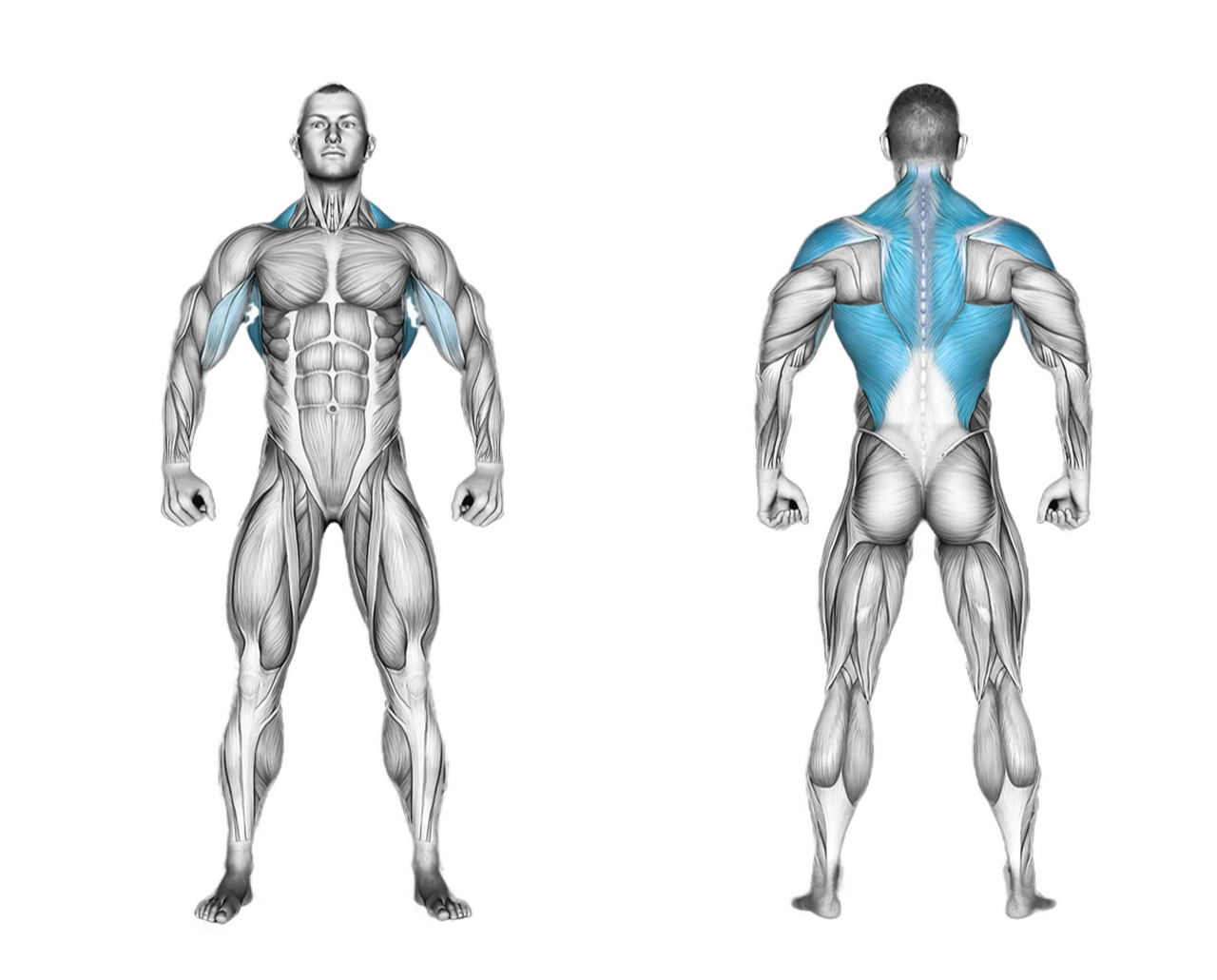
The cable rear pulldown is a compound vertical pulling exercise performed on a cable machine, targeting the latissimus dorsi, rhomboids, and upper back musculature. It is best suited for experienced lifters with good shoulder mobility and typically fits into the middle of a back workout after heavier free-weight movements.
- Muscles
- Back
- Equipment
- Cable machine
- Type
- Strength
- Animation
- Men
How to do it
- Sit at a lat pulldown machine and adjust the knee pad to fit snugly against your legs.
- Grab the bar with a wide overhand grip, hands wider than shoulder-width apart.
- Sit down with your spine straight and slightly lean back.
- Inhale and brace your core. Exhale as you pull the bar down towards the back of your neck.
- Lead with your elbows and squeeze your shoulder blades together at the bottom of the movement.
- Keep your movements controlled, focusing on engaging your lat muscles.
- Slowly return the bar to the starting position, extending your arms and feeling the stretch in your lats.
Common mistakes
- Pushing the head excessively forward strains the cervical spine and compromises neck alignment.
- Pulling the bar too low past the base of the neck places excessive stress on the rotator cuff and shoulder joints.
- Using excessive weight and jerking the torso reduces tension on the lats and increases the risk of shoulder strain.
- Banging the bar against the back of the neck causes blunt trauma and indicates a lack of eccentric control.
Tips
- Maintain a slight forward lean from the hips while keeping your spine in a neutral position throughout the movement.
- Initiate the pull by depressing the shoulder blades and driving your elbows straight down toward your sides.
- Stop immediately and consult a specialist if you experience pinching or sharp pain in your shoulders or neck.
Sets and reps
Perform 3 to 4 sets of 8 to 12 controlled repetitions with 60 to 90 seconds of rest to target back hypertrophy. Avoid heavy, low-rep sets with this movement to minimize excessive strain on the shoulder and neck joints.
Muscles worked
Your coach guides every set
Turn on the coach in Gloox: it asks how you feel, picks the weight from your history and cues technique and rest. Rate each set and the next one is tuned to you.

On a computer? Point your phone's camera here to get the app.
Questions
Is the rear pulldown better than the front pulldown?
Front pulldowns are generally safer for the shoulders and allow for heavier loading with equal lat activation. Rear pulldowns shift more emphasis to the upper back, but require significantly more shoulder flexibility.
What can replace this exercise if it causes shoulder discomfort?
Standard cable pulldowns to the chest or neutral-grip pulldowns are effective, joint-friendly alternatives that target the same muscle groups.
Similar exercises
Cable Lateral Pulldown with Mag GripCable machine
Cable Lateral Pulldown with Mag GripCable machine
Cable High RowCable machine
Cable Single Arm High RowCable machine
Cable High Row with Chest SupportCable machine
Cable Standing Lat Pushdown (rope equipment)Cable machine
Lever Cross Lat PulldownCable machine
Cable Cross over Lateral PulldownCable machine