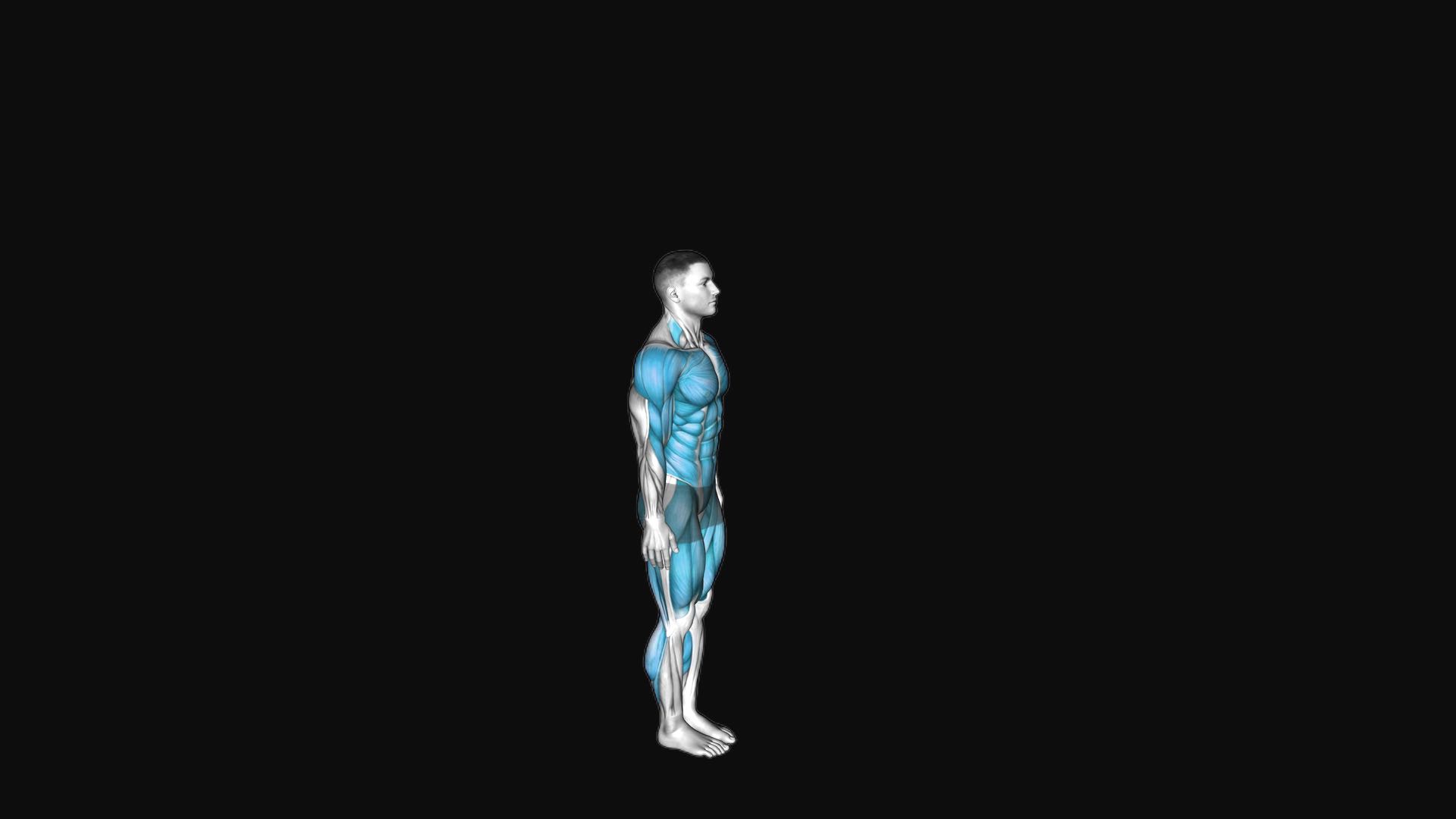
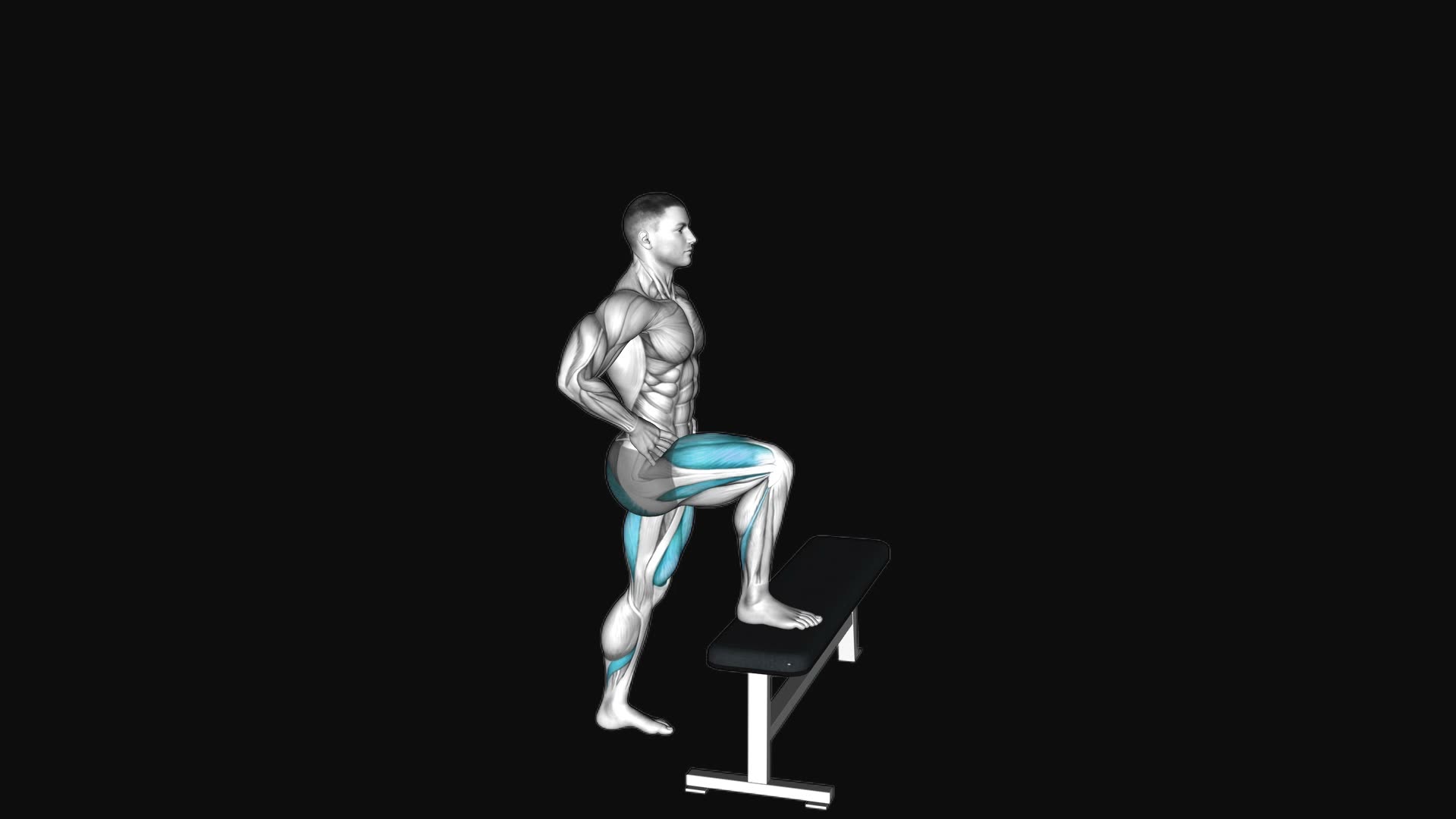
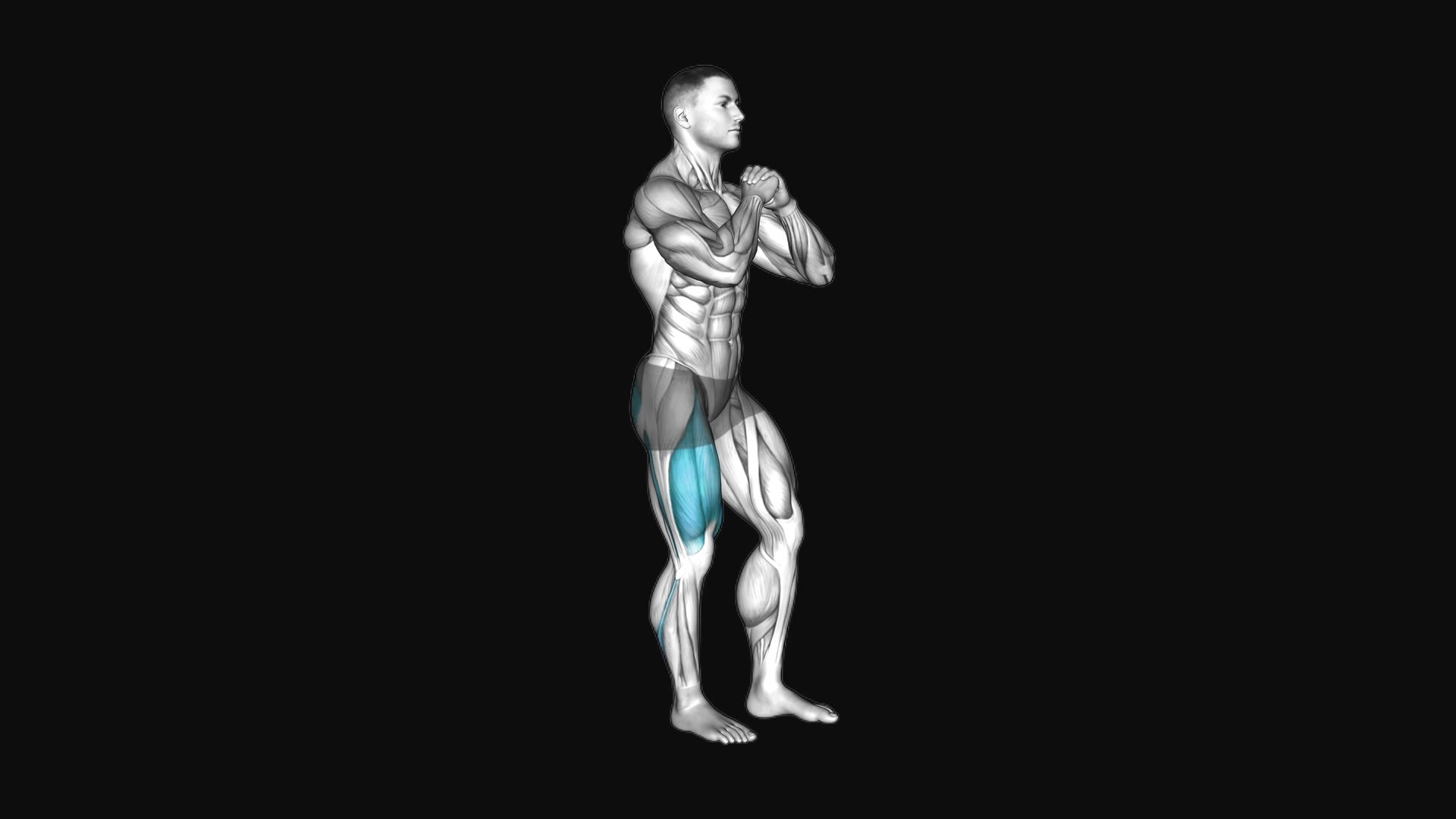
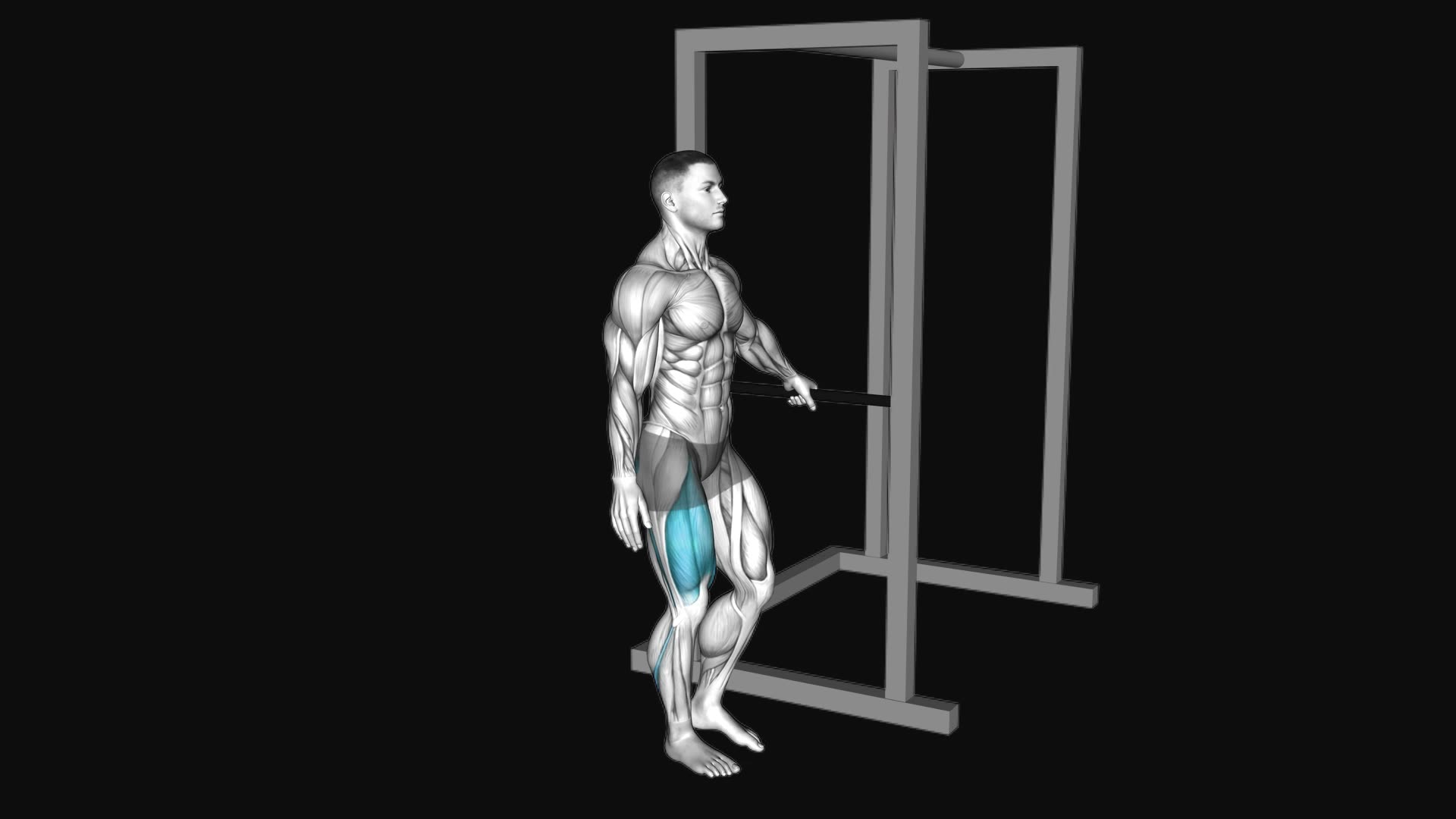
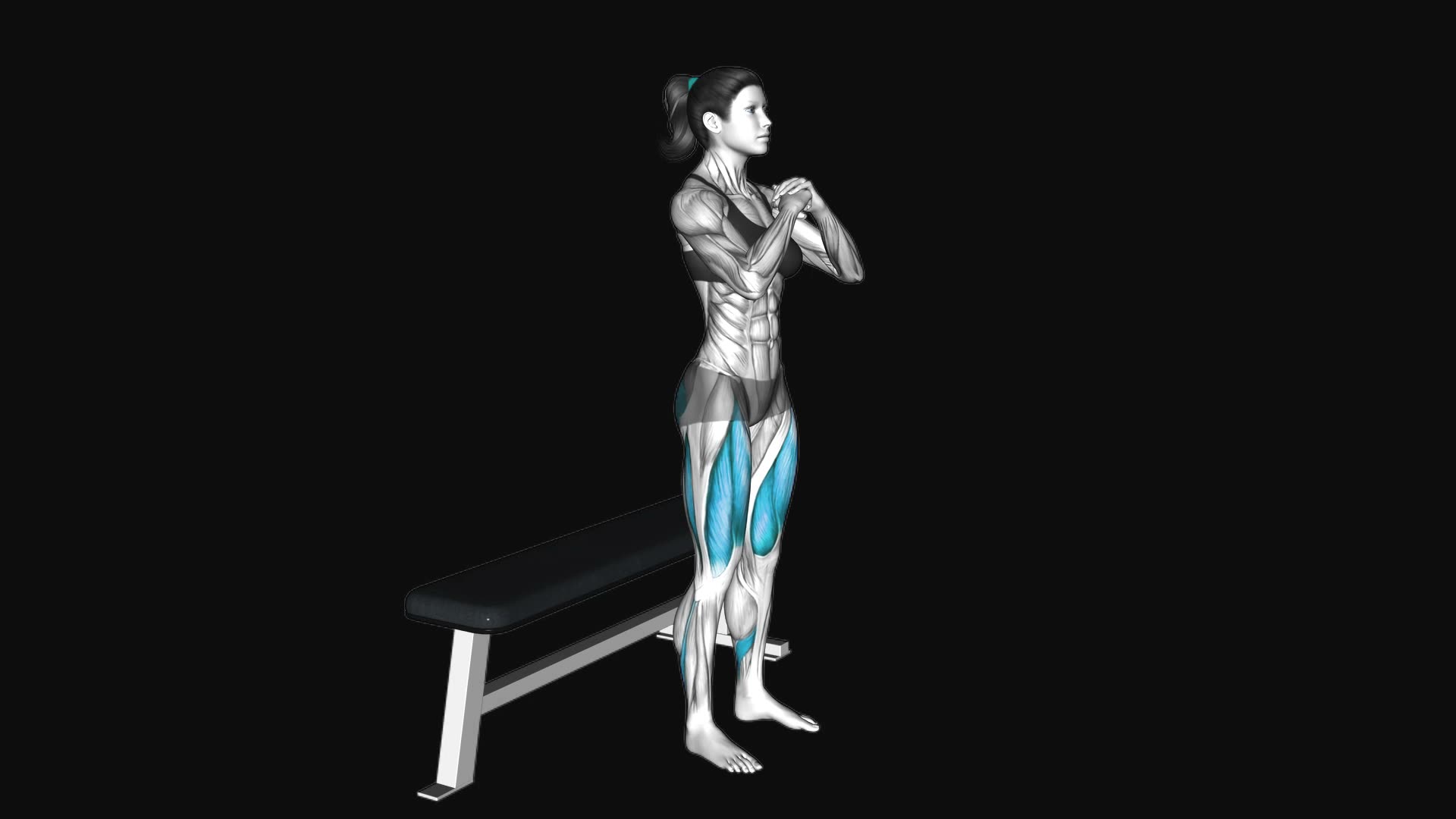
Legs · Bodyweight
Bodyweight Deadlift Shin Tap
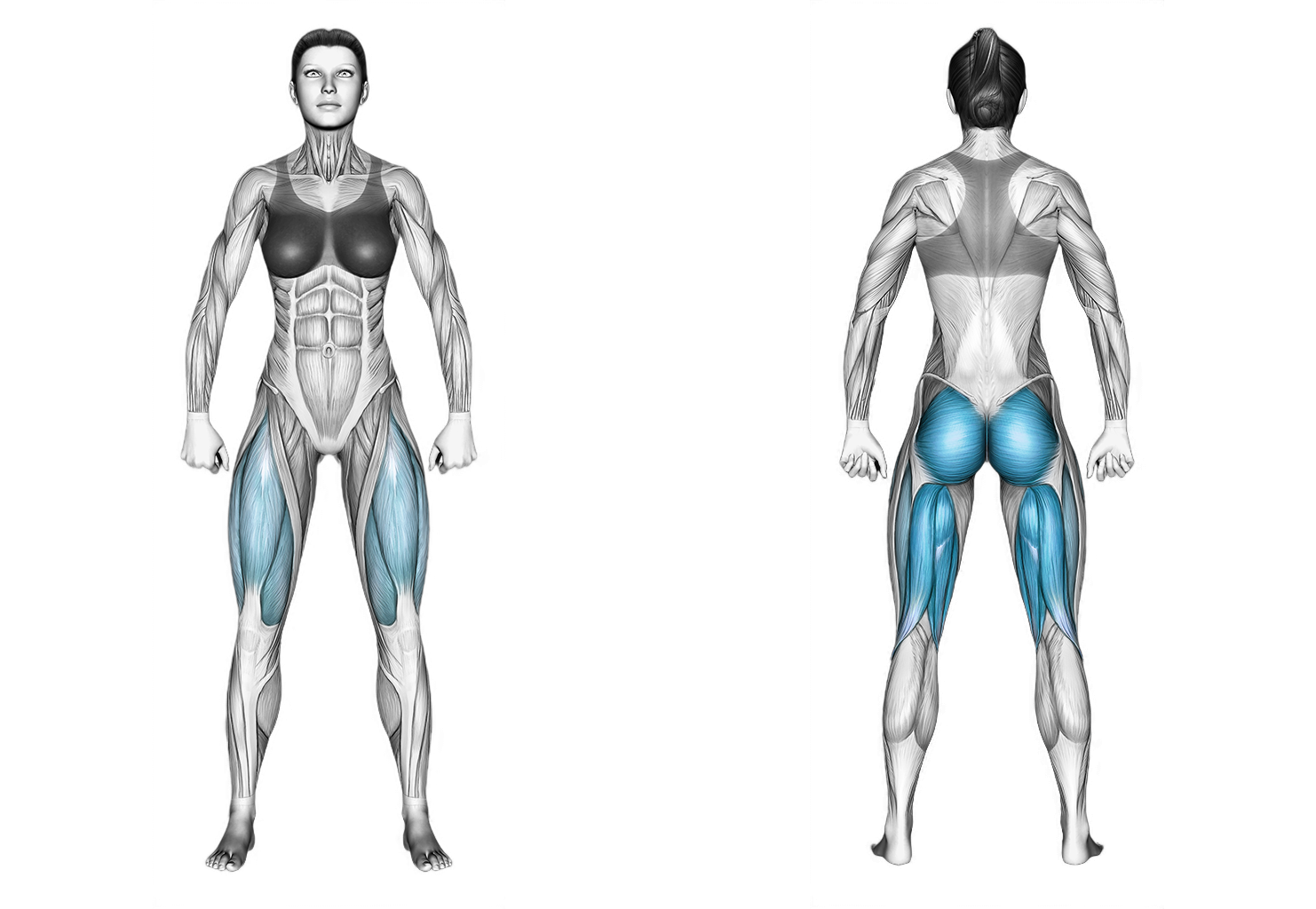
The bodyweight deadlift shin tap is a foundational hip-hinge movement that strengthens the hamstrings, glutes, and lower back without any equipment. It is ideal for beginners mastering hinge mechanics or for intermediate lifters as a warm-up drill before loaded posterior chain work.
- Equipment
- Bodyweight
- Type
- Strength
- Animation
- Women
How to do it
- Stand with feet hip-width apart.
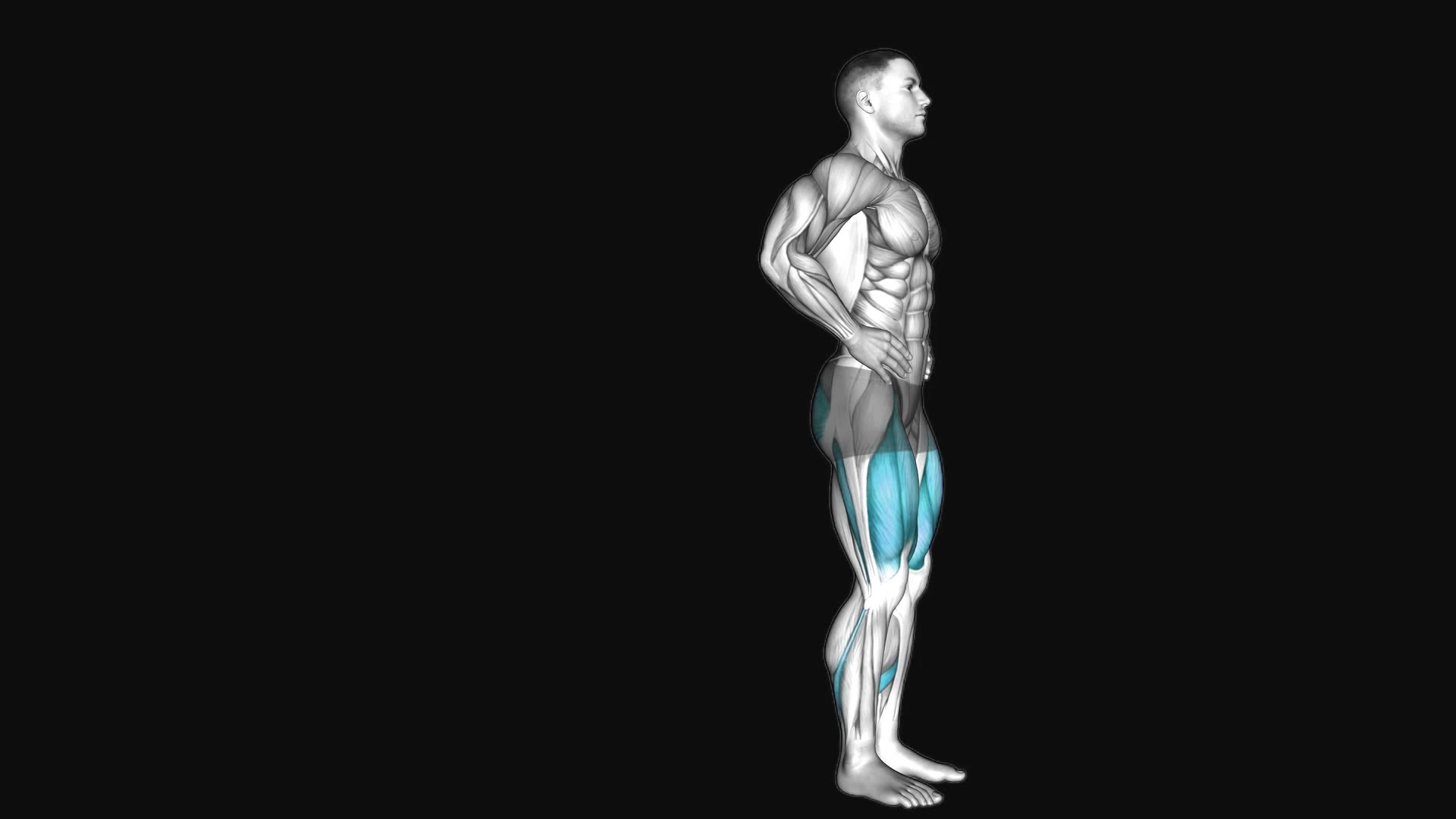
- Hinge at the hips and push them back while keeping your back straight.
- Lower your torso until your hands tap your shins.
- Keep a slight bend in your knees and feel the stretch in your hamstrings.
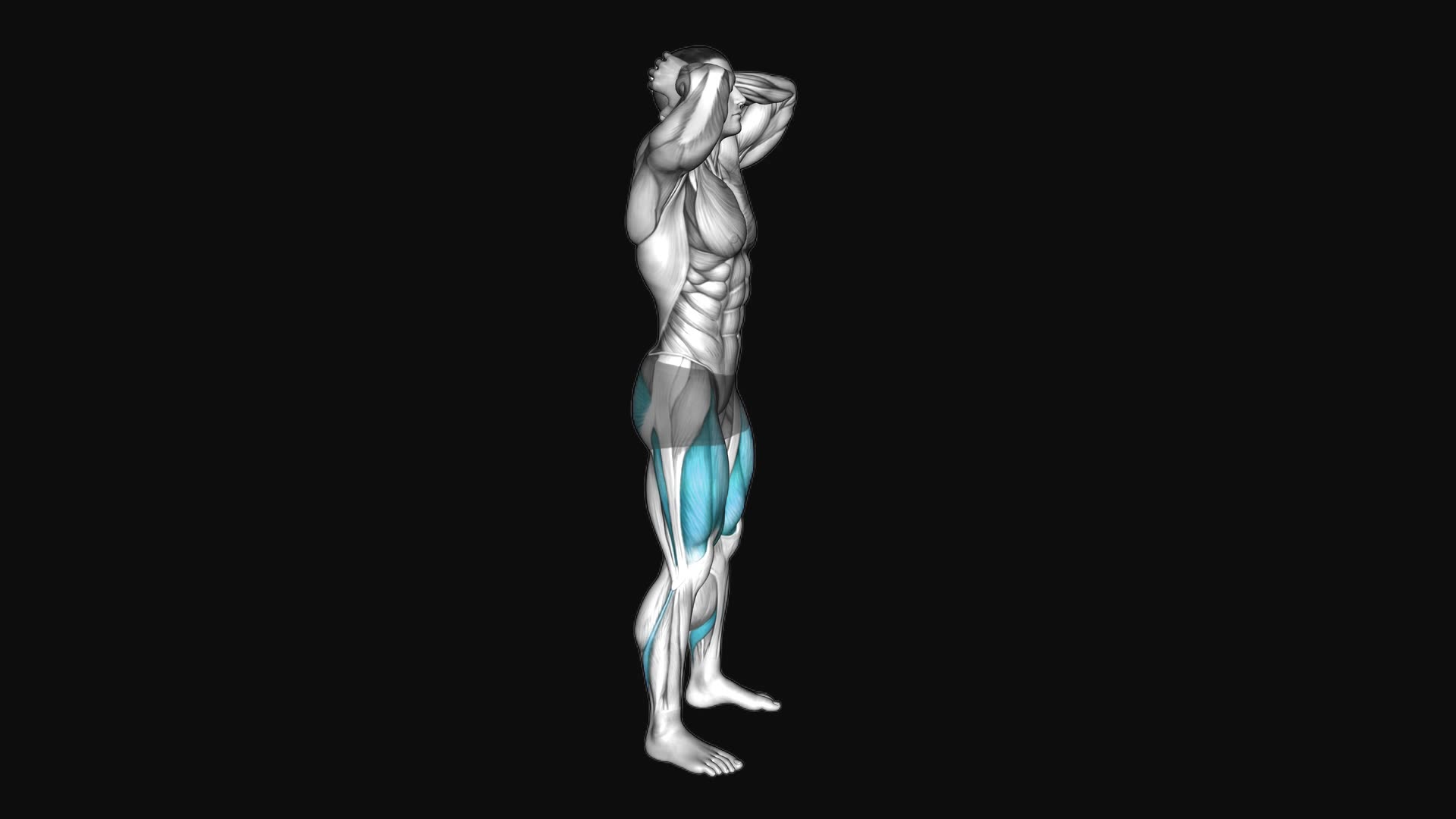
- Return to standing by driving your hips forward and squeezing your glutes.
- Keep your core engaged throughout.
Common mistakes
- Rounding the lower back during the hinge, which shifts mechanical stress from the hamstrings to the lumbar spine.
- Bending the knees too much, which turns the movement into a squat and reduces tension on the posterior chain.
- Cranking the neck upward to look forward, placing unnecessary strain on the cervical spine.
- Failing to fully extend the hips at the top, leaving the glutes under-recruited.
Tips
- Initiate the movement by pushing your hips straight back rather than thinking about bending over.
- Maintain a neutral spine by keeping your gaze focused a few feet in front of you on the floor.
- Brace your core throughout the movement to protect the lower back and keep your torso rigid.
Sets and reps
Perform 2–3 sets of 12–15 controlled repetitions with 45–60 seconds of rest between sets to groove the pattern or warm up.
Muscles worked
Your coach guides every set
Turn on the coach in Gloox: it asks how you feel, picks the weight from your history and cues technique and rest. Rate each set and the next one is tuned to you.

On a computer? Point your phone's camera here to get the app.
Questions
Is the bodyweight deadlift shin tap safe for lower back pain?
It is generally safe when performed with a neutral spine, but if you experience pain, stop immediately and consult a healthcare professional.
Can you build muscle using only this bodyweight variation?
It effectively activates and conditions the posterior chain, but progressive overload with weights will eventually be needed for significant muscle growth.