Shoulders · Barbell
Barbell Seated Overhead Press
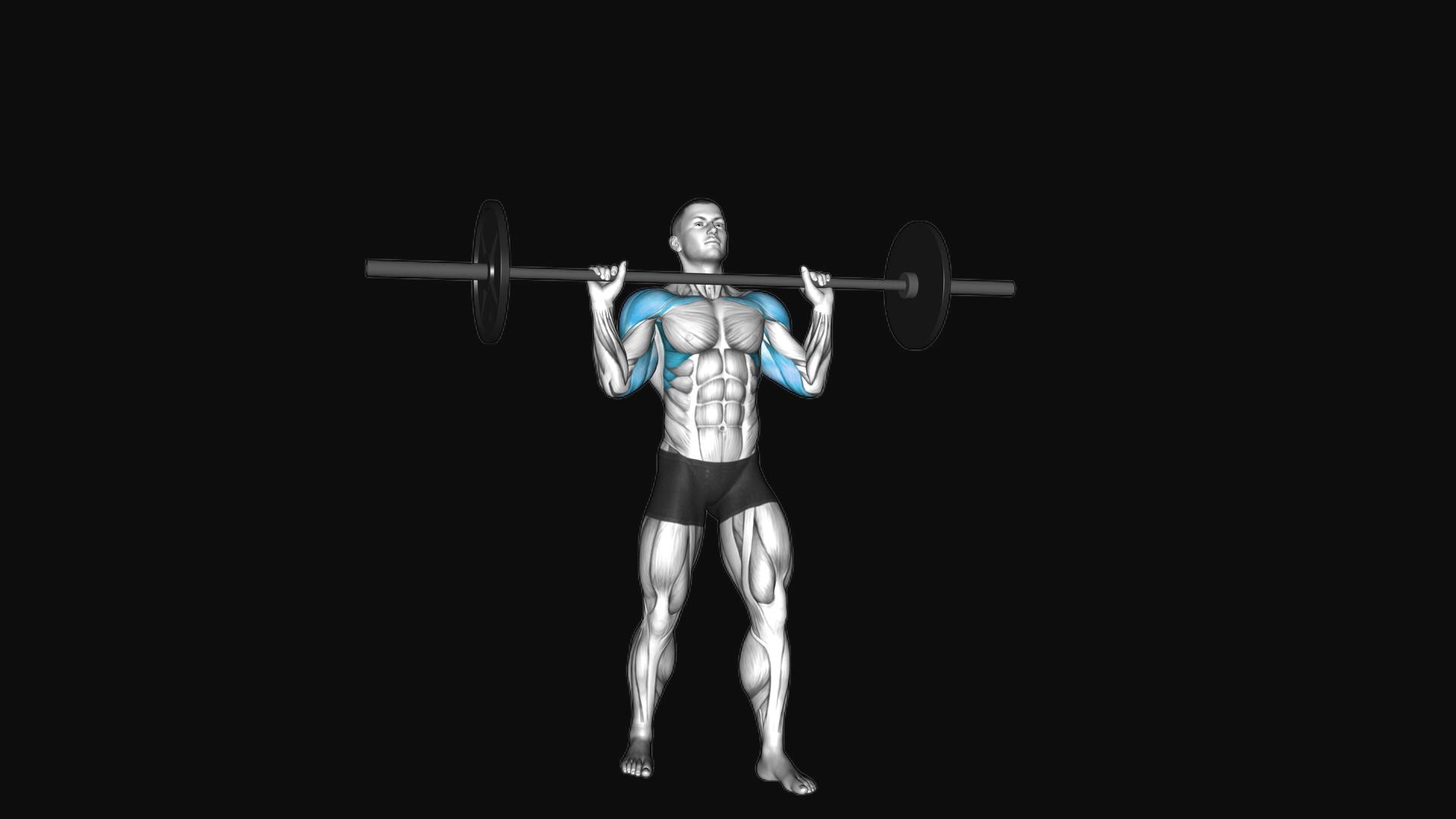
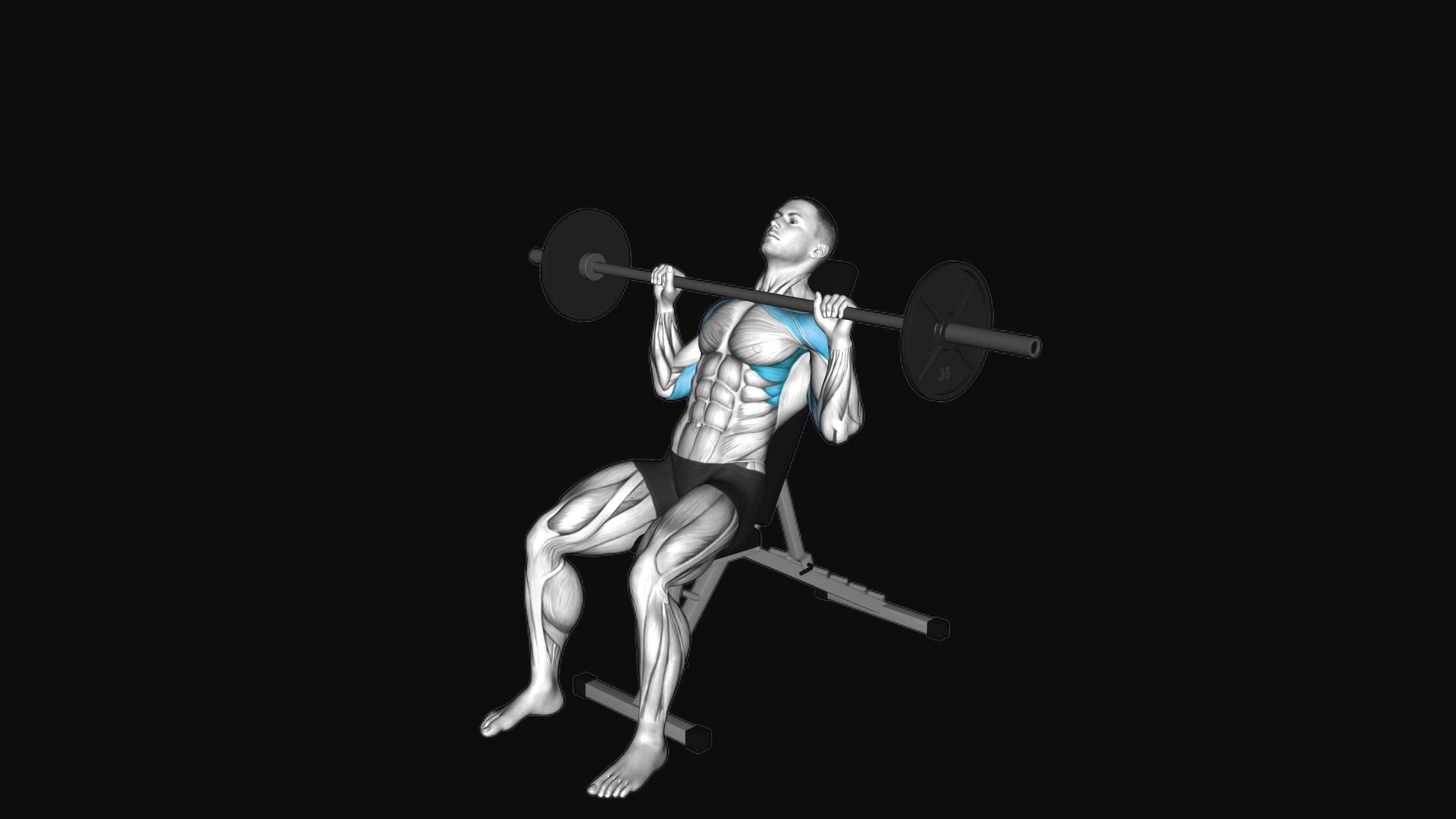
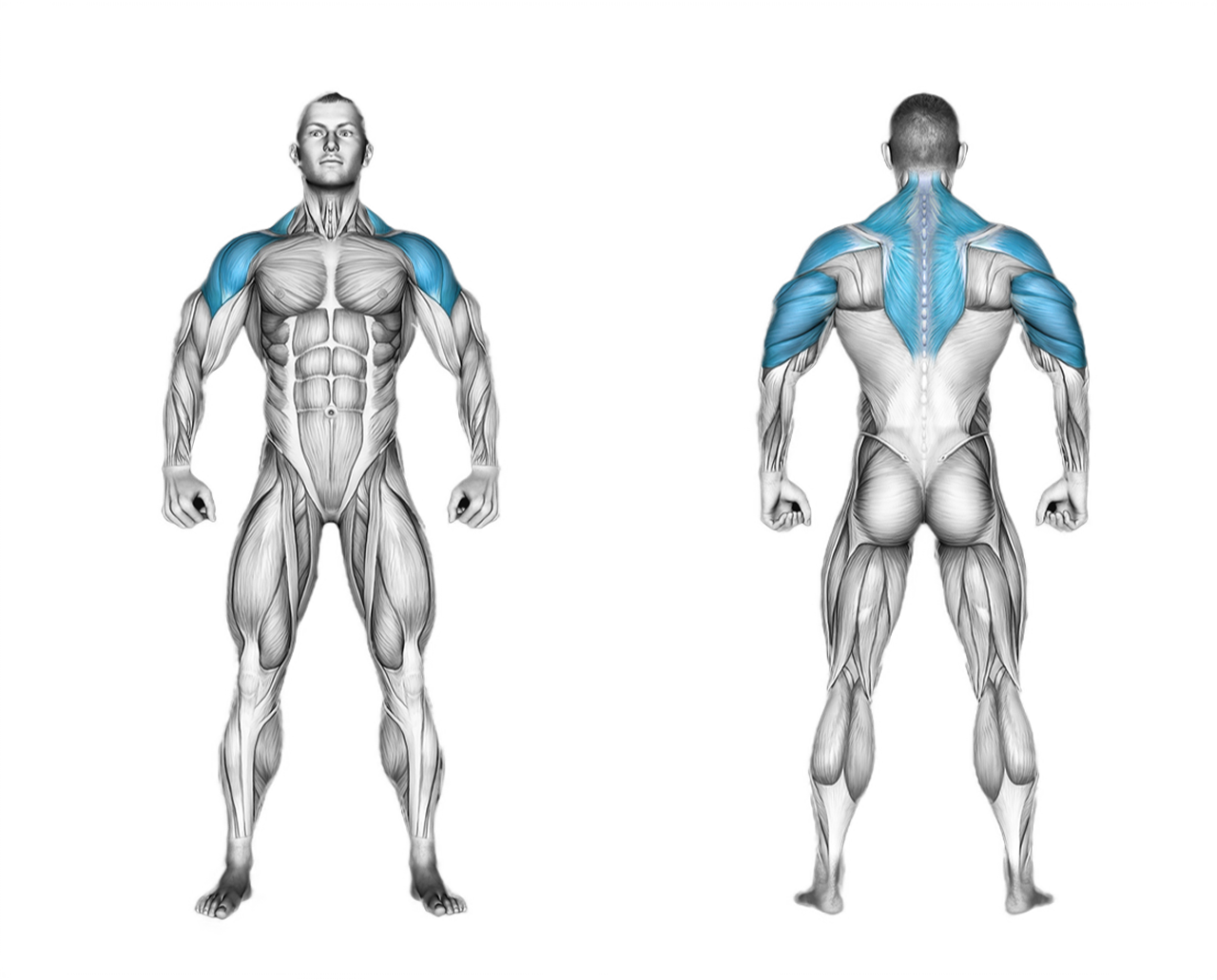
The barbell seated overhead press is a foundational compound exercise targeting the anterior and lateral deltoids, triceps, and upper chest. Seated positioning removes lower-body drive, making it a reliable primary lift for pure upper-body pushing strength and shoulder hypertrophy.
How to do it
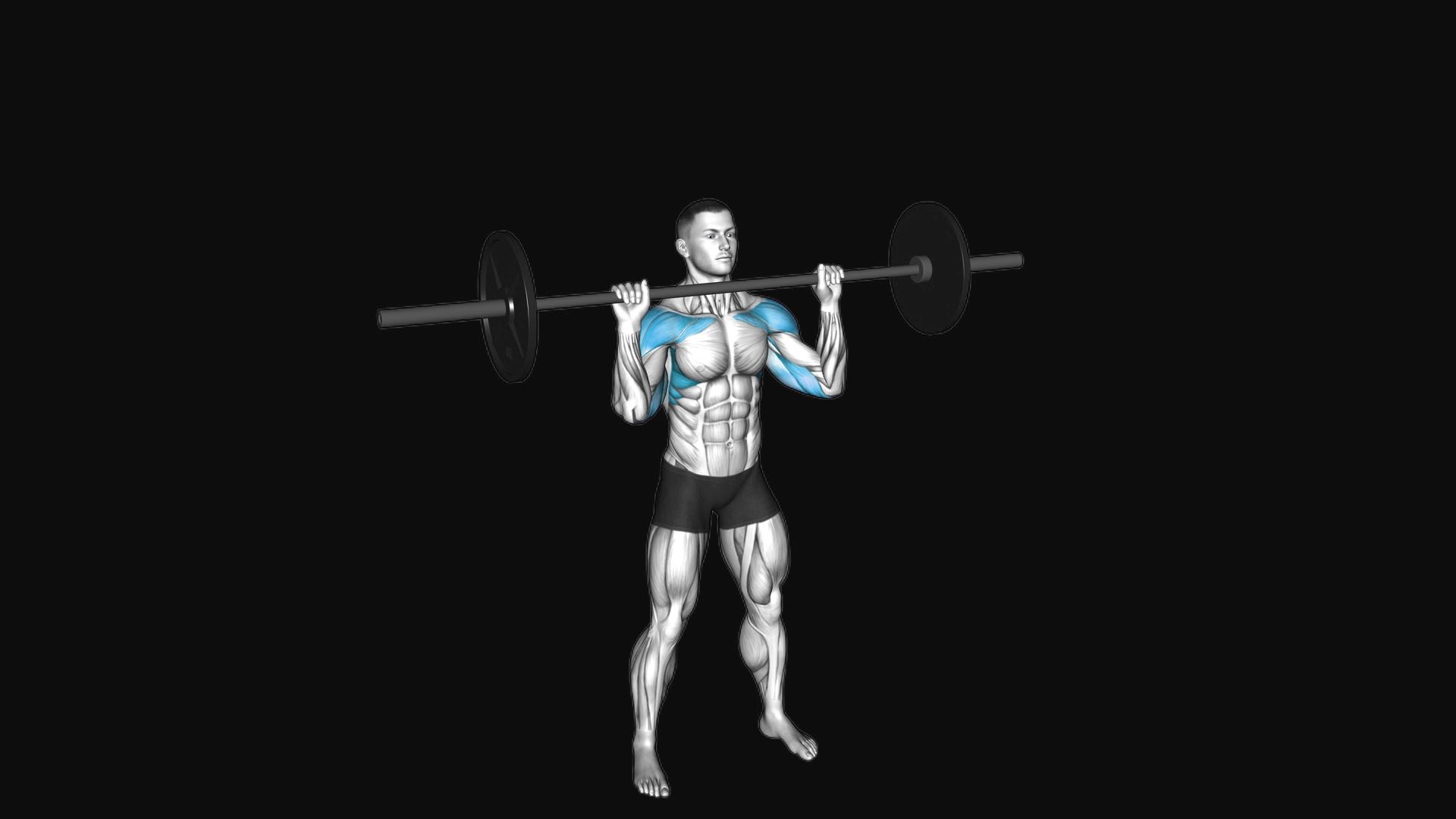
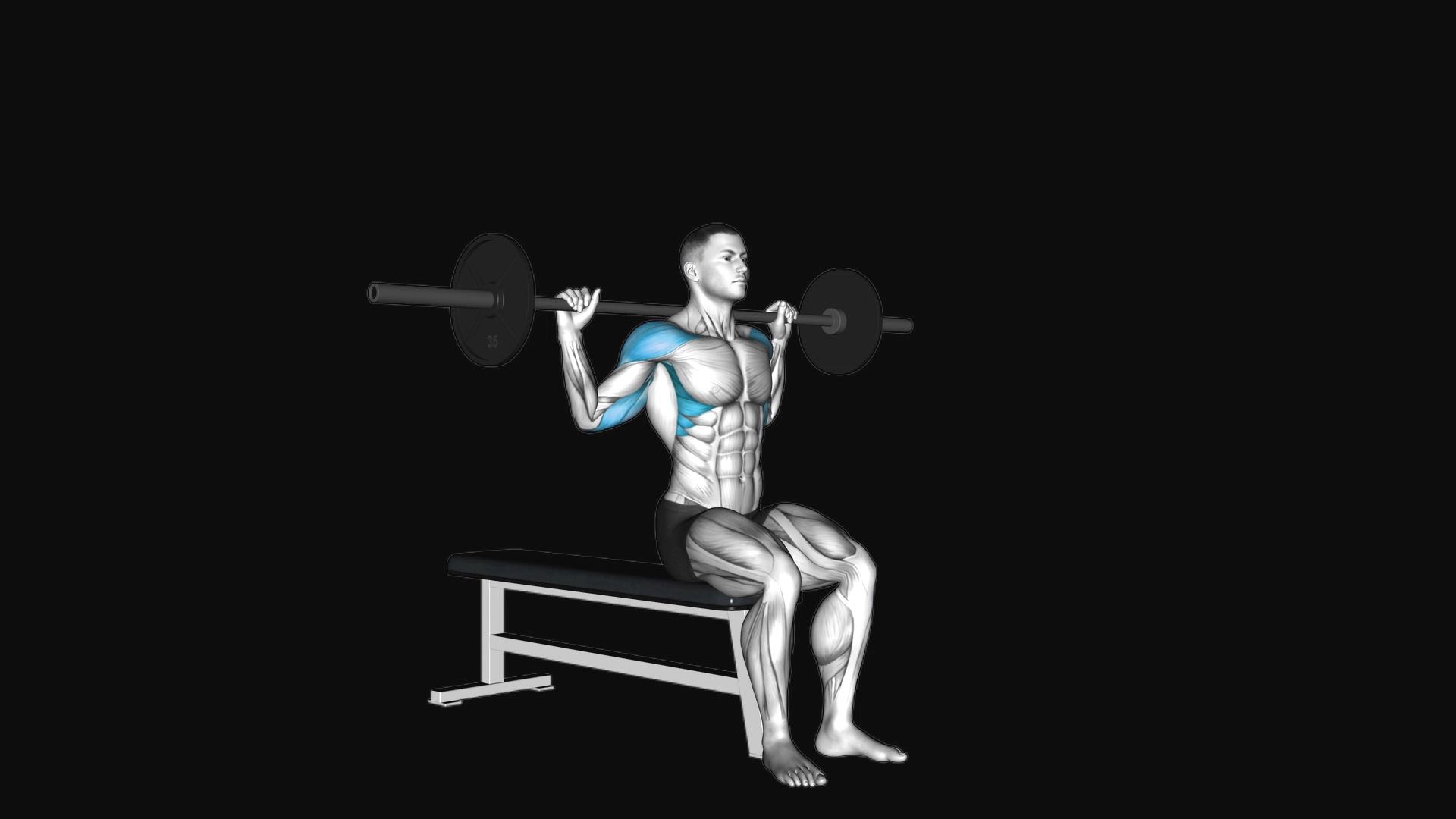
- Sit on a bench, holding a barbell at shoulder height with an overhand grip, hands just outside shoulder-width.
- Plant your feet firmly on the ground and keep your back straight and core engaged.
- Inhale and press the barbell upward, fully extending your arms overhead.
- Keep your head and neck in a neutral position, aligning them with your spine.
- Exhale as you slowly lower the barbell back to shoulder height in a controlled manner.
Common mistakes
- Excessive lower back arching shifts the load to the upper chest and exposes the lumbar spine to unnecessary shear stress.
- Flaring your elbows completely out to the sides increases impingement risk within the subacromial space.
- Bouncing the bar off the upper chest uses momentum instead of muscular control, increasing the risk of sternal and wrist strain.
- Pressing the bar too far forward instead of straight over the crown of the head creates an unfavorable lever arm and strains the shoulders.
Tips
- Keep your forearms vertical and tuck your elbows roughly 30 to 45 degrees in front of your torso throughout the press.
- Set an adjustable bench to a high incline (around 75 to 85 degrees) to allow natural scapular movement without forcing extreme thoracic extension.
- Pull your chin back slightly as the bar passes your face, then push your head back to neutral once the bar clears your forehead.
Sets and reps
For building shoulder mass and pressing strength, perform 3 to 4 sets of 6 to 10 reps with 2 to 3 minutes of rest. If training for absolute strength, use 4 to 5 sets of 3 to 5 reps with up to 3 to 4 minutes of rest between sets.
Muscles worked
Your coach guides every set
Turn on the coach in Gloox: it asks how you feel, picks the weight from your history and cues technique and rest. Rate each set and the next one is tuned to you.

On a computer? Point your phone's camera here to get the app.
Questions
Is the seated press safer for the lower back than the standing press?
Yes, using a supportive bench backrest reduces balance demands and lumbar shear, provided you do not excessively arch your lower back.
Can dumbbells replace the barbell in this exercise?
Dumbbells are an excellent substitute because they allow an independent path of motion for each arm, which can be gentler on cranky shoulders.