Shoulders · Barbell
Barbell Front Raise
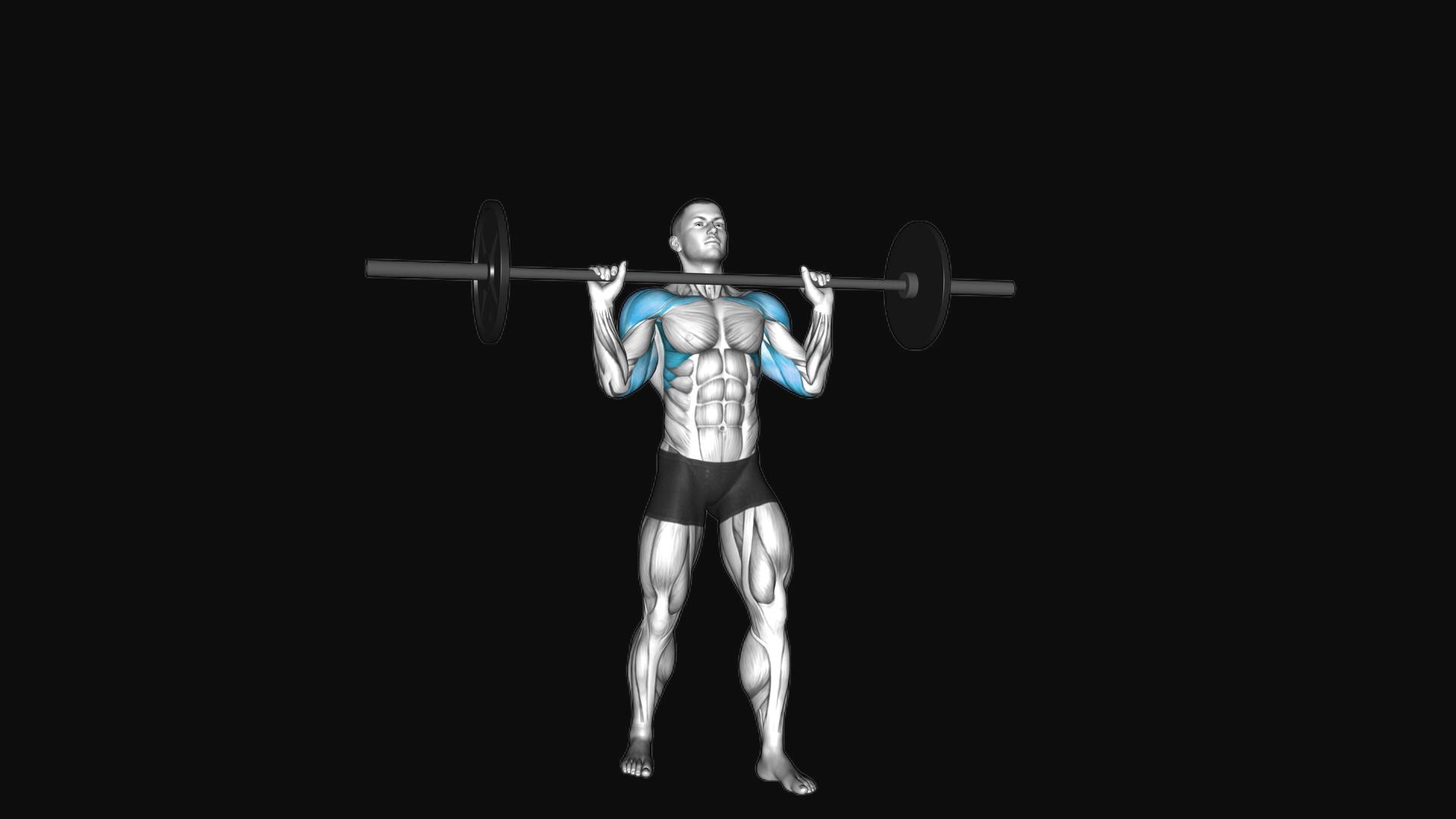
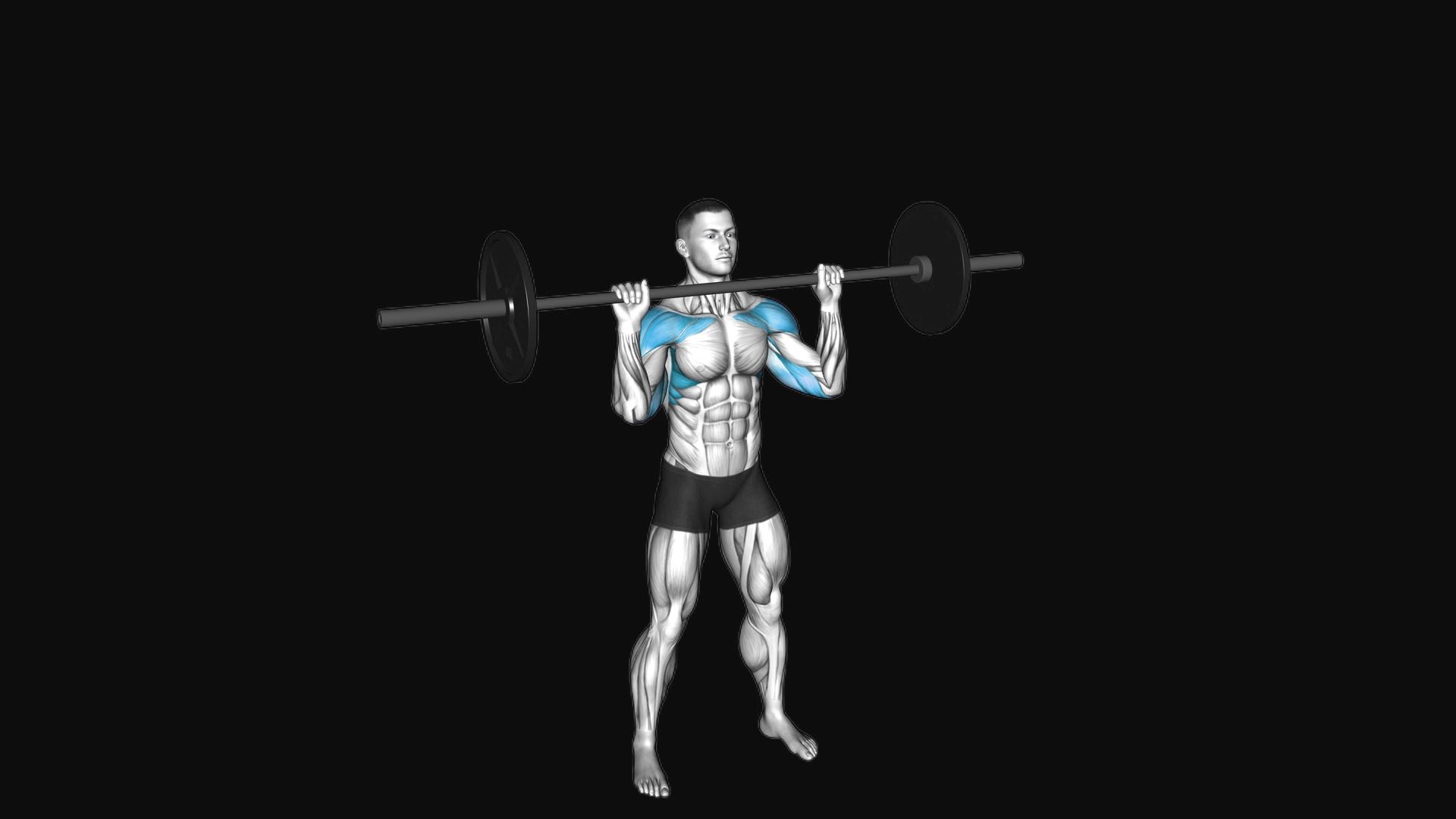
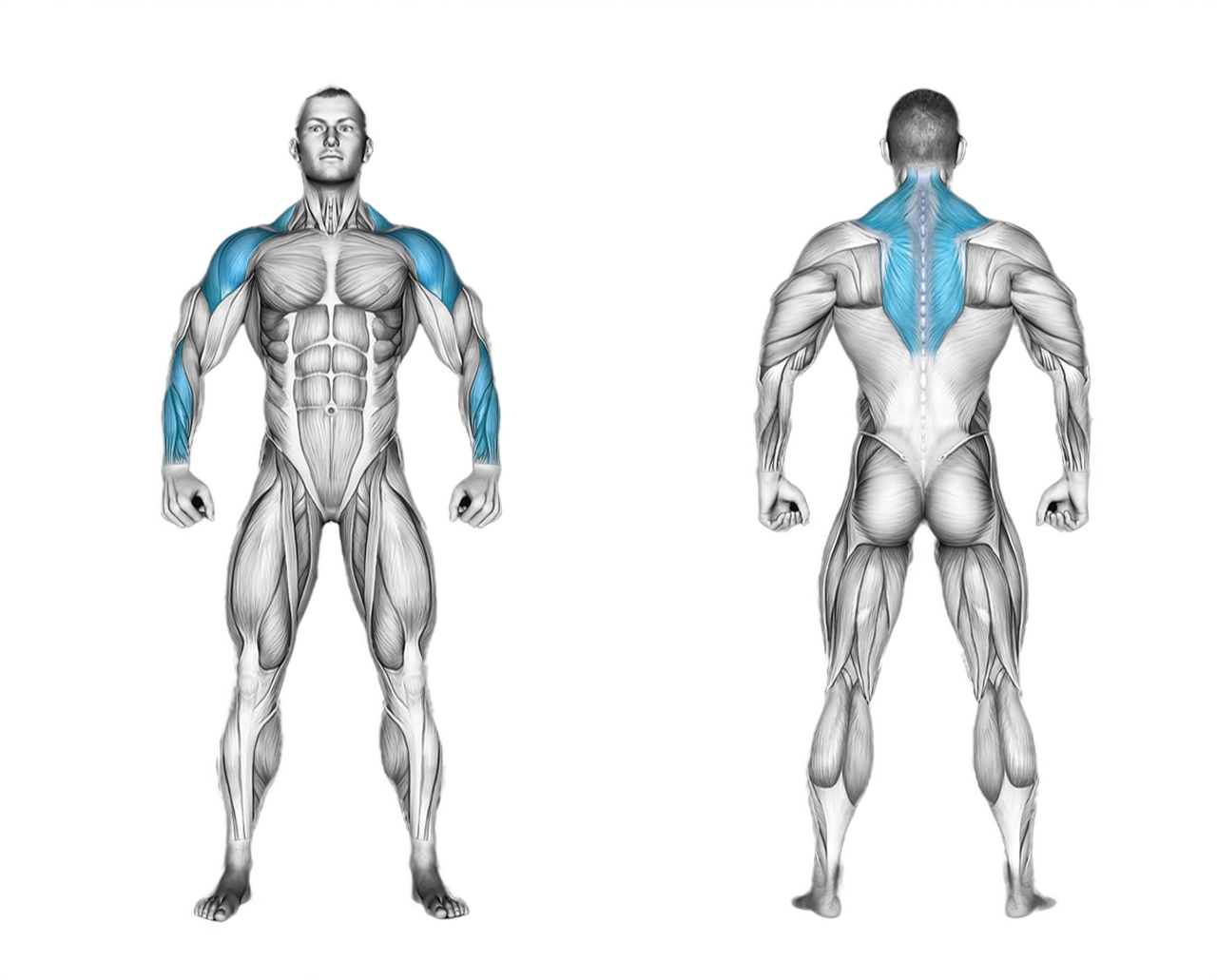
The barbell front raise is an isolation exercise designed to target the anterior deltoids with secondary involvement from the upper chest. It suits lifters of all experience levels and is best placed toward the end of a shoulder or push-day workout after heavy pressing movements.
How to do it
- Stand with your feet shoulder-width apart, holding a barbell in front of your thighs with an overhand grip, hands slightly narrower than shoulder-width.
- Keep your back straight and knees slightly bent.
- Inhale and brace your core. As you exhale, lift the barbell straight up in front of you, keeping your arms extended, until it is at shoulder height.
- Ensure your wrists remain straight and your body is stable during the lift.
- Inhale as you slowly lower the barbell back to the starting position in a controlled manner.
Common mistakes
- Using momentum and swinging the torso backward takes tension away from the shoulders and excessively loads the lower back.
- Lifting the bar significantly above shoulder level shifts the work to the trapezius and increases the risk of shoulder impingement.
- Bending the elbows excessively under too heavy a load turns the movement into an inefficient hybrid pull instead of a deltoid raise.
Tips
- Keep a soft, locked bend in your elbows throughout the set to protect your joints without losing tension on the front delts.
- Squeeze your core and glutes before each repetition to create a stable base and eliminate body sway.
- Lower the bar over a controlled two- to three-second count to maximize the muscle-building benefits of the eccentric phase.
Sets and reps
Perform 3 to 4 sets of 10 to 15 repetitions using a light to moderate weight to prioritize muscular tension over load. Rest for 60 to 90 seconds between sets to allow full recovery of the smaller shoulder stabilizers.
Muscles worked
Your coach guides every set
Turn on the coach in Gloox: it asks how you feel, picks the weight from your history and cues technique and rest. Rate each set and the next one is tuned to you.

On a computer? Point your phone's camera here to get the app.
Questions
Is the barbell front raise necessary if you already do overhead presses and bench presses?
Because compound pressing heavily involves the front delts, this raise is an optional direct isolation tool best used if your anterior deltoids lag behind other heads.
What should you do if you feel pain in the front of the shoulder during the lift?
Stop the exercise immediately, as sharp discomfort can signal impingement or tendon irritation, and consult a qualified healthcare professional.