
Glutes · Resistance bands
Resistance Band Hip Thrusts on Knees
The resistance band hip thrust on knees is an isolation exercise that targets the glutes through active hip extension while challenging the abductors with lateral band tension. It works exceptionally well as a glute activation warm-up or as a high-rep finisher in home and gym lower-body routines.
- Muscles
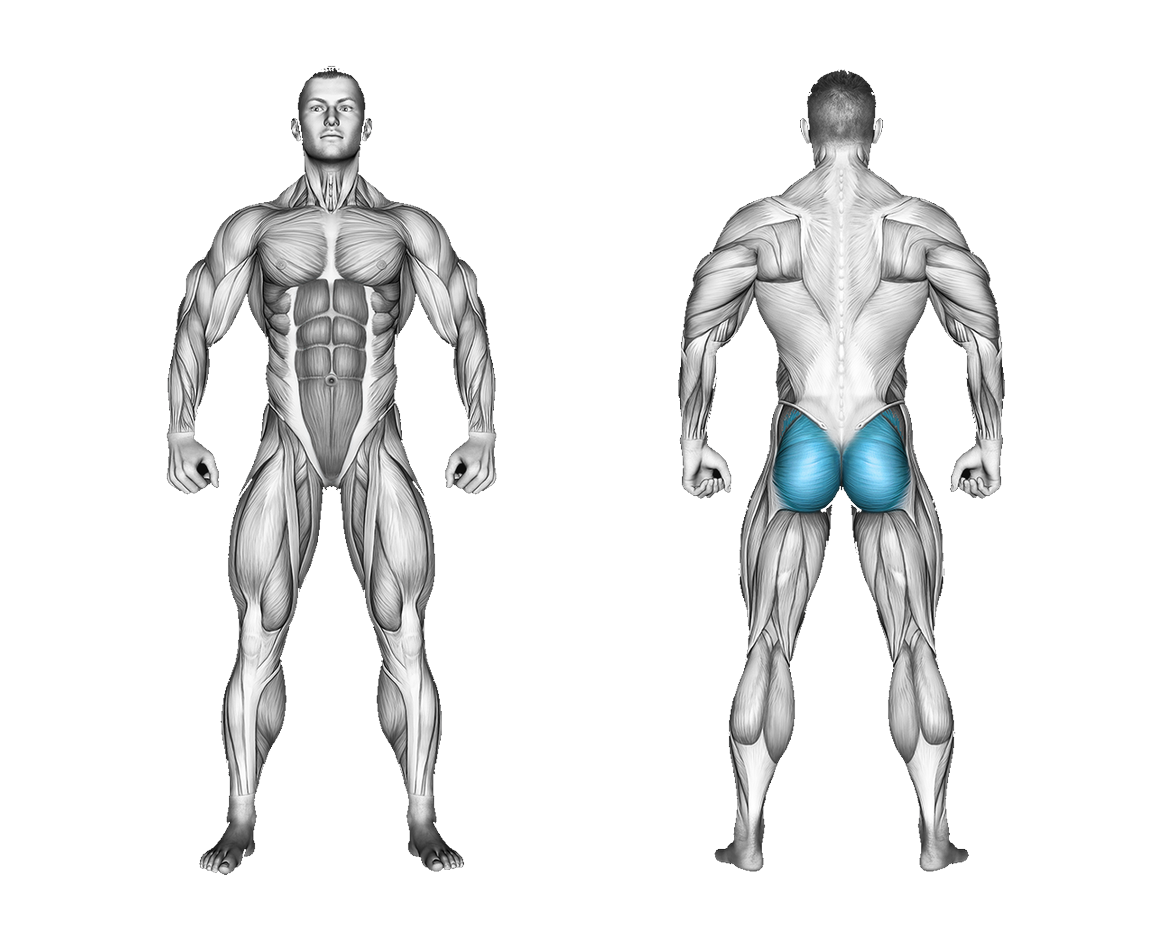
- Glutes
- Equipment
- Resistance bands
- Type
- Strength
- Animation
- Men and women
How to do it
- Kneel on the floor with your knees hip-width apart and loop the band around your thighs just above your knees.
- Sit your hips back toward your heels, keeping your back straight and your hands in front of your chest.
- Inhale and brace your core.
- As you exhale, drive your hips forward and up until your body forms a straight line from knees to shoulders, squeezing your glutes hard at the top.
- Inhale and slowly sit your hips back toward your heels to the starting position.
Common mistakes
- Hyperextending the lower back at the top shifts the workload off the glutes and places unnecessary stress on the lumbar spine.
- Allowing the knees to cave inward reduces band tension and disengages the gluteus medius.
- Rushing through reps using momentum diminishes time under tension and compromises muscle recruitment.
- Failing to drive the hips fully forward prevents a complete lockout and robs the glutes of their peak contraction.
Tips
- Place a folded exercise mat or cushion beneath the knees to eliminate pressure on the joints.
- Actively push outward against the resistance band through the entire range of motion to keep the glutes engaged.
- Hold the lockout for a full second at the top to emphasize peak muscular contraction before sitting back down.
Sets and reps
For glute activation, perform 2–3 sets of 15–20 repetitions with 45–60 seconds of rest. For hypertrophy or endurance work with a heavier band, aim for 3–4 sets of 12–15 slow, controlled reps with 60–90 seconds of rest.
Muscles worked
Your coach guides every set
Turn on the coach in Gloox: it asks how you feel, picks the weight from your history and cues technique and rest. Rate each set and the next one is tuned to you.

On a computer? Point your phone's camera here to get the app.
Questions
Is this movement safe for the lower back?
Yes, provided you brace your core and avoid overarching your lower back at full extension. If you experience any pain, stop immediately and consult a healthcare professional.
Where should the resistance band be placed?
Position the band around the thighs just an inch or two above the kneecaps. This placement maintains optimal tension on the outer hips without irritating the knee joints.
Similar exercises
Resistance Band Lateral WalkResistance bands
Resistance Band Bent Leg Side Kick (kneeling)Resistance bands
Band Seated Hip External RotationResistance bands
Band Hip AbductionResistance bands
Resistance Band Lying AbductionResistance bands
Resistance Band Standing Balance Glute KickbackResistance bands
Resistance Band Standing Balance Hip AbductionResistance bands
Resistance Band Standing Hip AbductionResistance bands