
Glutes · Resistance bands
Resistance Band Standing Balance Hip Abduction
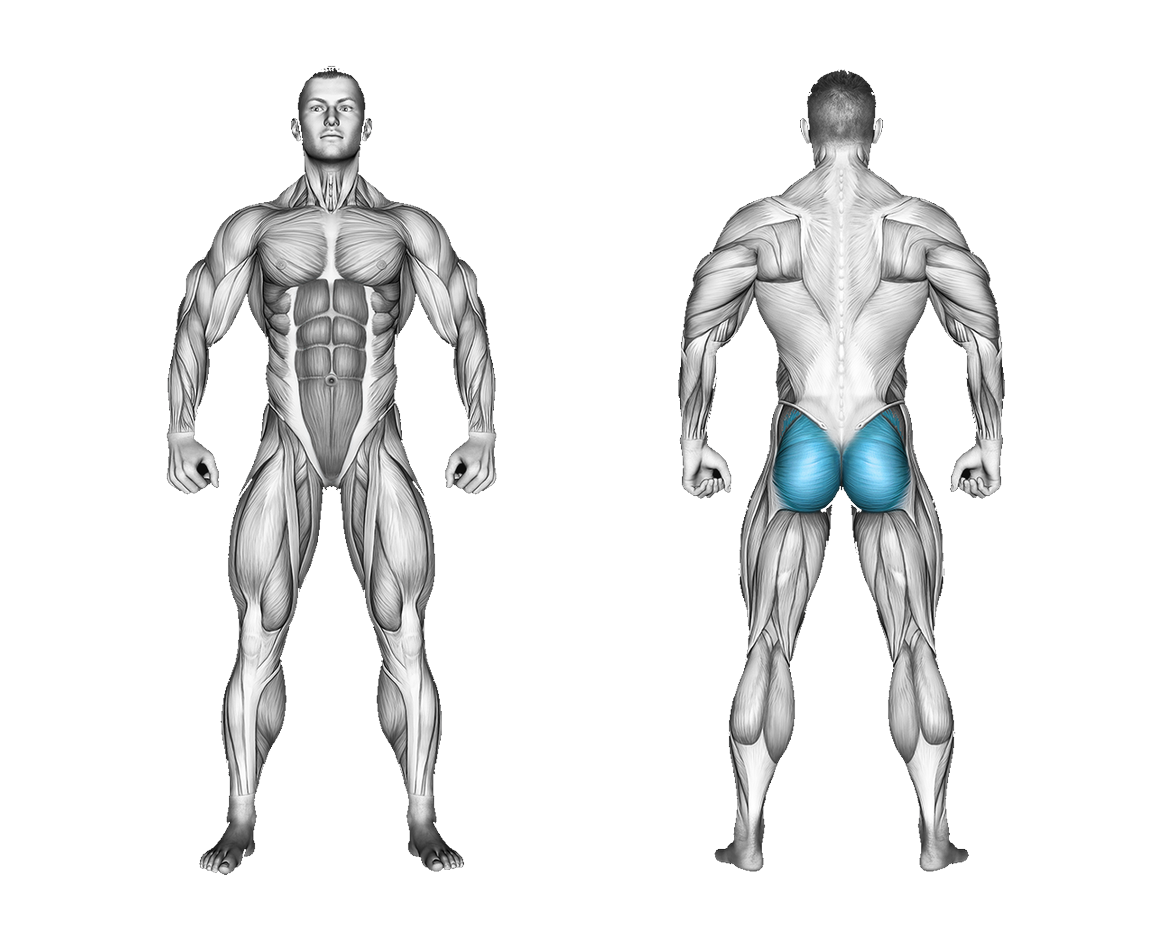
The resistance band standing balance hip abduction is an isolation exercise that targets the gluteus medius and minimus while challenging single-leg stability. It fits well into warm-ups for glute activation or near the end of a lower-body session for hypertrophy and endurance.
- Muscles
- Glutes
- Equipment
- Resistance bands
- Type
- Strength
- Animation
- Men and women
How to do it
- Loop the band around both ankles and stand tall with your feet hip-width apart, hands on your hips or out for balance.
- Shift your weight onto one leg and lift the other foot slightly off the floor.
- Keep your torso upright and your core braced.
- Inhale. As you exhale, raise the lifted leg straight out to the side against the band, keeping your toes pointing forward.
- Inhale and slowly bring the leg back without letting the foot touch the floor, staying balanced on the supporting leg.
- Complete all reps, then switch legs.
Common mistakes
- Leaning the torso excessively to the opposite side reduces tension on the working glute and strains the lower back.
- Rotating the toes outward during the lift shifts the focus away from the abductors toward the hip flexors.
- Snapping the leg back uncontrolled robs the glutes of eccentric tension and compromises your balance.
- Resting the foot on the floor between reps eliminates continuous tension on both the moving and stabilizing hips.
Tips
- Keep a slight, soft bend in the standing knee to protect the joint and engage your stabilizing muscles.
- Point your active foot slightly inward or straight ahead to keep direct tension on the side of your hip.
- Fix your gaze on a stationary point at eye level to help maintain equilibrium throughout the set.
Sets and reps
Perform 3–4 sets of 15–20 controlled reps per leg with 45–60 seconds of rest between sides to target muscular endurance and activation.
Muscles worked
Your coach guides every set
Turn on the coach in Gloox: it asks how you feel, picks the weight from your history and cues technique and rest. Rate each set and the next one is tuned to you.

On a computer? Point your phone's camera here to get the app.
Questions
Why does the standing leg burn more than the moving leg?
The supporting hip works isometrically under your full body weight to stabilize the pelvis against the pull of the band. This is completely normal and helps build functional hip stability.
Where should the resistance band be placed?
Placing the band around your ankles creates the longest lever arm and highest resistance, while placing it just above your knees makes balancing easier. Start above the knees if you struggle with balance and move the band lower as you progress.
Similar exercises
Resistance Band Lateral WalkResistance bands
Resistance Band Bent Leg Side Kick (kneeling)Resistance bands
Band Seated Hip External RotationResistance bands
Band Hip AbductionResistance bands
Resistance Band Lying AbductionResistance bands
Resistance Band Standing Balance Glute KickbackResistance bands
Resistance Band Standing Hip AbductionResistance bands
Resistance Band Bent Leg Kickback (Kneeling)Resistance bands