
Glutes · Resistance bands
Resistance Band Standing Hip Abduction
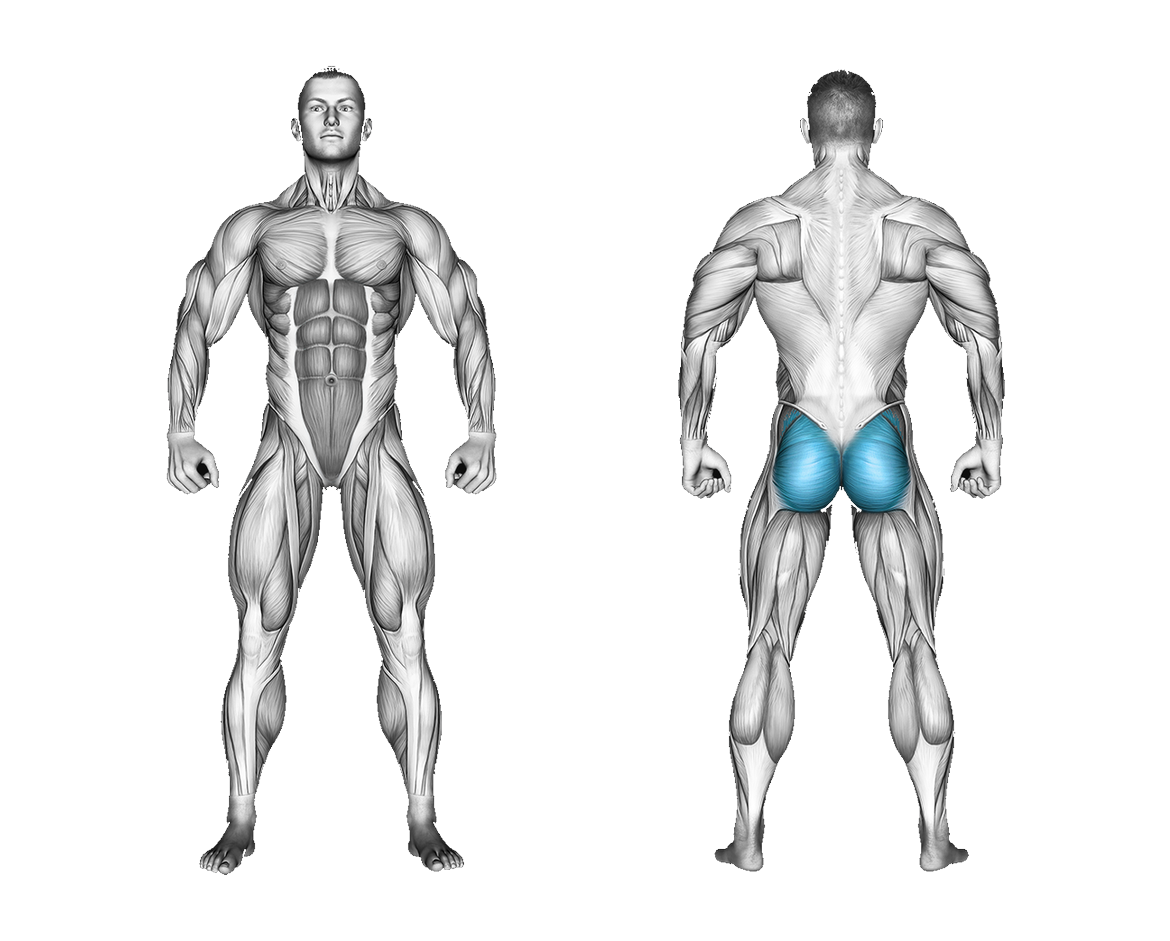
The resistance band standing hip abduction is an isolation movement targeting the gluteus medius and minimus while challenging the stabilizers of the support hip. It suits lifters of all experience levels and functions well as an activation warm-up or a high-rep lower-body finisher.
- Muscles
- Glutes
- Equipment
- Resistance bands
- Type
- Strength
- Animation
- Men and women
How to do it
- Loop the band around both ankles and stand with your feet hip-width apart so the band is lightly taut.
- Hold onto a wall or sturdy support with one hand for balance and brace your core.
- Shift your weight onto your left leg and keep your torso upright.
- Inhale, then as you exhale, lift your right leg straight out to the side as far as possible, keeping the knee straight and toes pointing forward.
- Inhale and slowly bring your leg back to the starting position without letting the band go slack.
- Complete all reps, then switch legs.
Common mistakes
- Leaning your torso sideways toward the support arm reduces tension on the targeted glute and loads the lower back.
- Rotating the moving foot outwards shifts the tension away from the gluteus medius toward the hip flexors.
- Letting the band snap your leg back quickly removes time under tension and increases the risk of losing balance.
Tips
- Keep the toes of your working leg pointed straight ahead or slightly inward to maximize lateral glute recruitment.
- Maintain a soft bend in the knee of your standing leg to stabilize your pelvis throughout the set.
- Move the band higher up above the knees if placing it around the ankles feels too unstable or difficult to control.
Sets and reps
For glute activation, hypertrophy, and muscular endurance, perform 2 to 4 sets of 15 to 25 repetitions per leg. Keep rest periods short, between 30 and 60 seconds.
Muscles worked
Your coach guides every set
Turn on the coach in Gloox: it asks how you feel, picks the weight from your history and cues technique and rest. Rate each set and the next one is tuned to you.

On a computer? Point your phone's camera here to get the app.
Questions
Why does the stationary leg burn more than the moving one?
The standing leg's hip stabilizers must fire isometrically to keep your pelvis level against band tension, which frequently induces more localized fatigue than the moving leg.
Can this exercise replace heavy compound glute lifts?
No, it is an isolation movement designed to strengthen lateral hip stabilizers and shape the outer glutes, best used to complement compound lifts like squats and deadlifts.
Similar exercises
Resistance Band Lateral WalkResistance bands
Resistance Band Bent Leg Side Kick (kneeling)Resistance bands
Band Seated Hip External RotationResistance bands
Band Hip AbductionResistance bands
Resistance Band Lying AbductionResistance bands
Resistance Band Standing Balance Glute KickbackResistance bands
Resistance Band Standing Balance Hip AbductionResistance bands
Resistance Band Bent Leg Kickback (Kneeling)Resistance bands