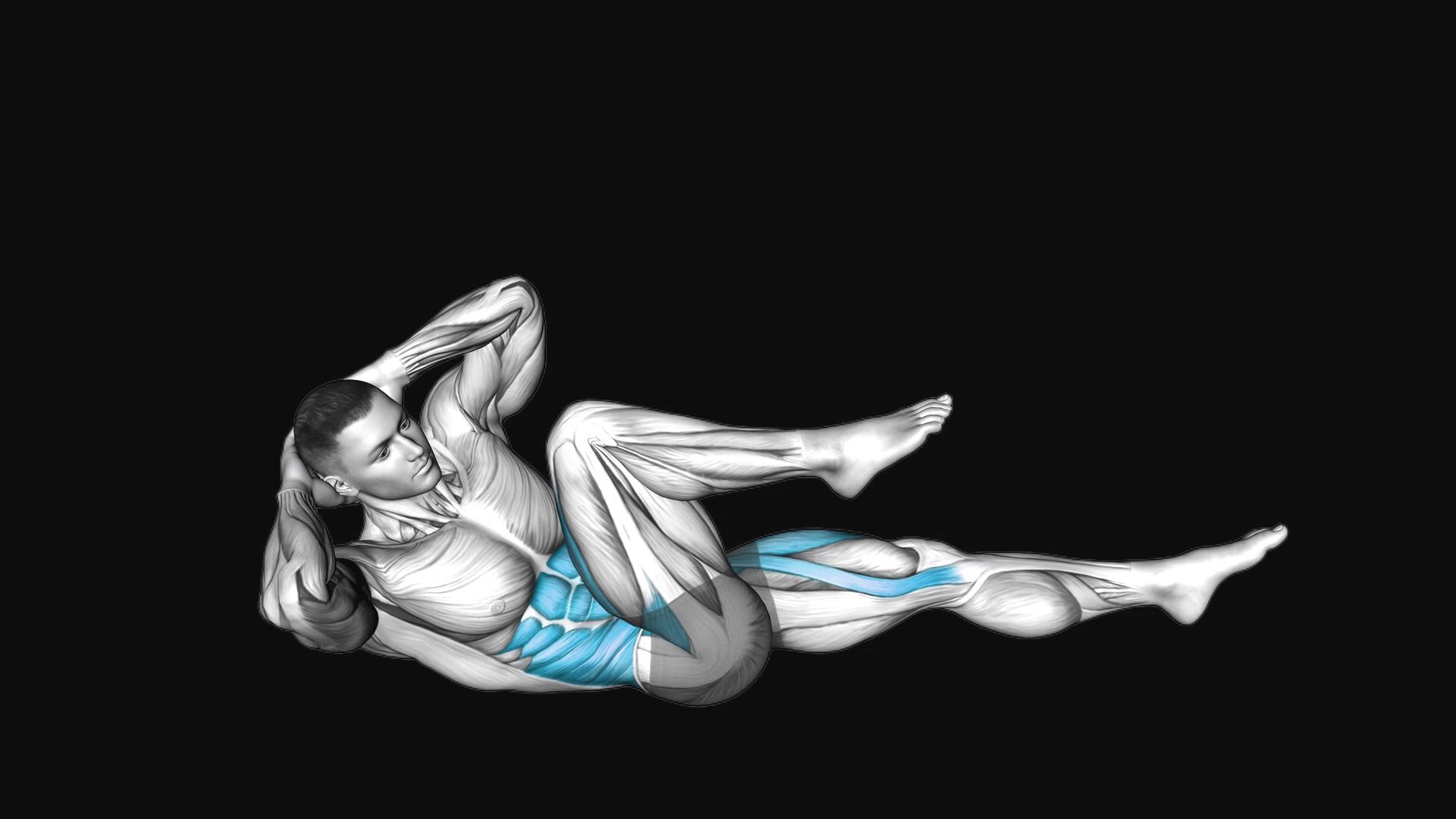
Abs · Dumbbells
Dumbbell Russian Twist
The dumbbell Russian twist is a seated rotational core exercise that builds stability and muscular endurance. It targets the obliques, rectus abdominis, and deep spinal stabilizers, making it a practical addition to the end of a strength workout or a dedicated core circuit.
- Muscles
- Abs
- Equipment
- Dumbbells
- Type
- Strength
- Animation
- Men
How to do it
- Sit on the floor with your knees bent, holding a dumbbell with both hands.
- Lean back slightly to engage your core, lifting your feet off the ground.
- Keep your back straight and core tight.
- Rotate the dumbbell from side to side, touching the ground beside your hips.
- Maintain control throughout the twisting motion.
Common mistakes
- Moving only the arms across the body rather than rotating the ribcage reduces engagement of the obliques.
- Rounding the lower back instead of maintaining a neutral spine places excessive stress on the lumbar vertebrae.
- Using momentum and swinging the weight too quickly eliminates continuous muscular tension.
- Excessive leg flailing compromises pelvic stability and shifts the workload away from the core.
Tips
- Track the dumbbell with your eyes and chest to ensure full thoracic rotation.
- Keep your heels lightly resting on the floor if elevating your feet causes lower back discomfort or loss of balance.
- Hold the dumbbell close to your torso initially, extending the arms further out only as core control improves.
Sets and reps
Perform 3–4 sets of 16–24 total repetitions (8–12 per side) with 45–60 seconds of rest between sets to build core endurance and control.
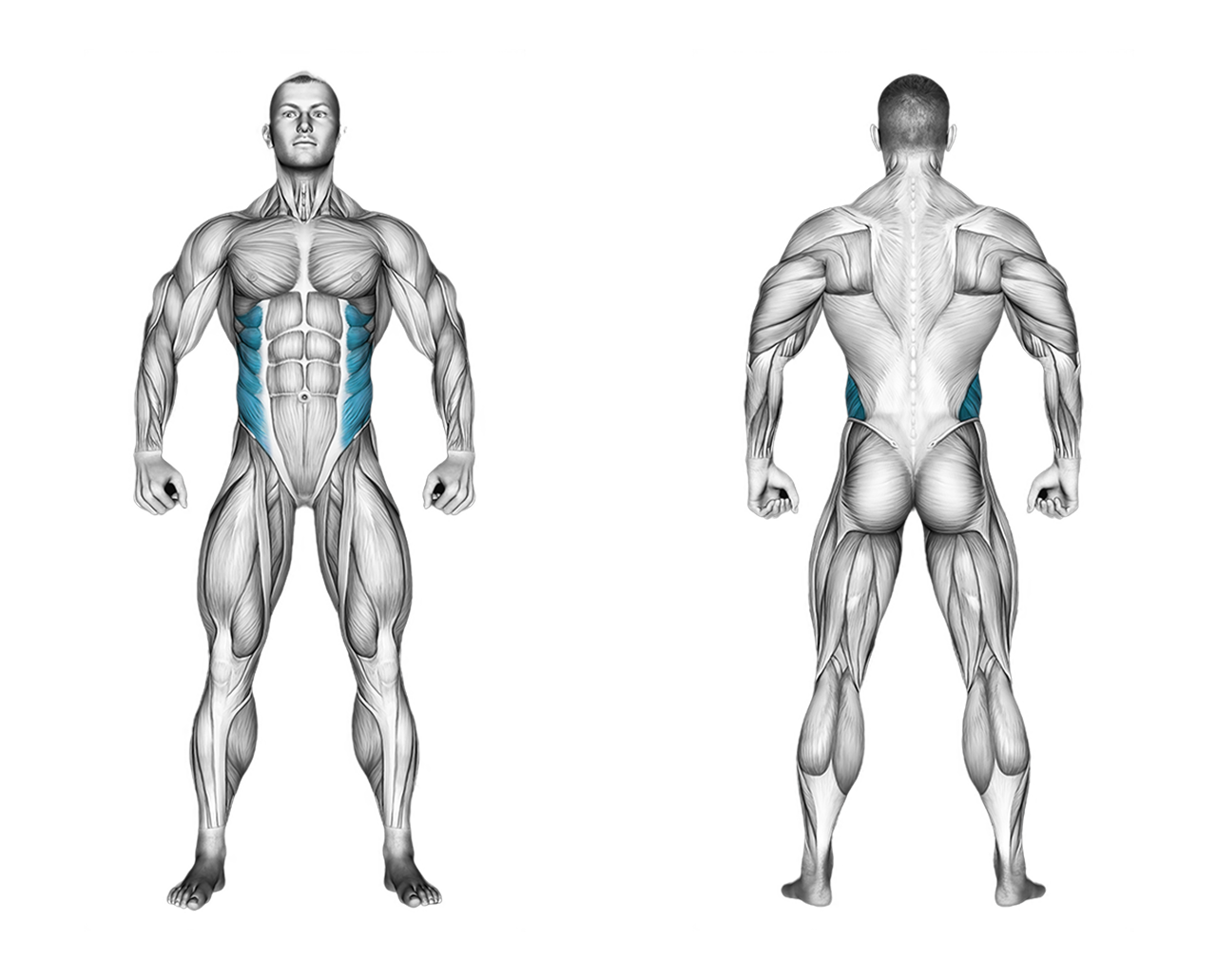
Muscles worked
Your coach guides every set
Turn on the coach in Gloox: it asks how you feel, picks the weight from your history and cues technique and rest. Rate each set and the next one is tuned to you.

On a computer? Point your phone's camera here to get the app.
Questions
Are Russian twists safe for the lower back?
Combining spinal flexion with rotation can irritate the lumbar spine; if you experience pain, stop immediately and consult a healthcare professional.
Which muscles are worked the most during this exercise?
The internal and external obliques drive the rotation, while the rectus abdominis and hip flexors work isometrically to maintain the seated torso angle.