Chest · Cable machine
Cable Seated Chest Fly
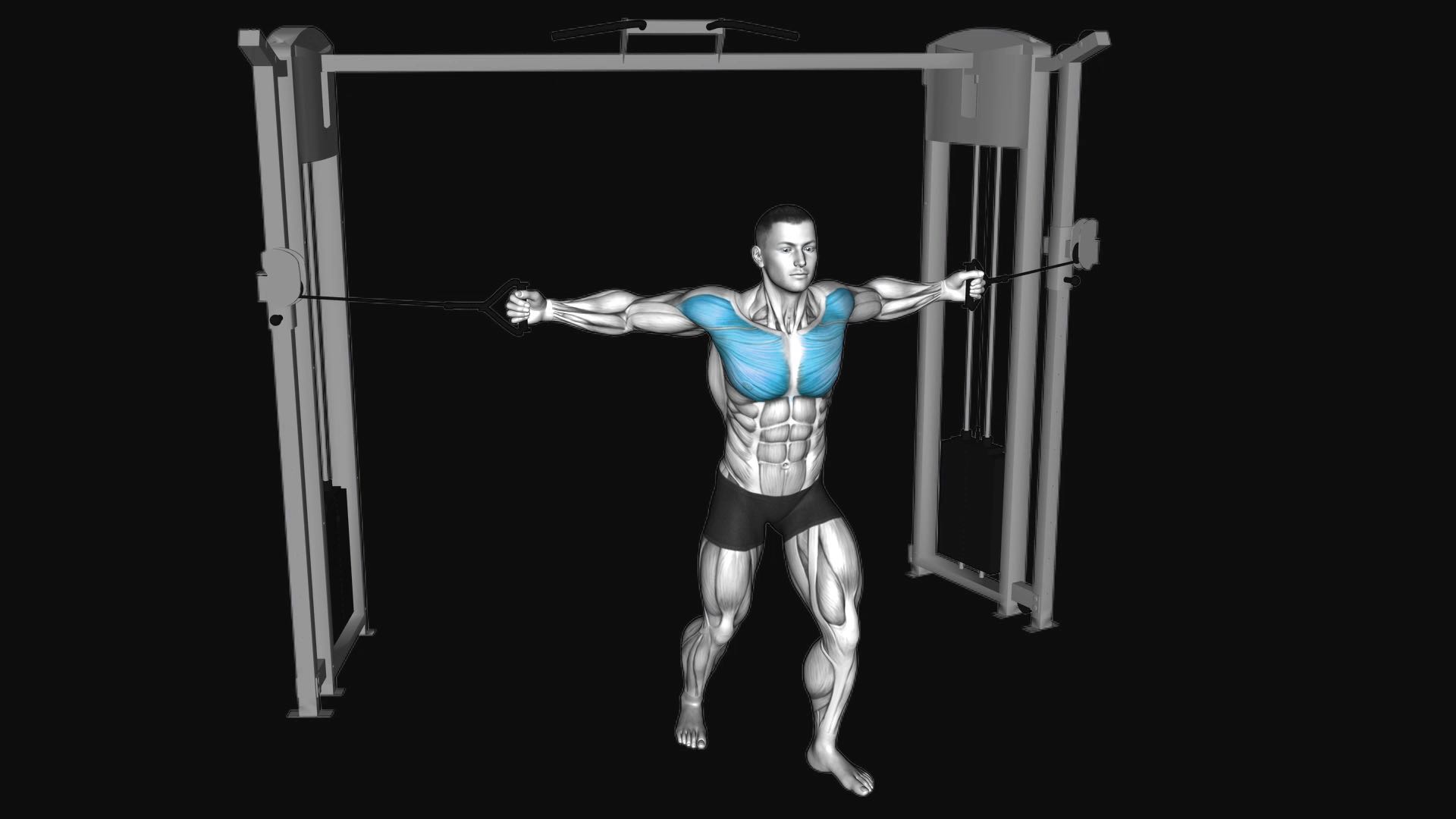
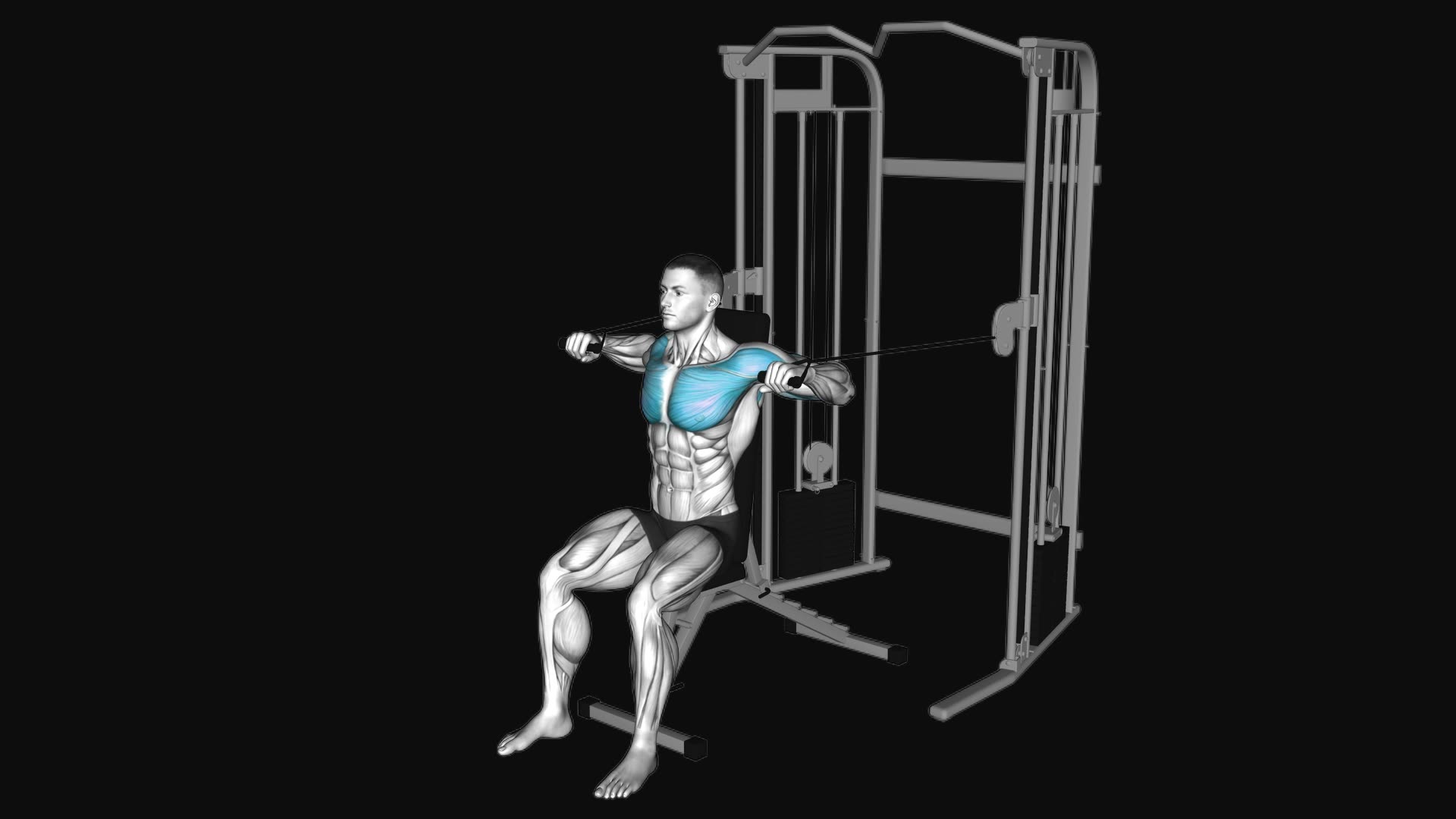
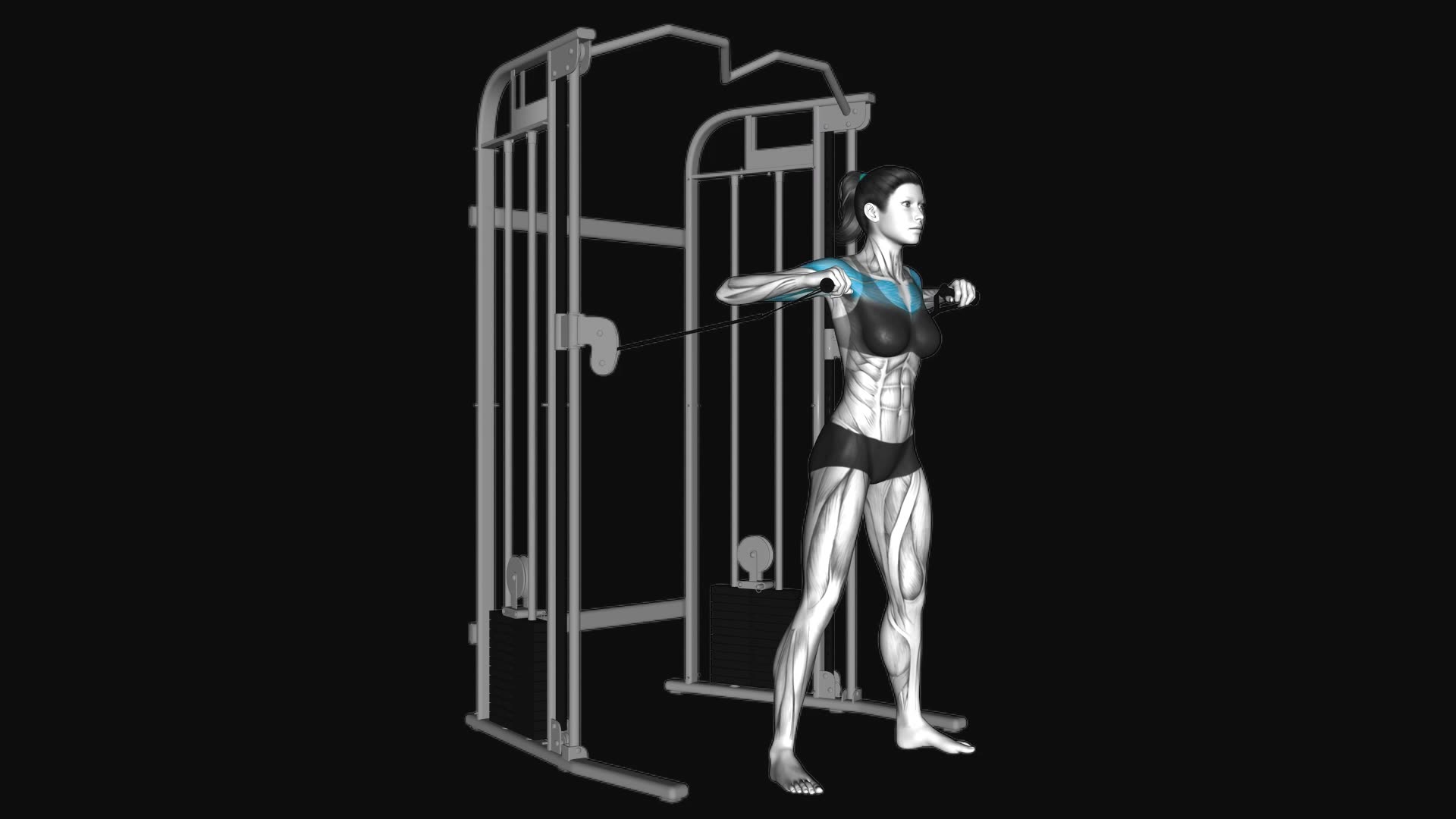
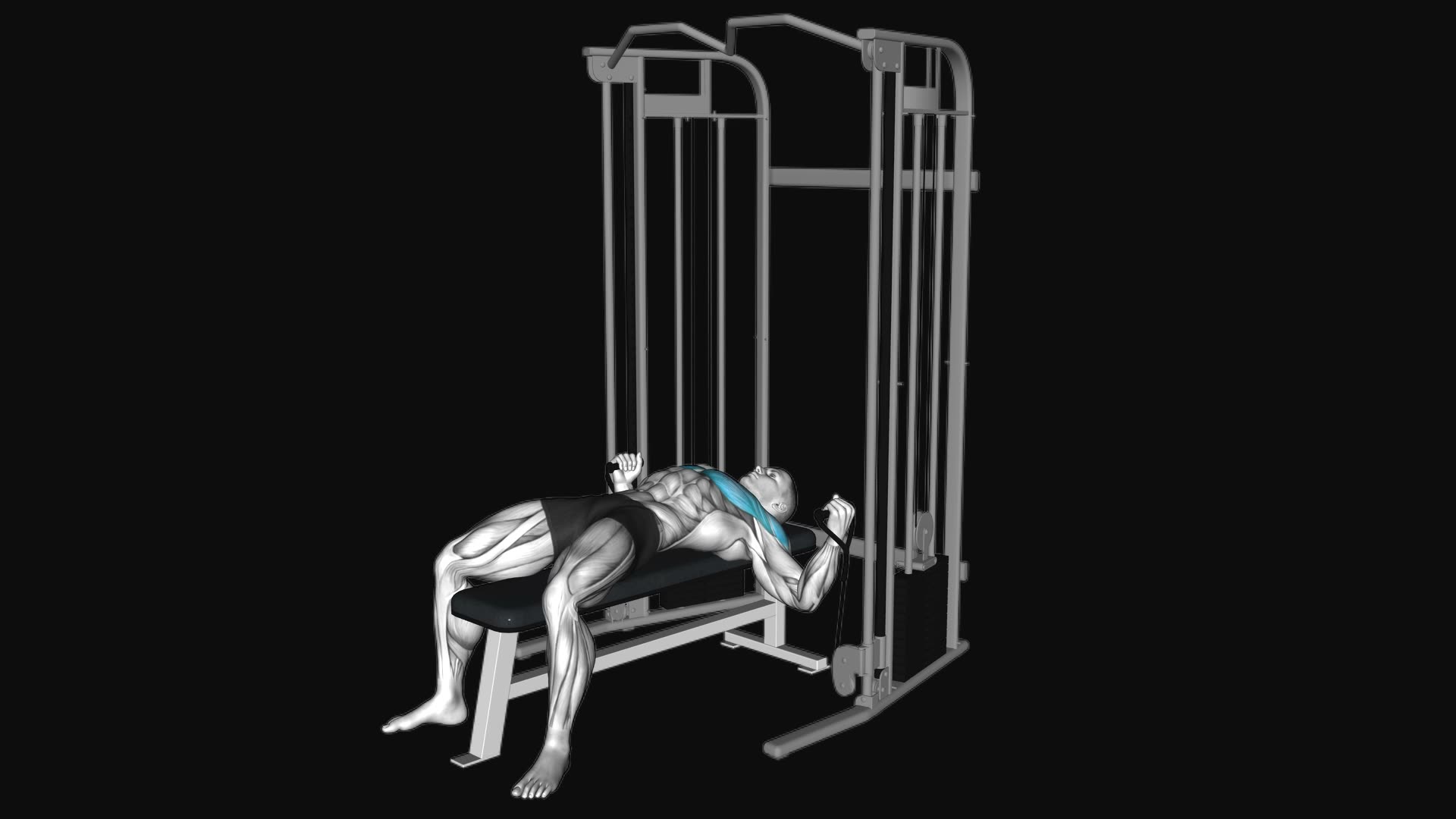
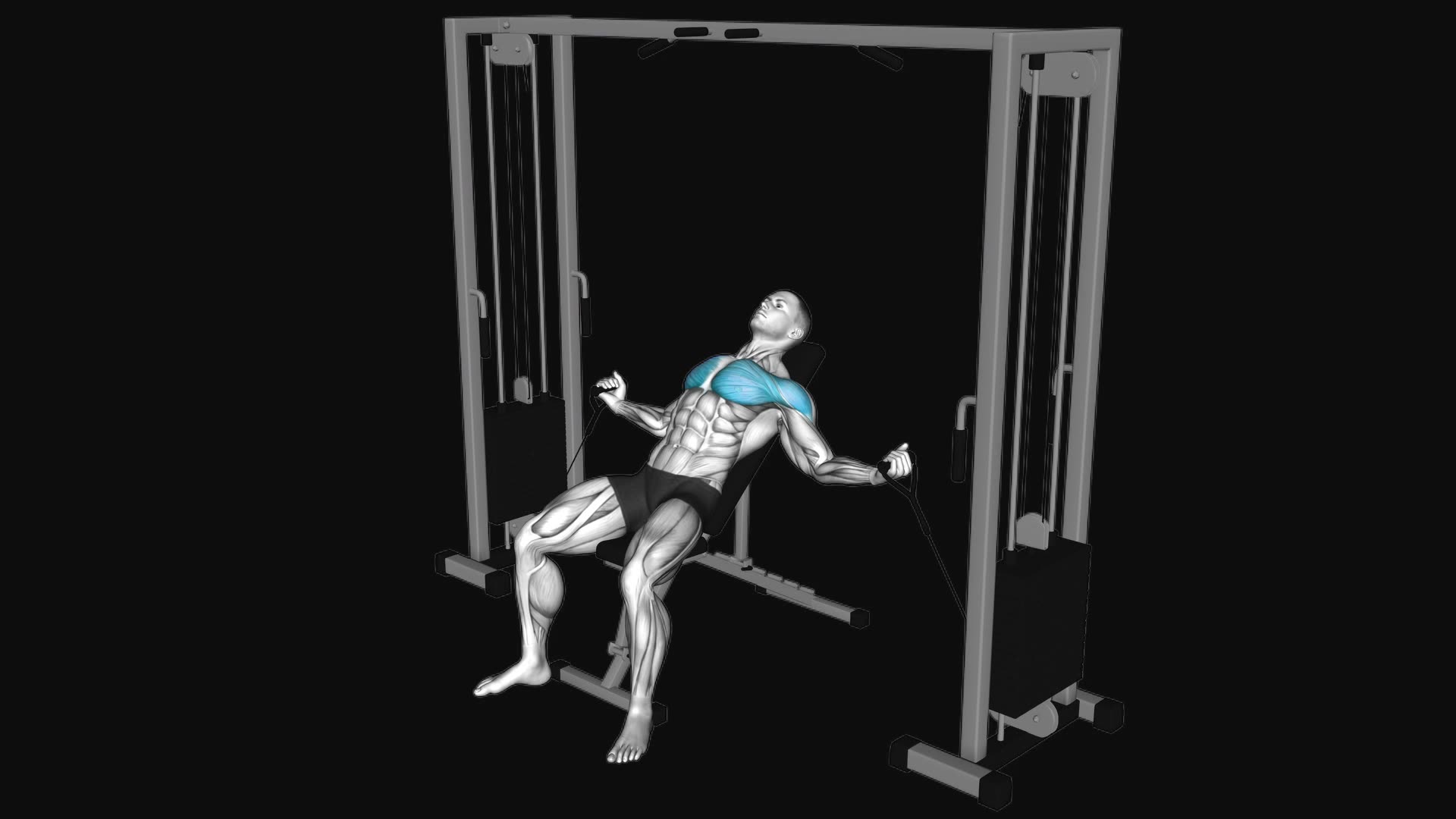
The cable seated chest fly is an isolation exercise designed to target the pectoral muscles while stabilizing the torso against a bench. It maintains continuous mechanical tension throughout the movement, making it an effective accessory or finishing exercise in a chest workout.
- Muscles
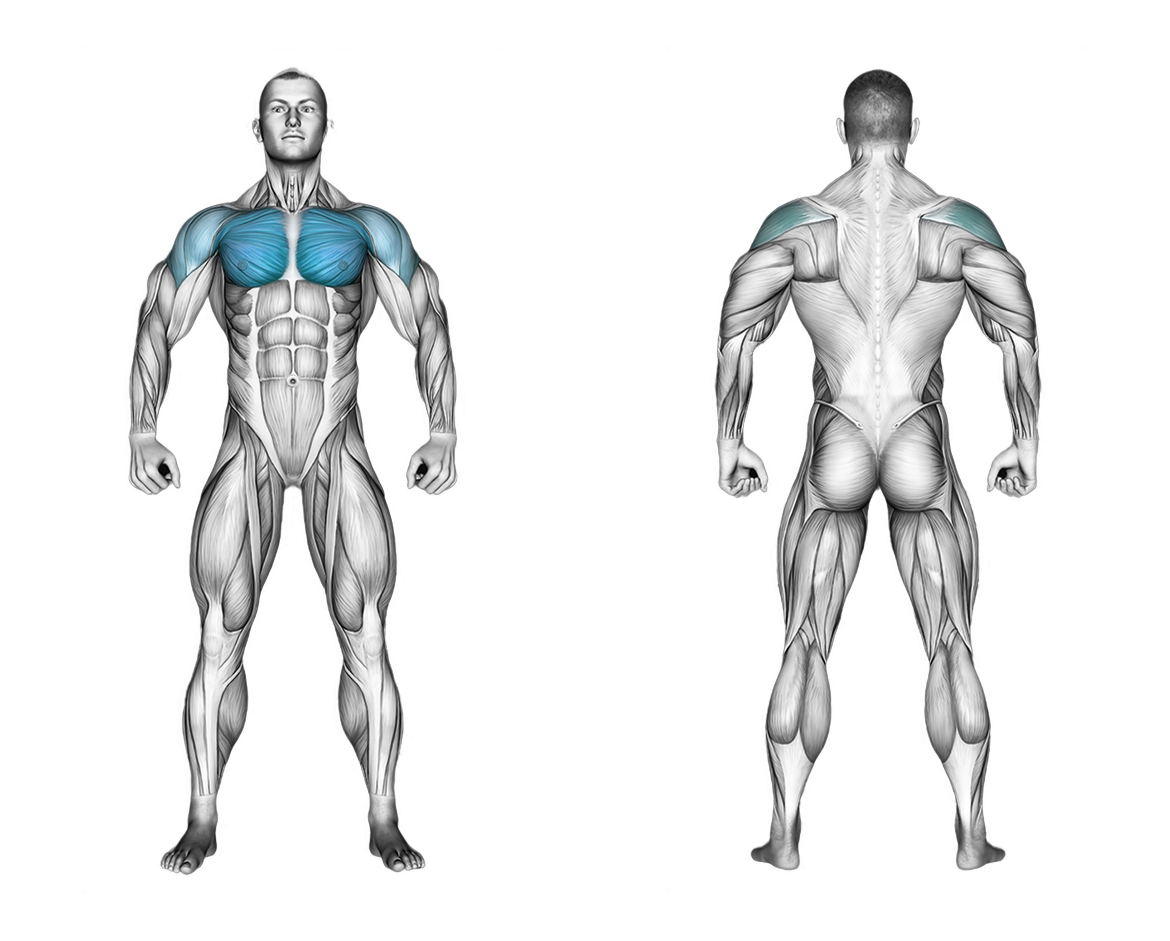
- Chest
- Equipment
- Cable machine
- Type
- Strength
- Animation
- Men and women
How to do it
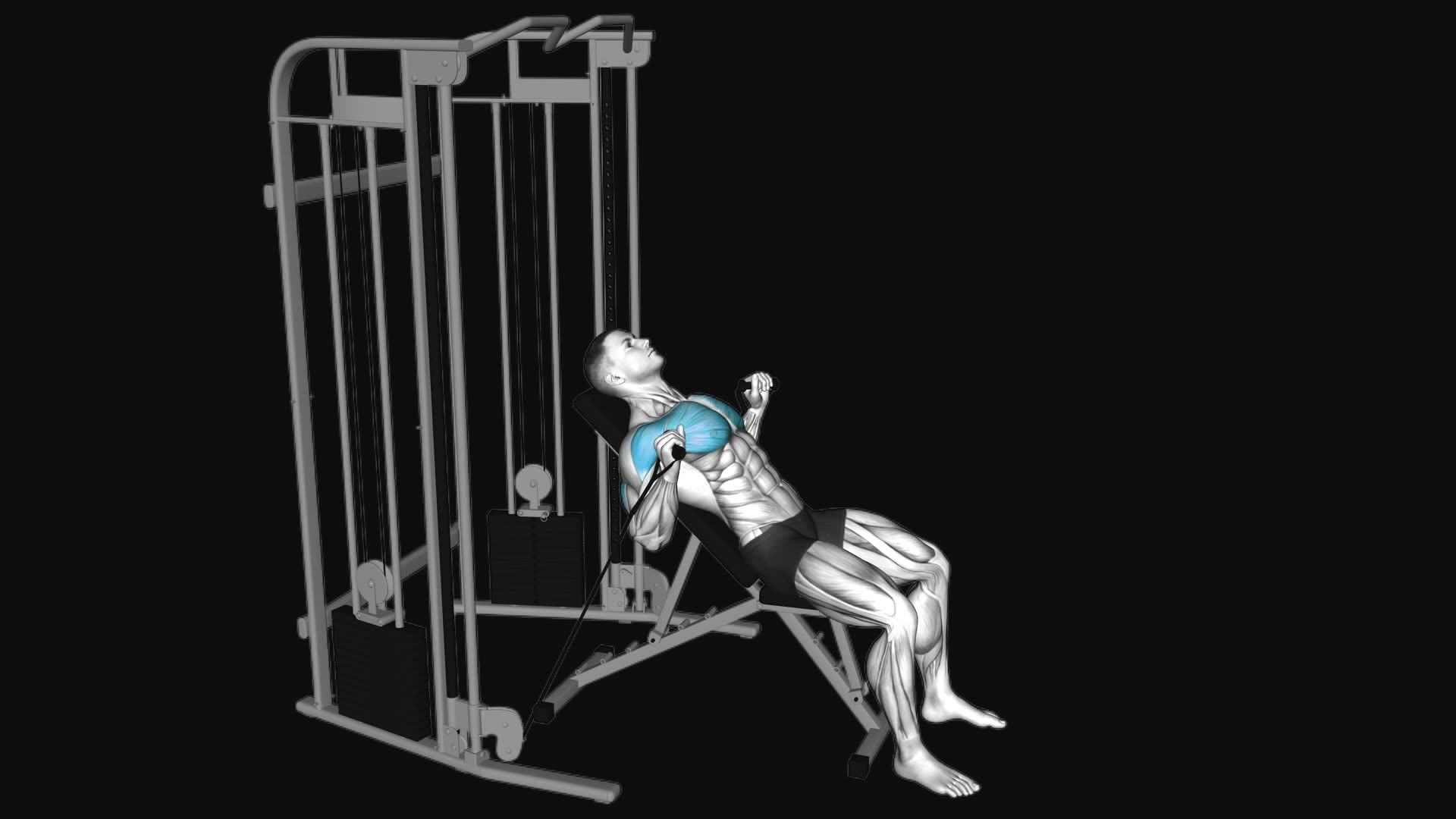
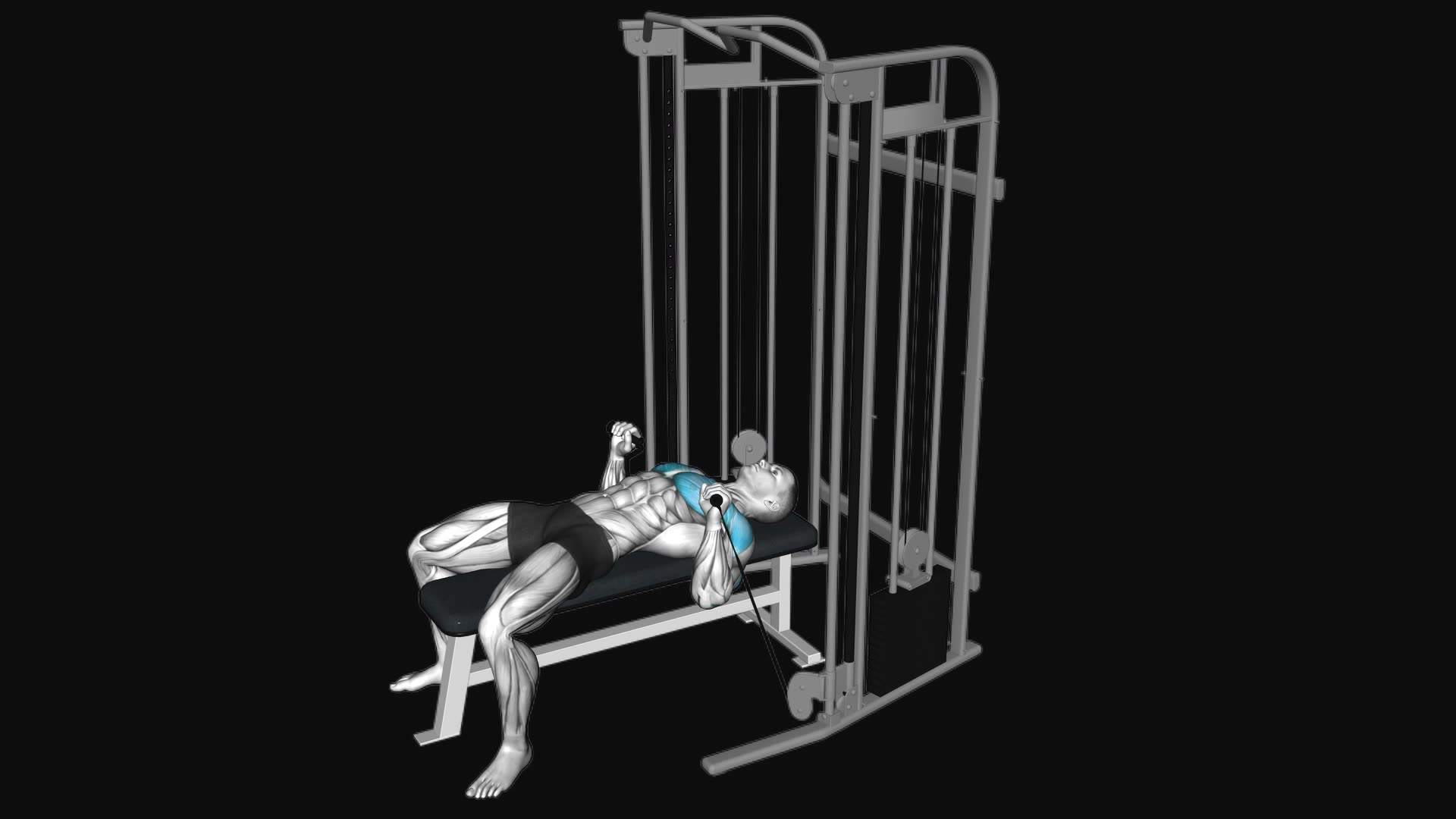
- Sit on a bench positioned between two cable pulleys set at chest height.
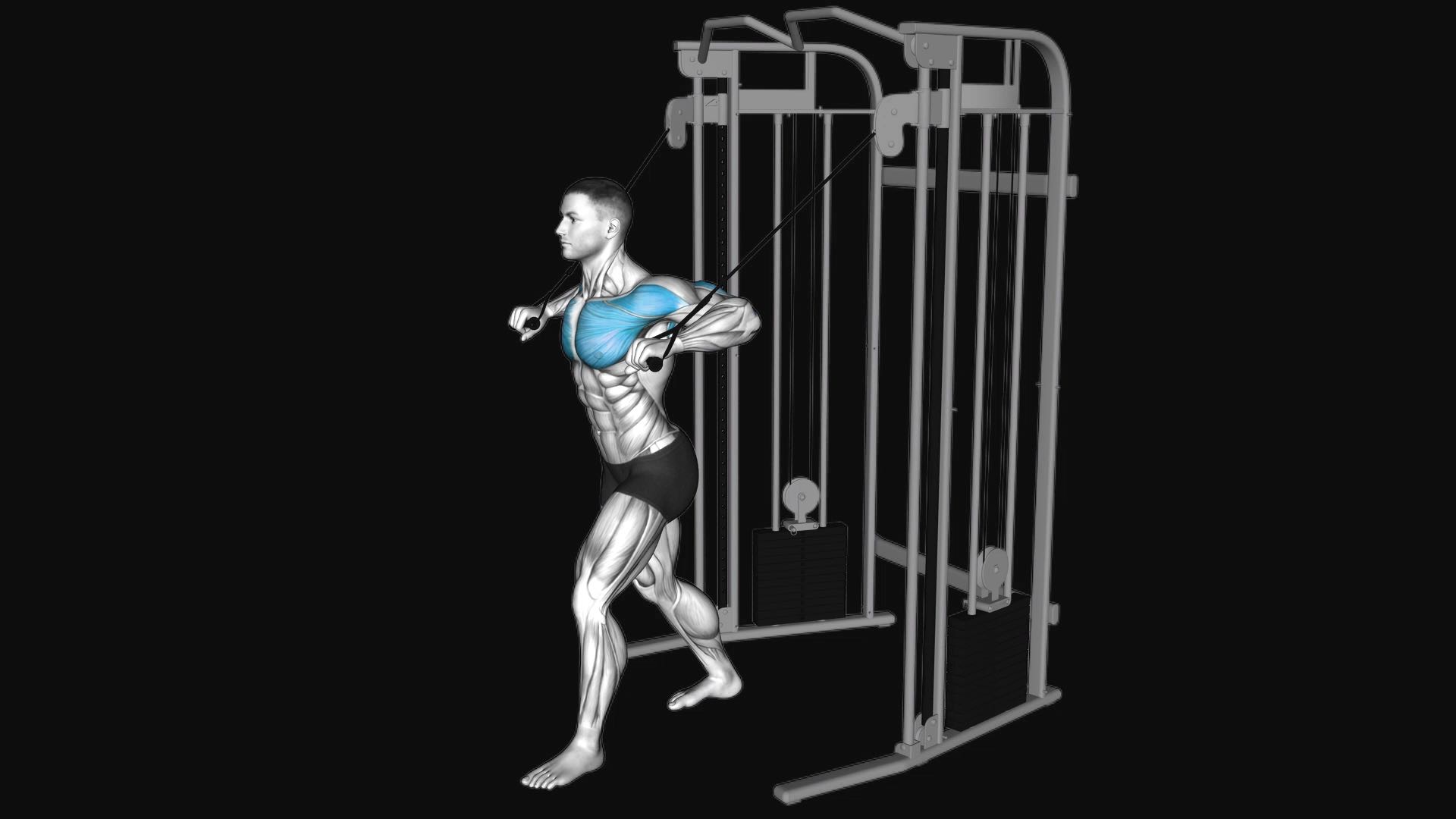
- Grab the cable handles and bring them together in front of your chest with a slight bend in your elbows.
- Squeeze your chest at the center.
- Open your arms back out to the sides in an arc motion until you feel a stretch in your chest.
- Bring the handles back together.
Common mistakes
- Locking out the elbows shifts stress onto the elbow joints and biceps tendons rather than keeping tension on the chest.
- Bending the arms excessively and turning the fly into a press reduces chest isolation and lowers the effectiveness of the exercise.
- Allowing the shoulders to roll forward off the bench shifts mechanical tension onto the anterior deltoids.
- Letting the handles travel too far back behind the torso places the shoulder joint capsule under unnecessary strain.
Tips
- Maintain a fixed, slight bend in your elbows from start to finish.
- Focus on bringing your inner biceps toward your sternum rather than merely clapping your hands together.
- Control the eccentric phase over two to three seconds to maximize muscle stretch under load.
Sets and reps
For hypertrophy, perform 3 to 4 sets of 10 to 15 controlled repetitions. Rest for 60 to 90 seconds between sets to allow localized muscle recovery.
Muscles worked
Your coach guides every set
Turn on the coach in Gloox: it asks how you feel, picks the weight from your history and cues technique and rest. Rate each set and the next one is tuned to you.

On a computer? Point your phone's camera here to get the app.
Questions
Why perform this exercise seated instead of standing?
The bench support removes momentum and lower-body stability requirements, allowing you to isolate the chest with strict form.
What should you do if you feel sharp pain in the front of your shoulders?
Stop the set immediately, limit the stretch range or decrease the load, and consult a healthcare specialist if pain persists.