Chest · Machines
Lever Lying Chest Press
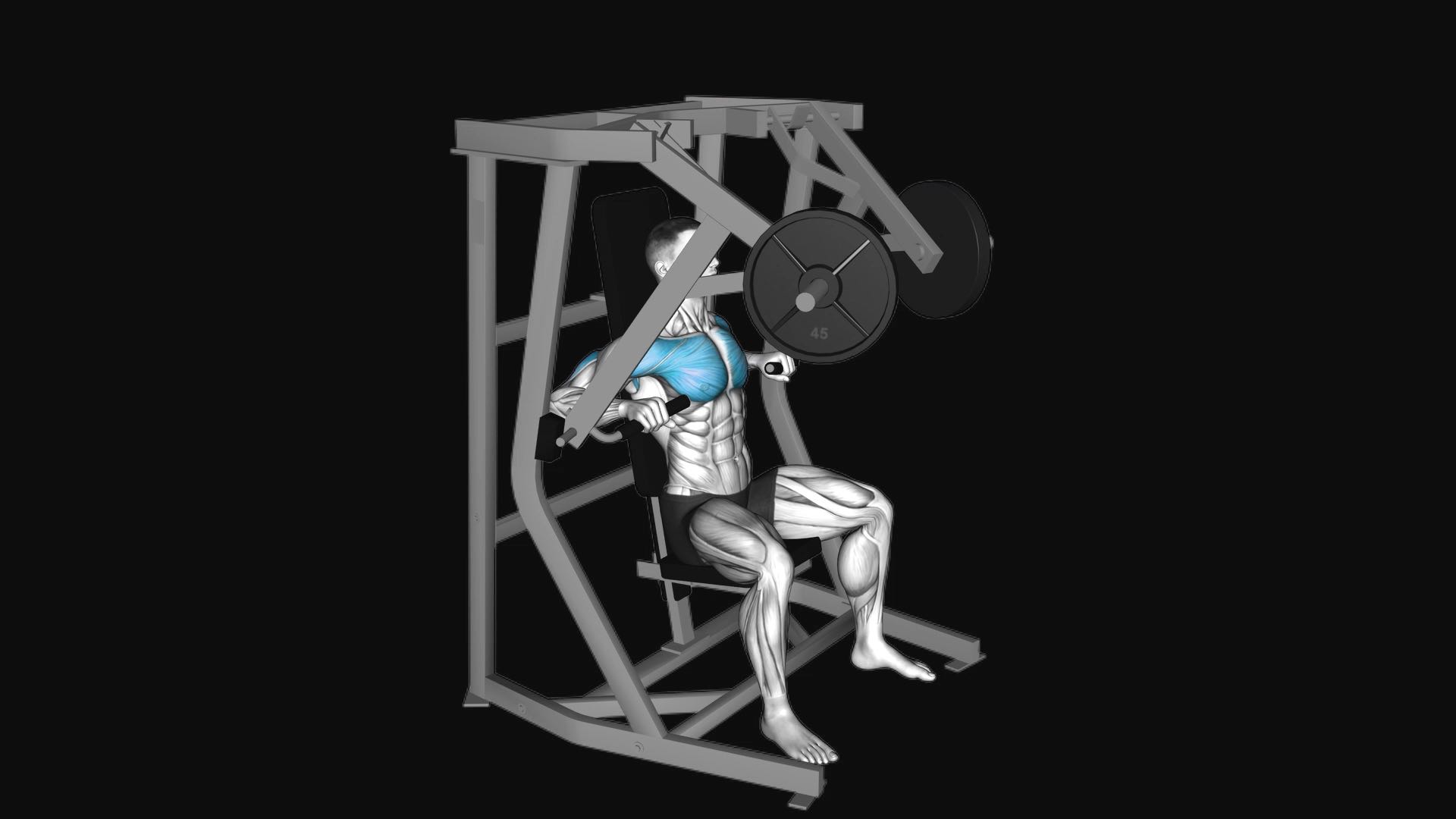
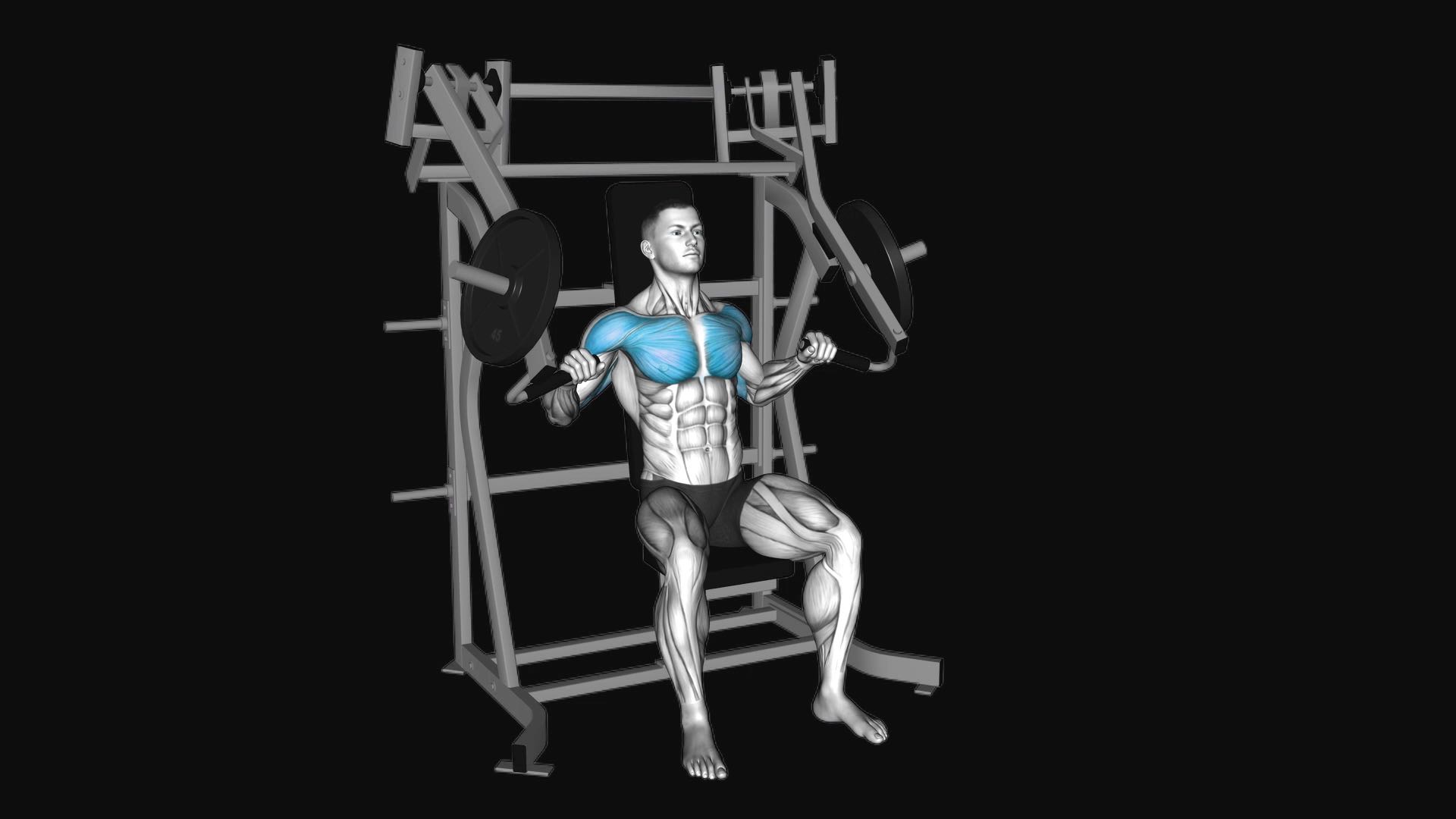
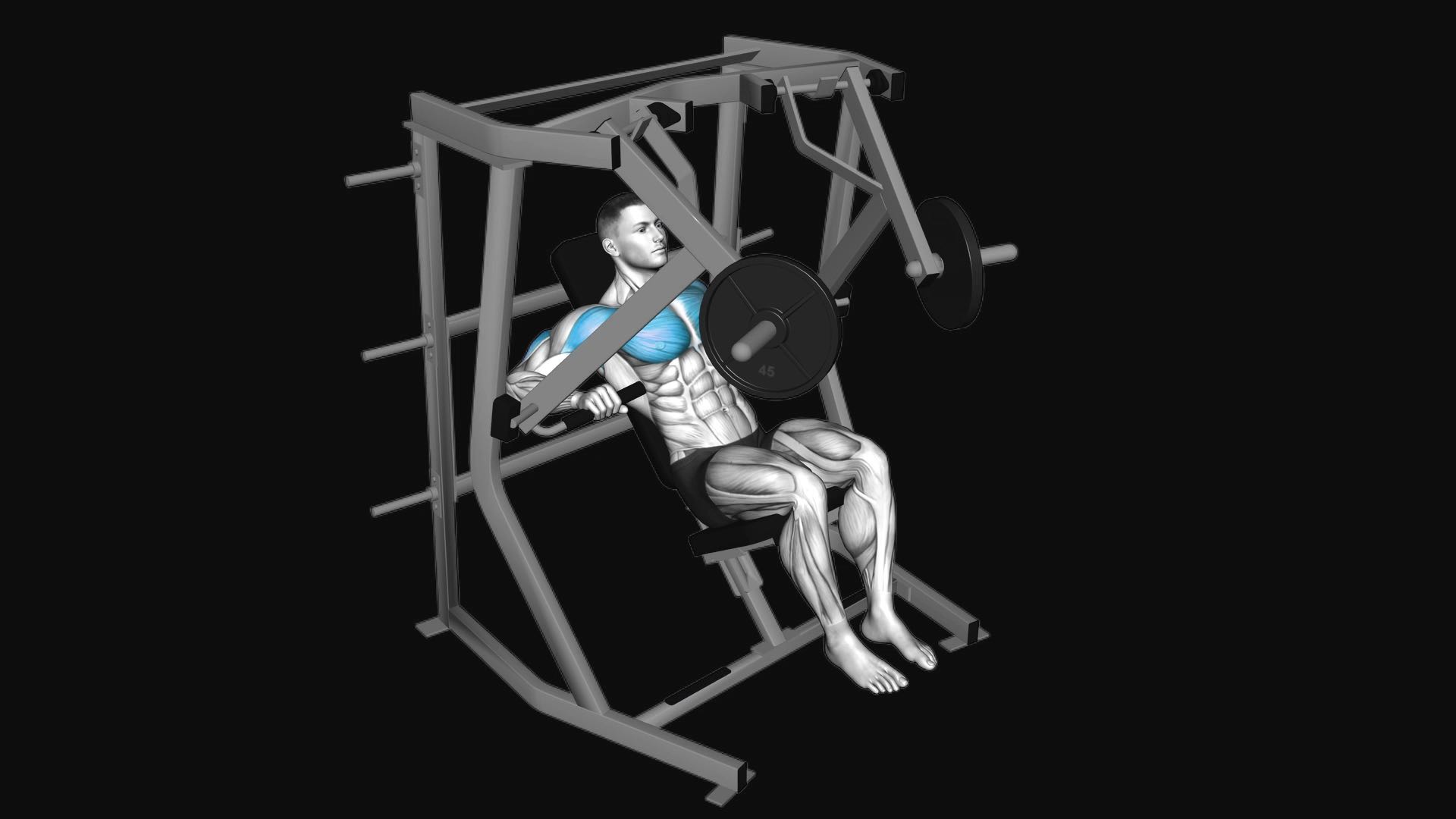
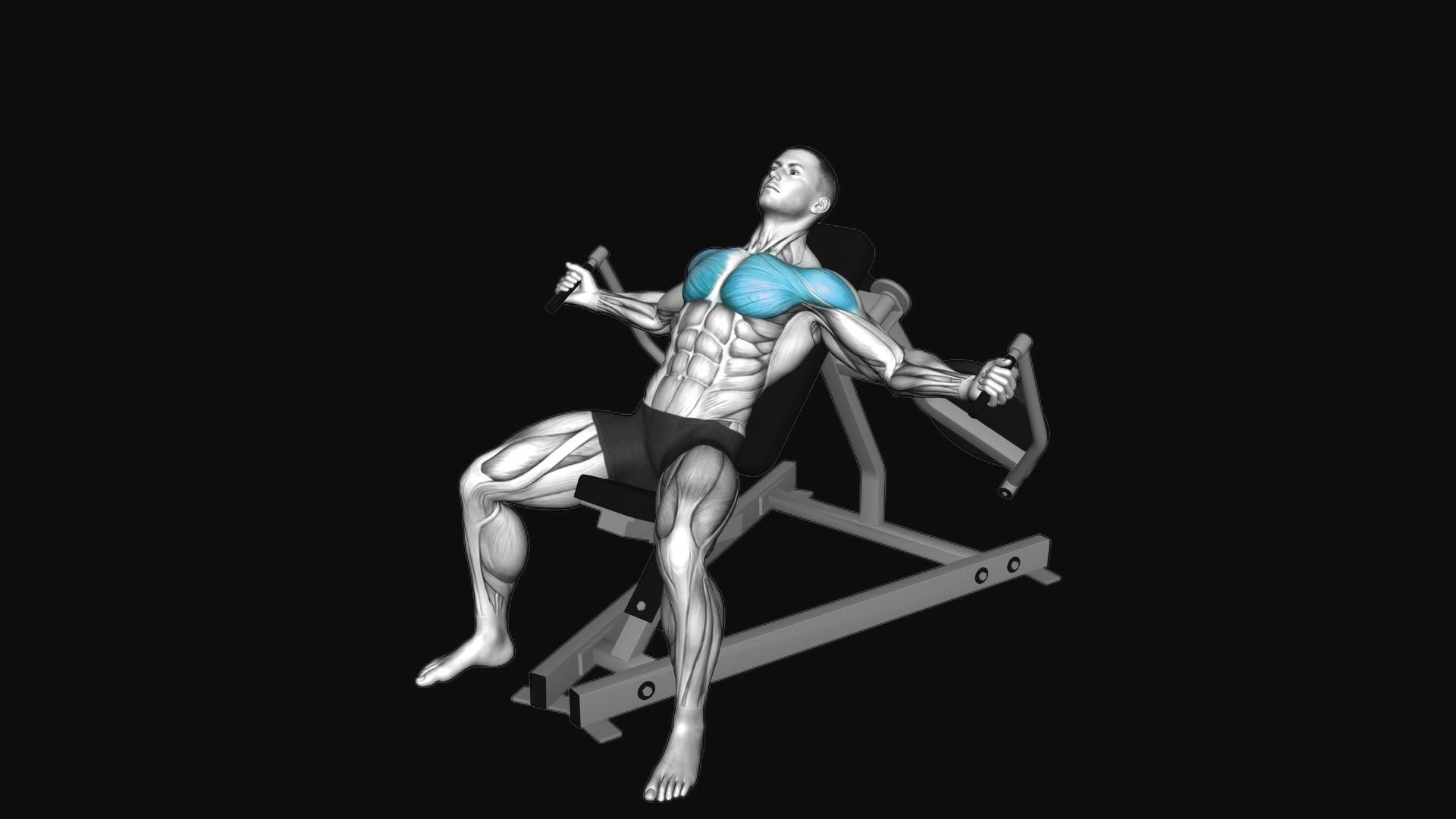
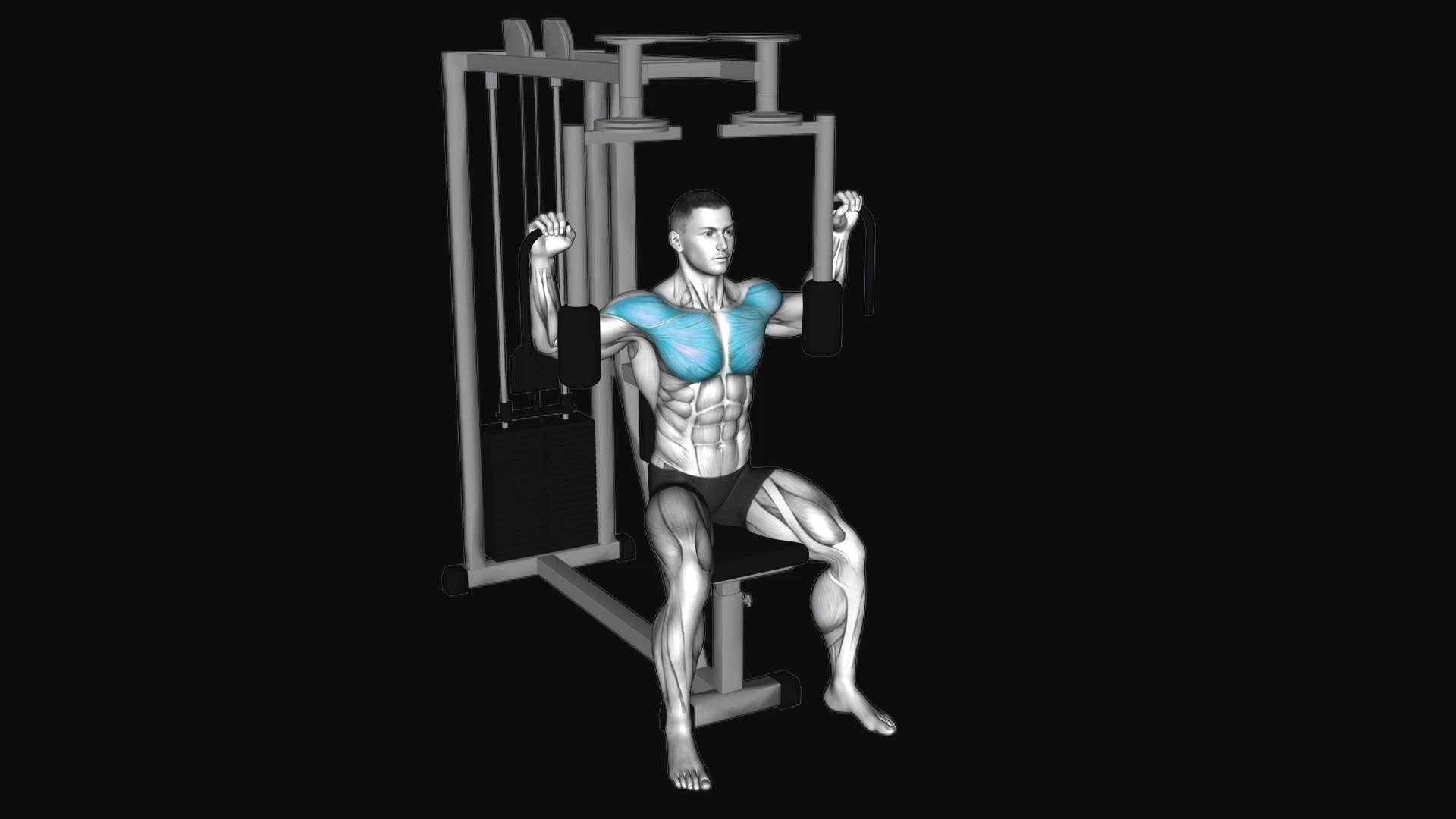
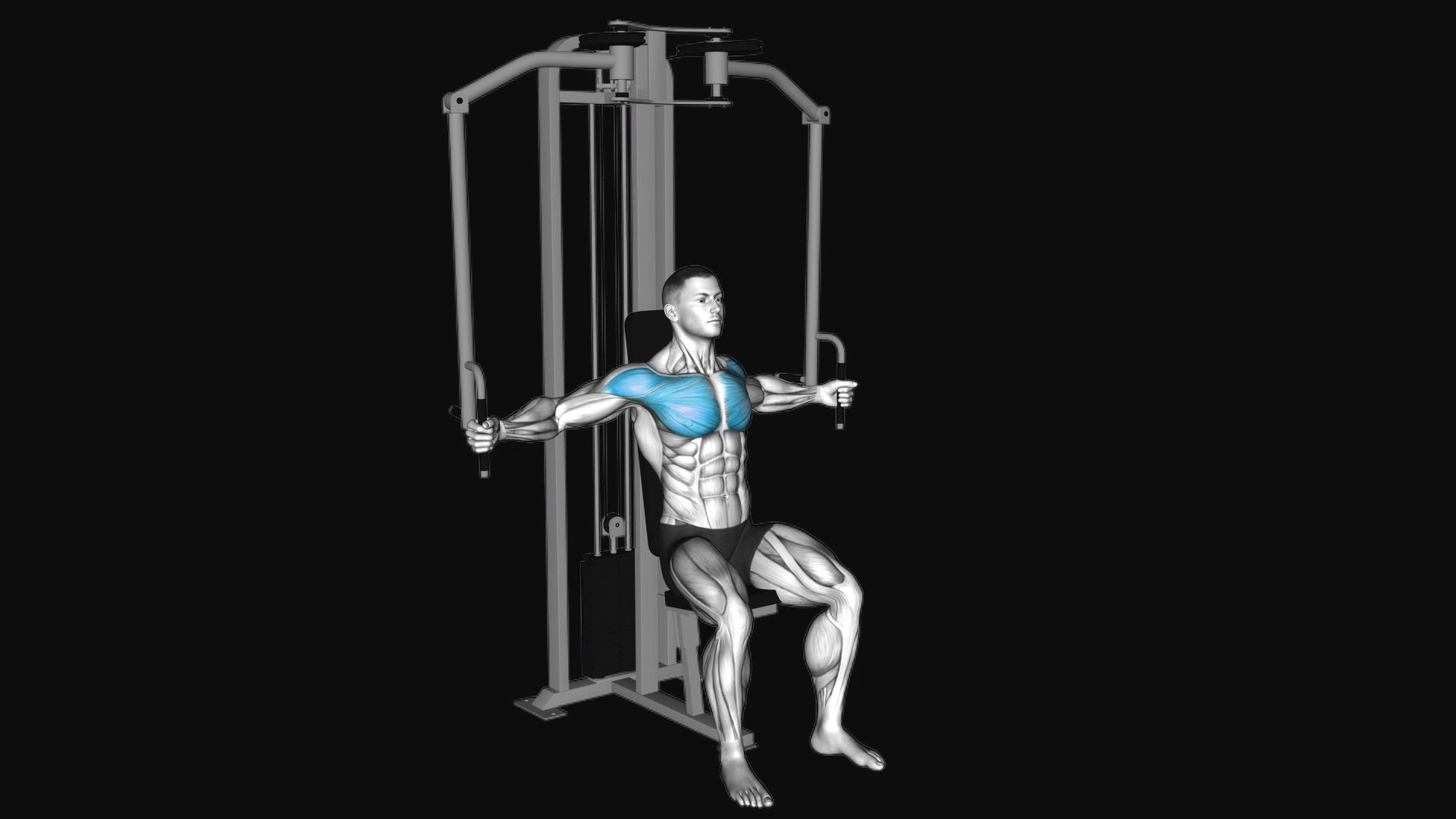
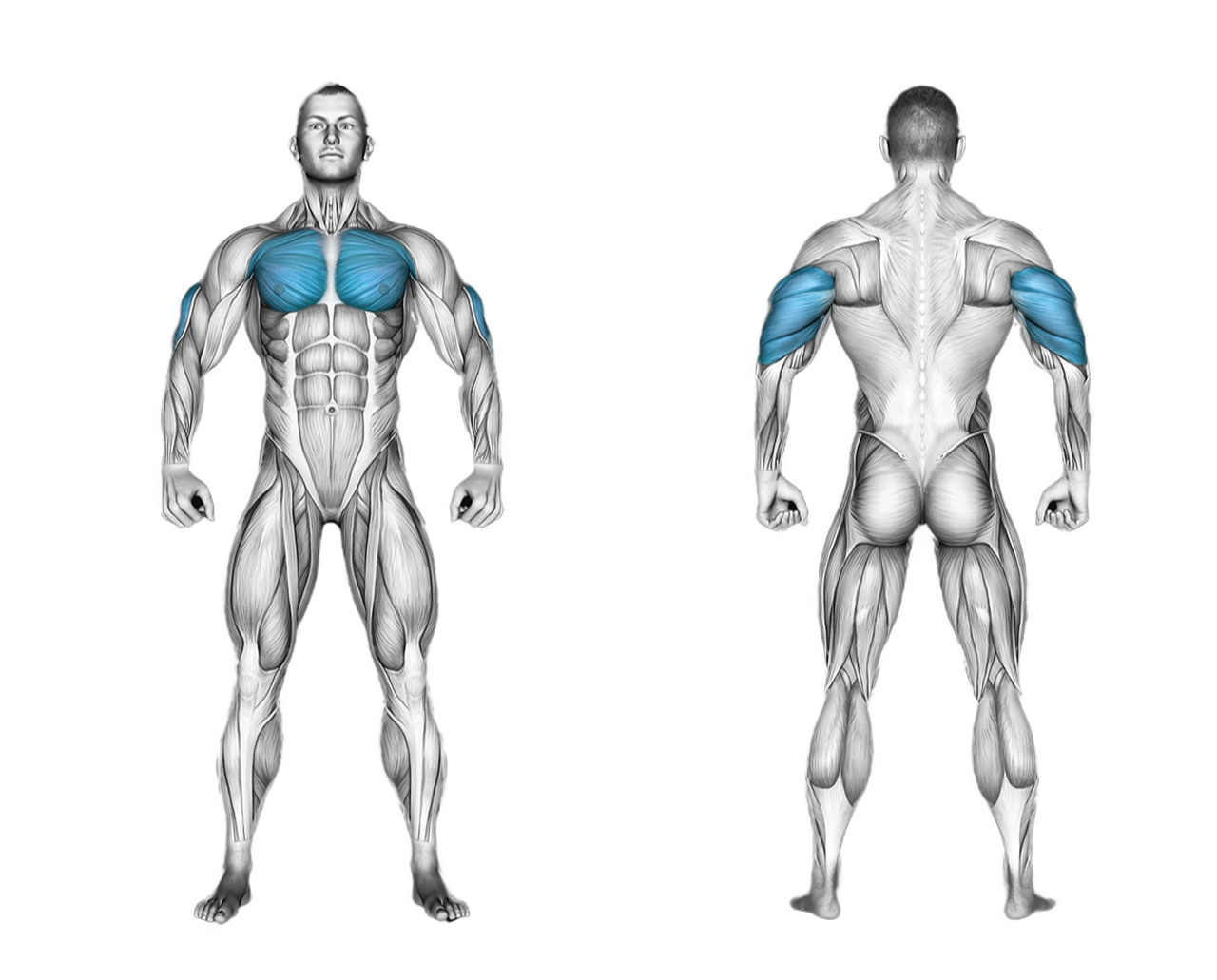
The lever lying chest press is a machine-based upper body exercise that guides the pressing path along a fixed arc. It primarily targets the pectoralis major along with the anterior deltoids and triceps, serving well as a safe primary press for beginners or a controlled hypertrophy exercise later in a chest workout.
How to do it
- Lie on the bench of the chest press machine, positioning your body so that the handles are in line with your chest.
- Grasp the handles with a grip slightly wider than shoulder-width, palms facing forward.
- Keep your feet flat on the ground and your back pressed against the bench.
- Inhale and brace your core. Exhale as you press the handles away from your chest, extending your arms.
- Focus on using your chest muscles to perform the press.
- Push until your arms are fully extended but without locking your elbows.
- Slowly return the handles to the starting position, controlling the movement and feeling the stretch in your chest muscles.
Common mistakes
- Aggressively locking out the elbows at the top of the rep, which transfers mechanical tension from the pecs to the elbow joints.
- Arching the lower back excessively or lifting the hips off the pad, which compromises core stability and strains the spine.
- Dropping the handles too fast into the bottom position, which removes eccentric muscle tension and risks shoulder irritation.
- Positioning the body too far forward so the handles align with the neck instead of the chest, placing excessive stress on the shoulder capsule.
Tips
- Keep your shoulder blades pinched together and pressed firmly into the bench throughout the movement.
- Align your body so the machine handles sit directly at mid-chest level when at the bottom of the press.
- Control the eccentric descent, taking around two seconds to lower the handles before pressing upward.
Sets and reps
For hypertrophy, perform 3 to 4 sets of 8 to 12 repetitions with 90 to 120 seconds of rest between sets. If using this movement as a finisher or for muscular endurance, aim for 3 sets of 12 to 15 reps with 60 to 90 seconds of rest.
Muscles worked
Your coach guides every set
Turn on the coach in Gloox: it asks how you feel, picks the weight from your history and cues technique and rest. Rate each set and the next one is tuned to you.

On a computer? Point your phone's camera here to get the app.
Questions
How does the lever lying press differ from a standard barbell bench press?
The lever mechanism eliminates the need to balance a free weight, allowing you to train closer to muscular failure with less stabilization demand.
What should you do if you feel shoulder pain while pressing?
Ensure your elbows are angled slightly below your shoulders rather than flared out, and if pain persists, stop the exercise and consult a medical professional.