Back · Machines
Lever T-bar Row
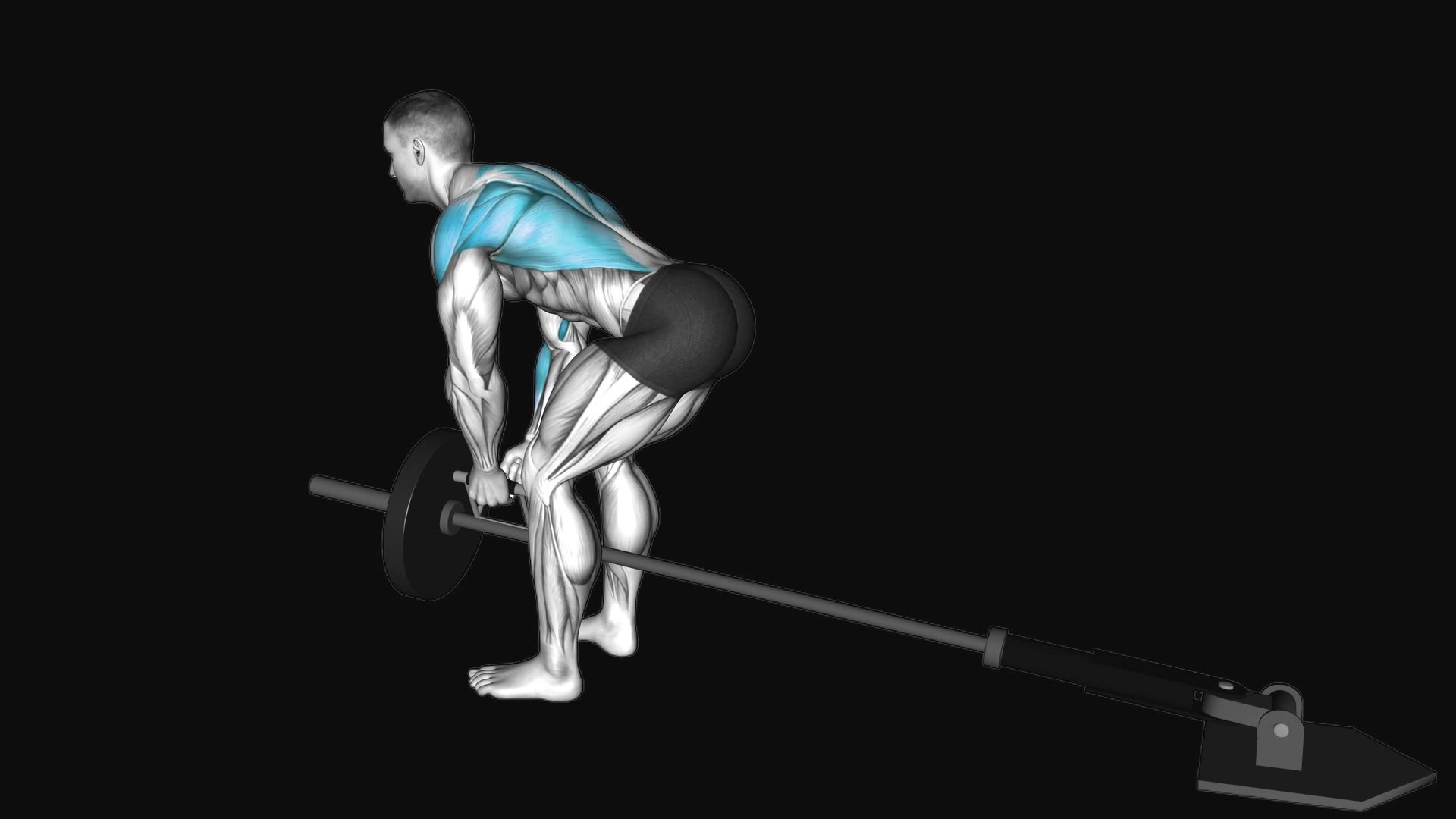
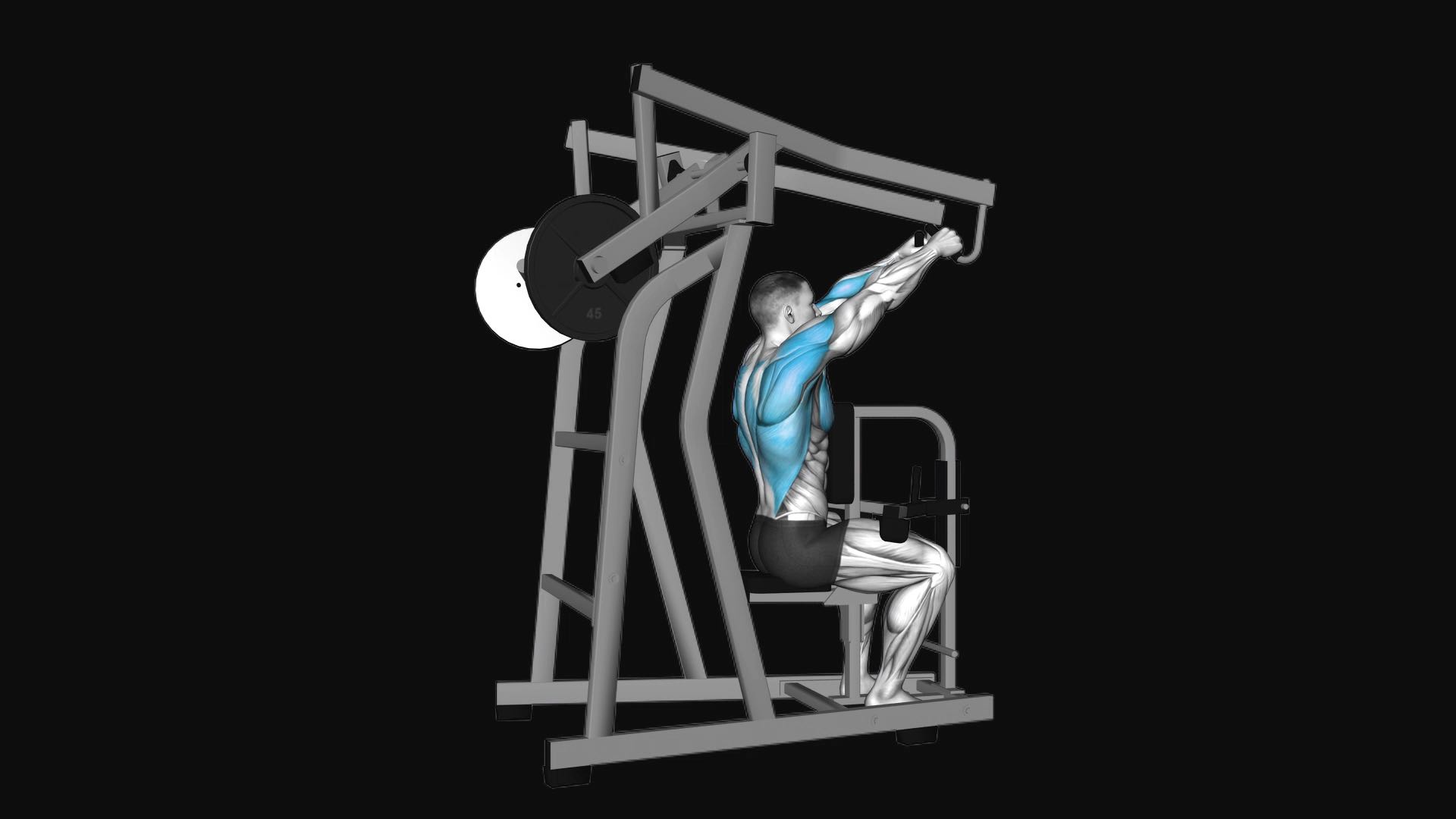
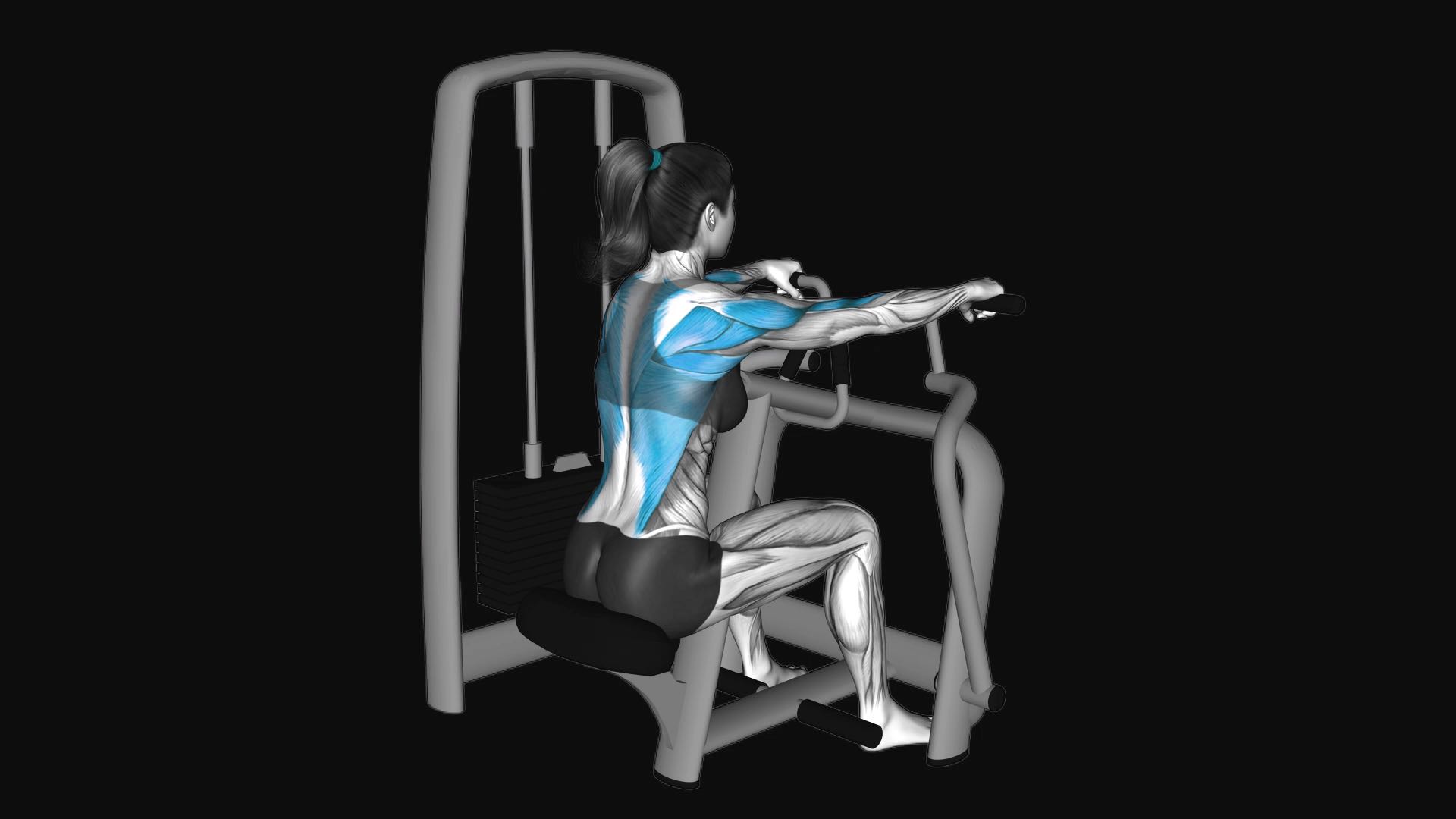
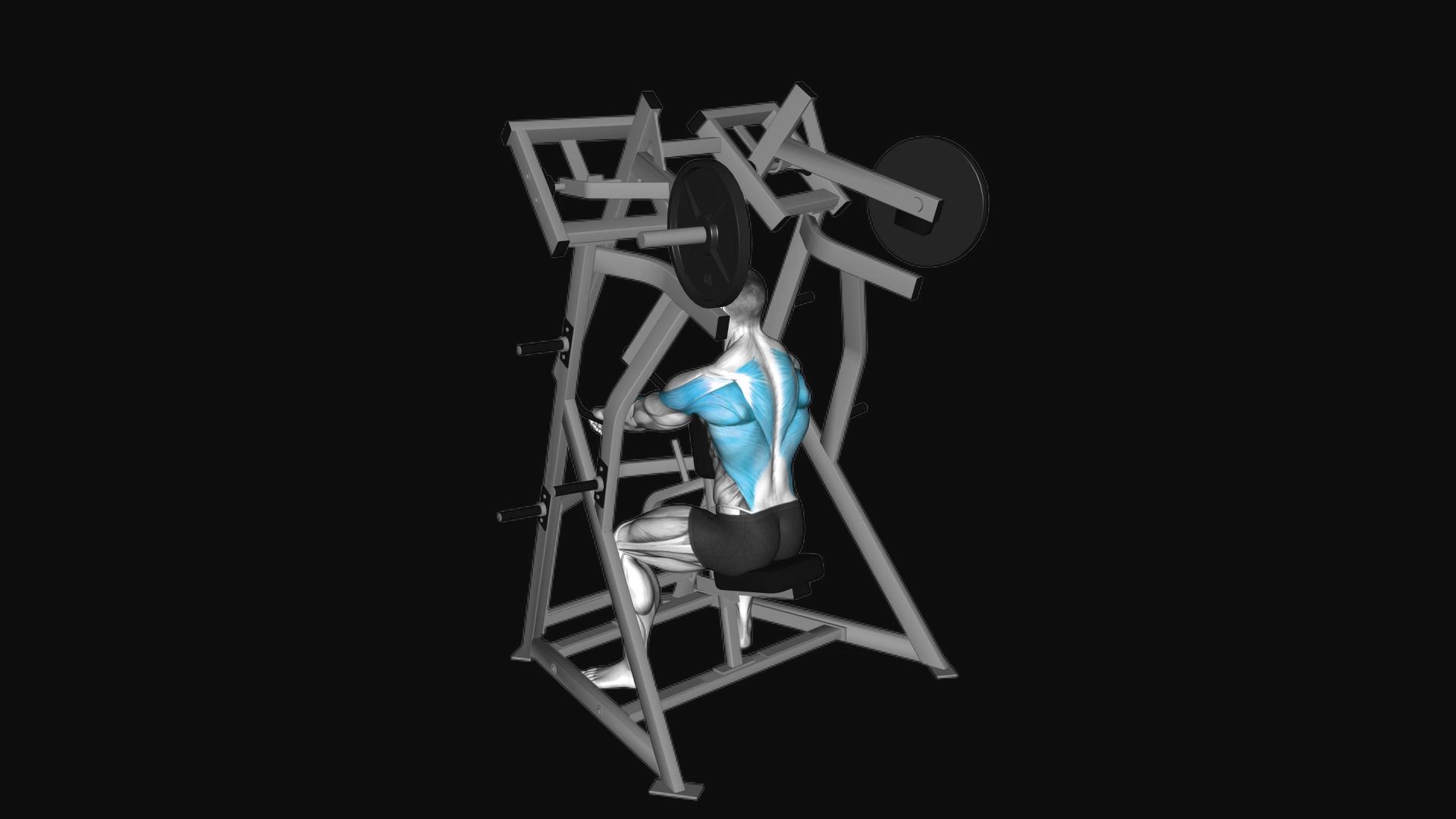
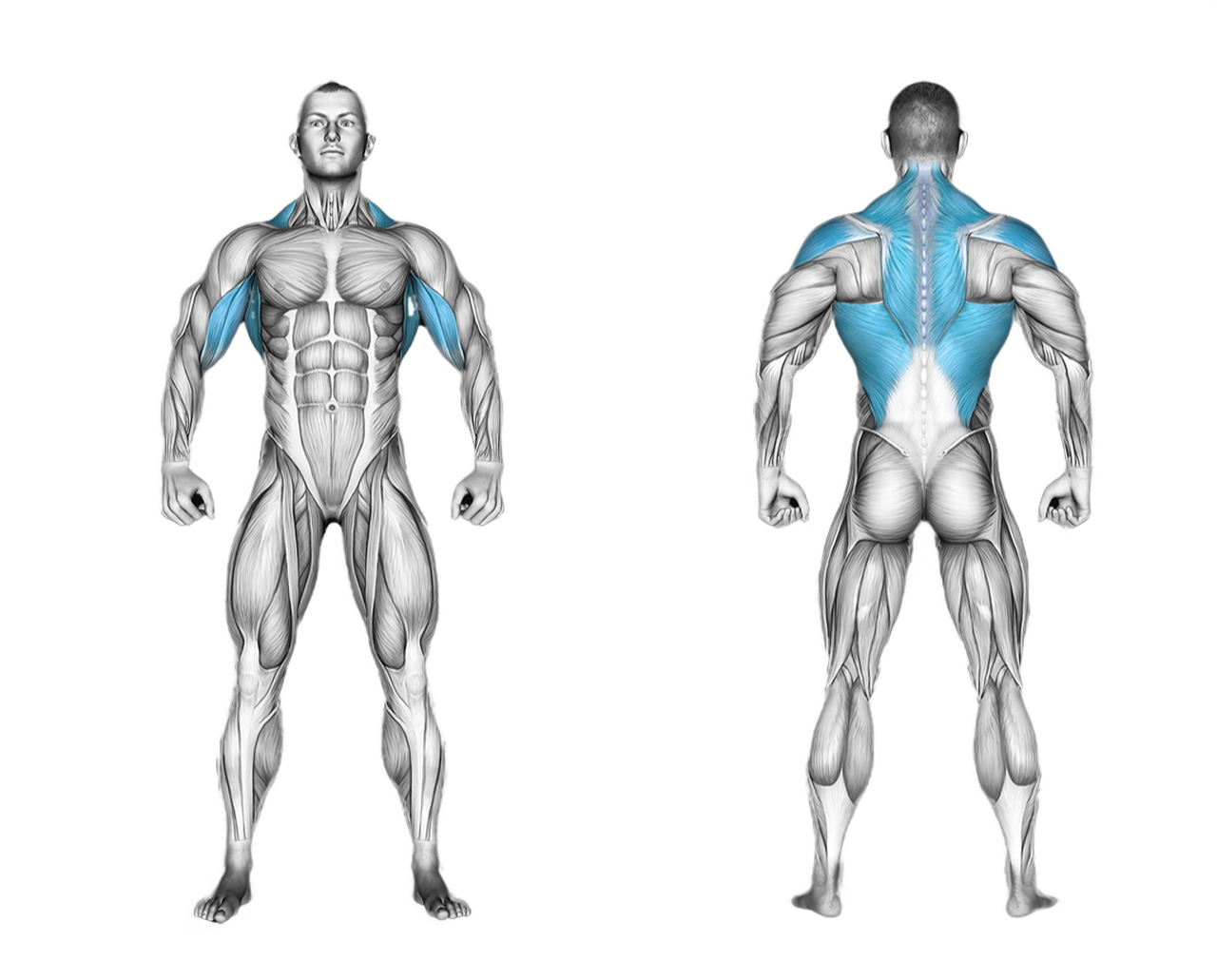
The lever T-bar row is a compound machine exercise designed to build back thickness, heavily engaging the lats, rhomboids, and mid-traps. It fits lifters of all experience levels and functions best as a primary or secondary horizontal pull in a back workout.
How to do it
- Stand on the T-bar row machine, placing your feet on the designated platforms.
- Bend your knees slightly and lean forward from your hips, maintaining a straight back.
- Grasp the handles with both hands.
- Inhale and brace your core. Exhale as you pull the handles towards your abdomen, keeping your elbows close to your body.
- Focus on using your back muscles, especially the mid-back and lats.
- Squeeze your shoulder blades together at the top of the movement.
- Slowly release the handles, extending your arms and returning to the starting position.
Common mistakes
- Rounding the lower back places dangerous shear stress on the lumbar spine.
- Jerking the torso upward to initiate the pull reduces tension on the back muscles and strains the hips.
- Flaring the elbows too wide redirects tension away from the lats and compromises shoulder mechanics.
- Cutting the range of motion short without retracting the shoulder blades prevents a complete contraction.
Tips
- Plant your feet firmly on the platform and maintain a braced, neutral spine throughout the entire set.
- Initiate the movement by driving your elbows back toward your hips rather than pulling only with your arms.
- Lower the weight with control to achieve a deep stretch in the lats without collapsing your posture.
Sets and reps
For hypertrophy, perform 3–4 sets of 8–12 repetitions with 90–120 seconds of rest. For muscular endurance, aim for 3 sets of 12–15 repetitions with 60–90 seconds of rest.
Muscles worked
Your coach guides every set
Turn on the coach in Gloox: it asks how you feel, picks the weight from your history and cues technique and rest. Rate each set and the next one is tuned to you.

On a computer? Point your phone's camera here to get the app.
Questions
Is the lever T-bar row safe for the lower back?
The guided lever reduces stabilizer demands compared to free weights, but the bent-over position still loads the lumbar spine. If you experience lower back pain, stop the exercise and consult a specialist, or switch to a chest-supported row.
What can replace the lever T-bar row if the machine is unavailable?
Bent-over barbell rows, landmine rows using a barbell corner attachment, and seated cable rows provide similar movement mechanics and muscular recruitment.