
Back · Cable machine
Cable Elevated Row
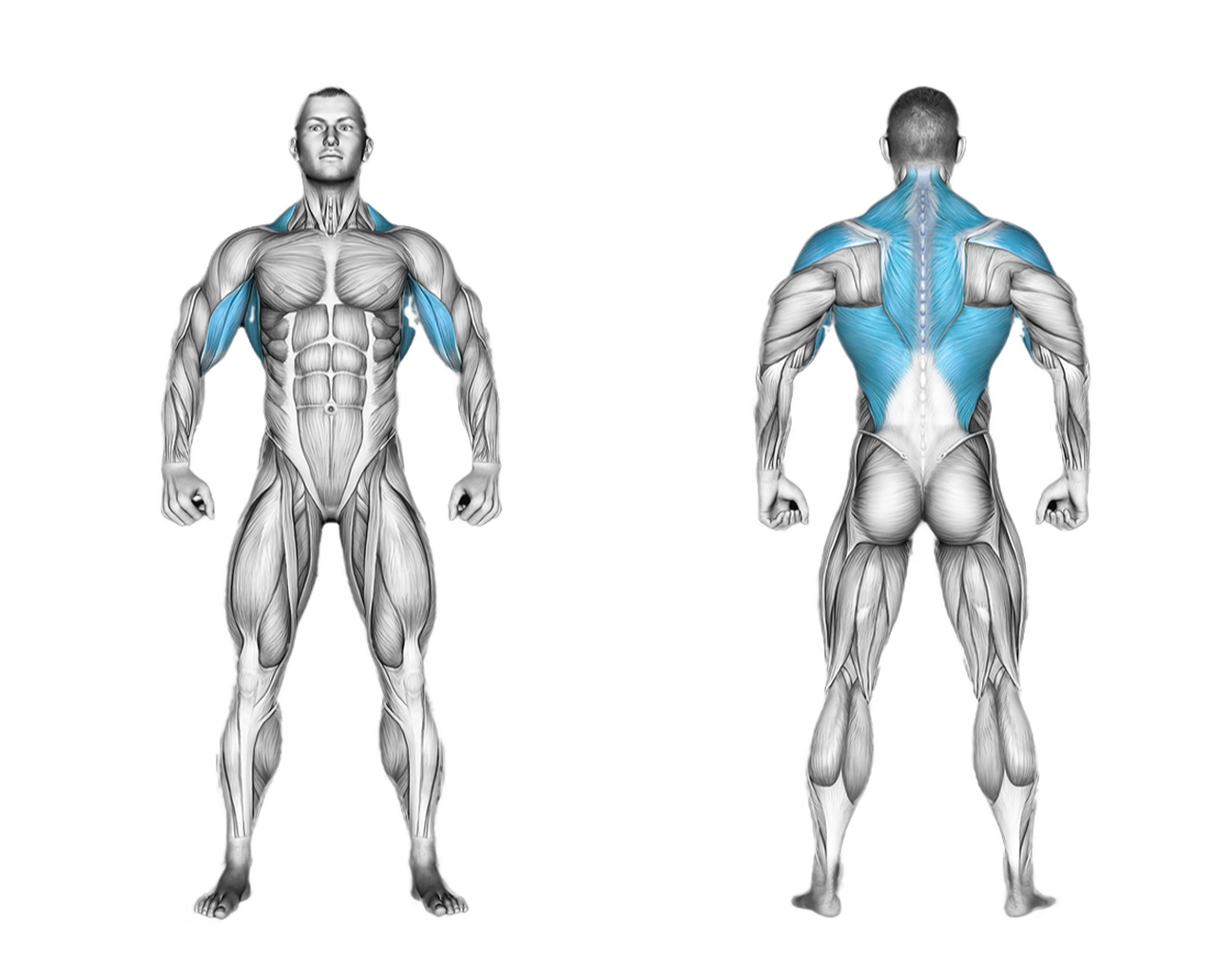
The cable elevated row is a bent-over pulling variation performed from a low pulley that targets the latissimus dorsi, rhomboids, and middle trapezius. It is well suited for lifters seeking continuous muscular tension across the upper and mid-back, typically fitting into the middle of a back or pull workout.
- Muscles
- Back
- Equipment
- Cable machine
- Type
- Strength
- Animation
- Men
How to do it
- Set up a cable machine with a handle attached to the low pulley.
- Stand a few feet away from the machine, feet shoulder-width apart.
- Bend forward at the hips to approximately a 45-degree angle, keeping your back straight.
- Grasp the handle with both hands, arms extended.
- Inhale and brace your core. Exhale as you pull the handle towards your abdomen, keeping your elbows close to your body.
- Focus on using your back muscles, particularly your mid and upper back.
- Squeeze your shoulder blades together at the end of the movement.
- Slowly extend your arms back to the starting position, controlling the movement.
Common mistakes
- Rounding the lumbar spine during the hinge increases shear stress on the lower back and limits upper-back engagement.
- Using hip momentum to heave the handle backward reduces tension on the lats and risks lower-back strain.
- Flaring the elbows excessively wide diverts work away from the lats and places unnecessary strain on the shoulder joints.
Tips
- Establish a firm hip hinge with a flat back and a slight bend in the knees before beginning each rep.
- Lead the pull by driving the elbows back close to the ribs and pausing briefly to squeeze the shoulder blades together.
- Control the eccentric phase to maintain steady cable tension and achieve an active stretch in the back musculature.
Sets and reps
Perform 3 to 4 sets of 8 to 12 repetitions with 60 to 90 seconds of rest between sets to balance strength and hypertrophy.
Muscles worked
Your coach guides every set
Turn on the coach in Gloox: it asks how you feel, picks the weight from your history and cues technique and rest. Rate each set and the next one is tuned to you.

On a computer? Point your phone's camera here to get the app.
Questions
What is the advantage of using a cable machine over a barbell for this row?
Cables maintain smooth, constant resistance throughout the entire range of motion, providing consistent tension even at full arm extension.
Is the cable elevated row safe for people with lower back concerns?
Because holding a hip hinge requires significant spinal erector stabilization, individuals with lower back pain should opt for chest-supported rows; stop immediately and consult a specialist if sharp pain occurs.
Similar exercises
Cable Lateral Pulldown with Mag GripCable machine
Cable Lateral Pulldown with Mag GripCable machine
Cable High RowCable machine
Cable Single Arm High RowCable machine
Cable High Row with Chest SupportCable machine
Cable Standing Lat Pushdown (rope equipment)Cable machine
Lever Cross Lat PulldownCable machine
Cable Cross over Lateral PulldownCable machine