Chest · Cable machine
Cable Upper Chest Crossovers
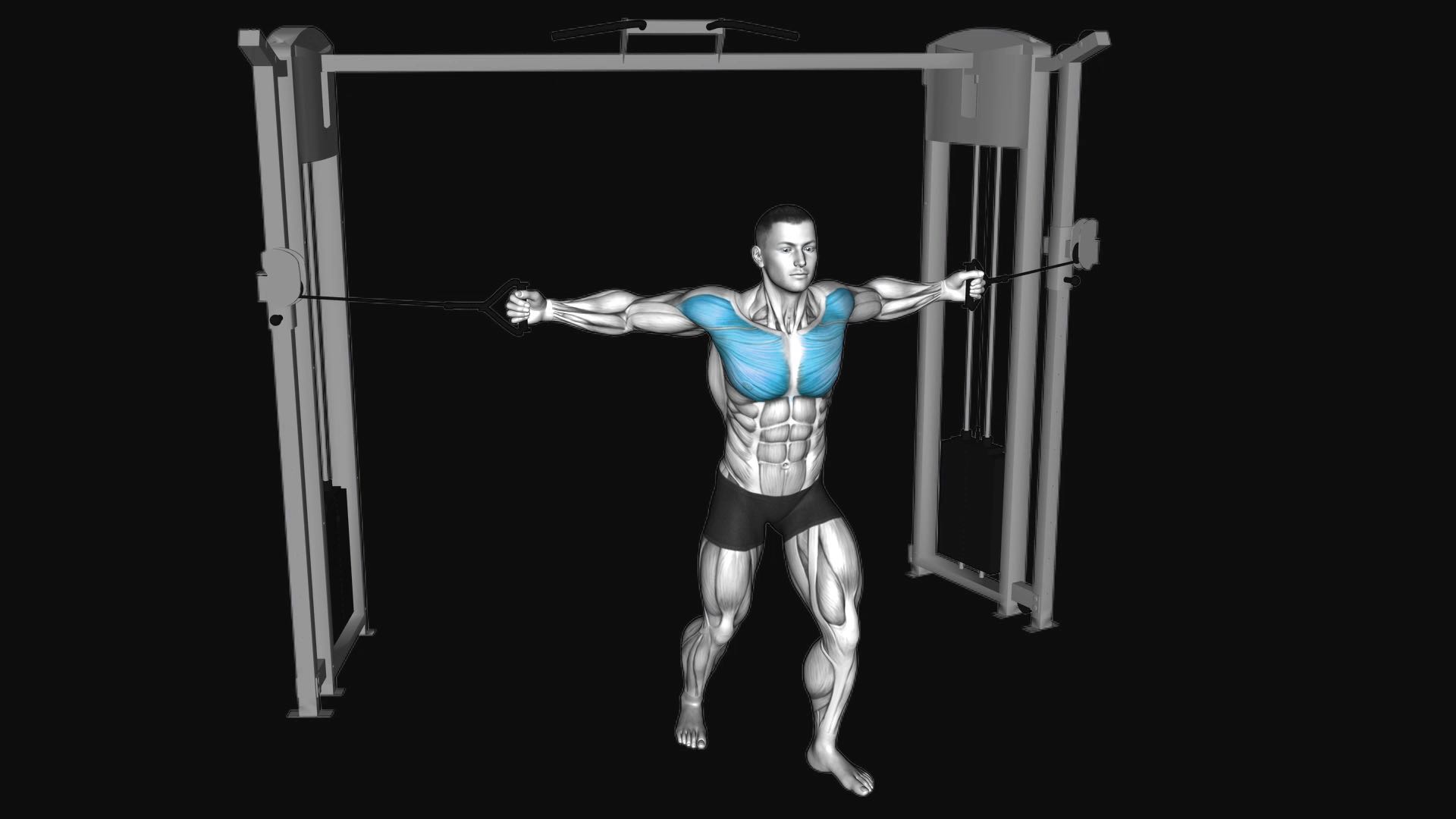
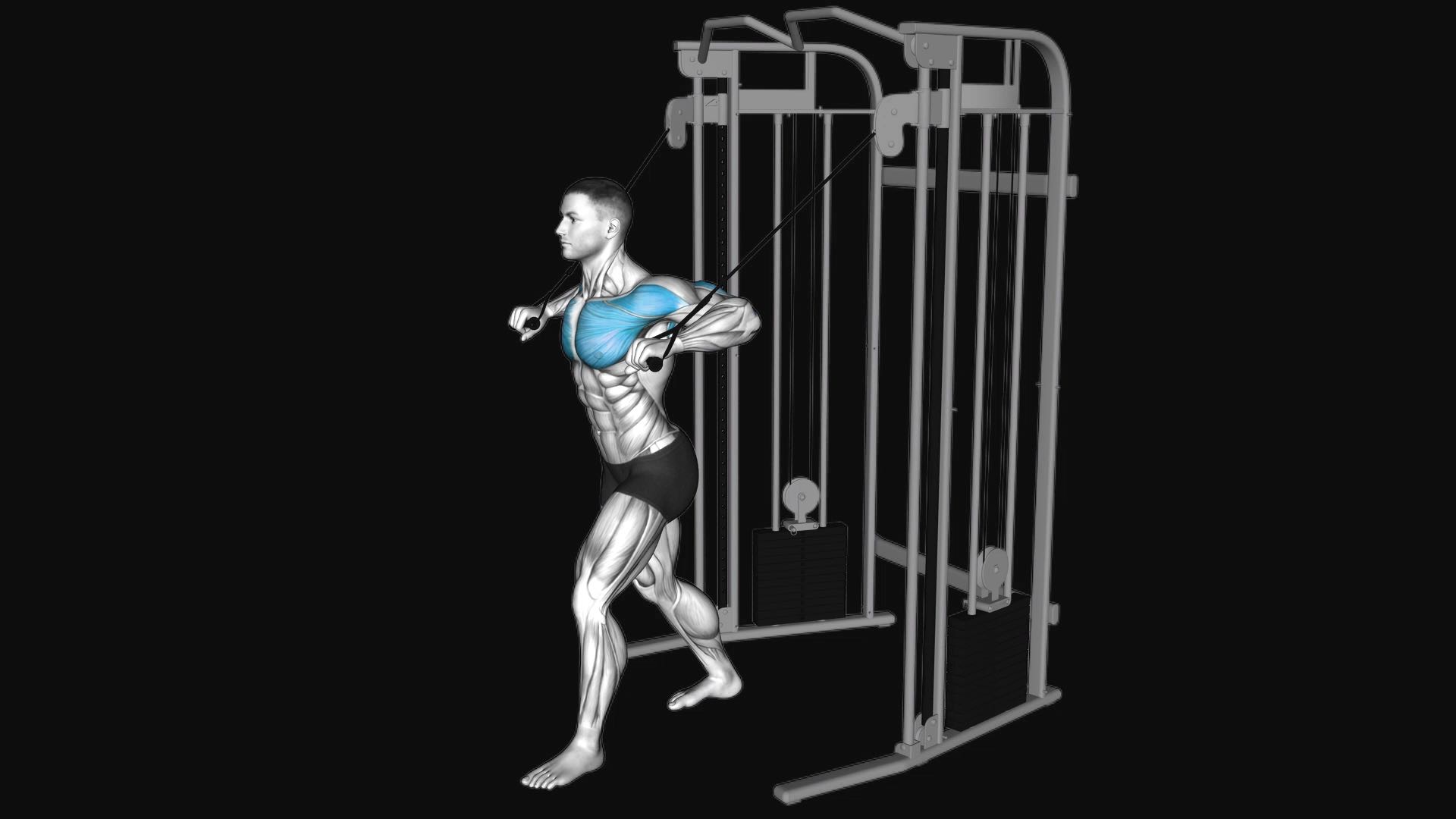
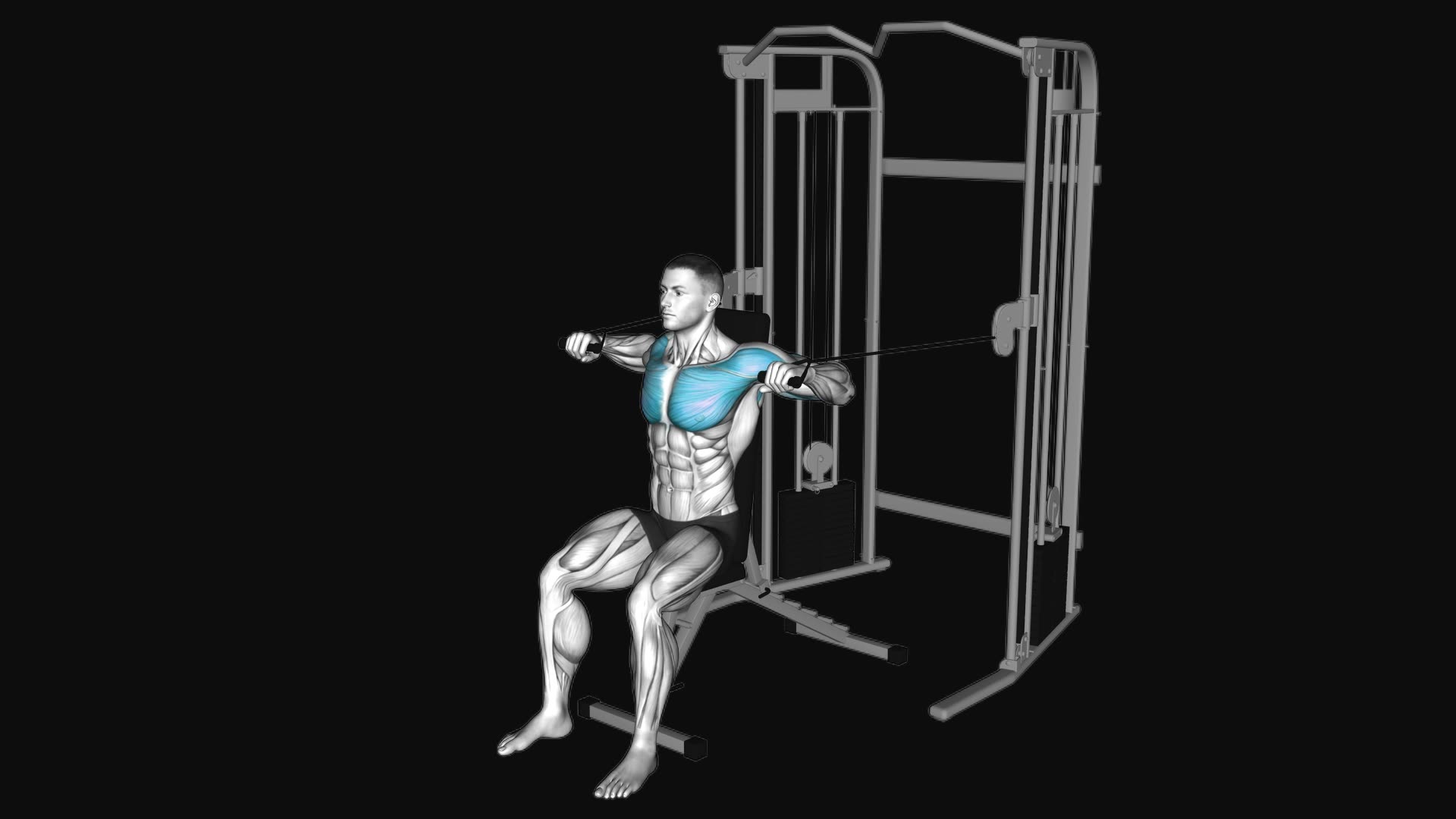
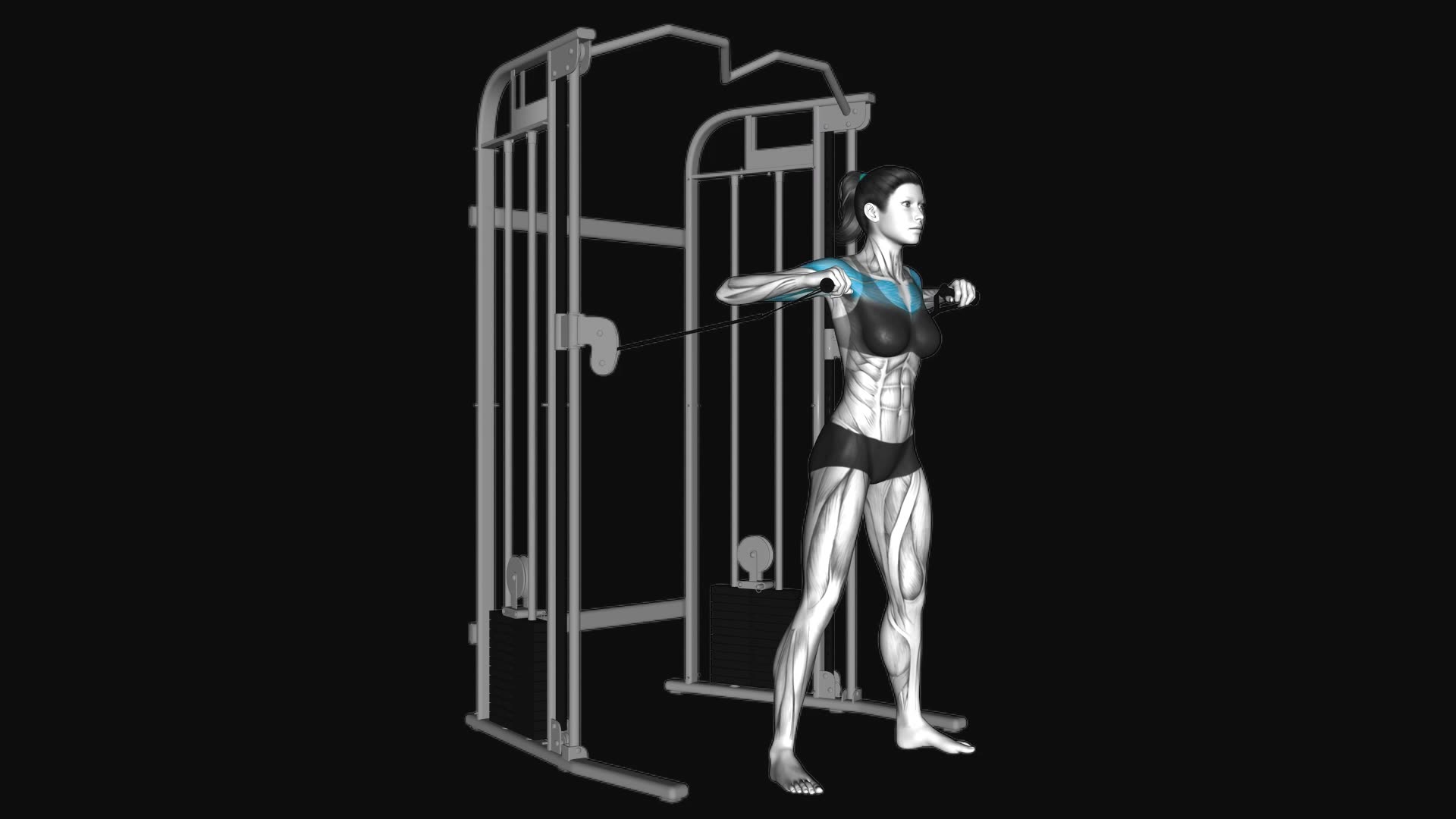
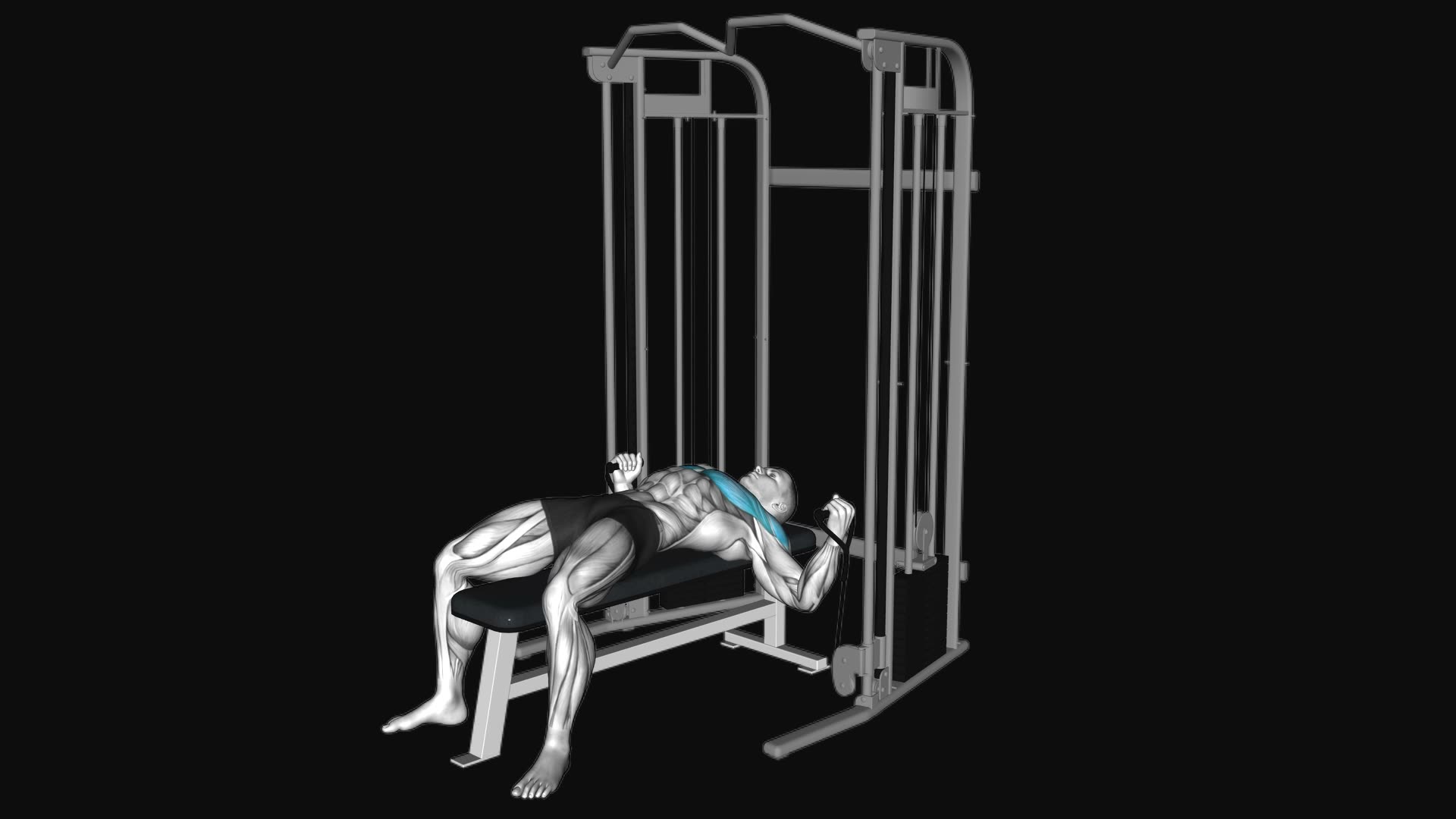
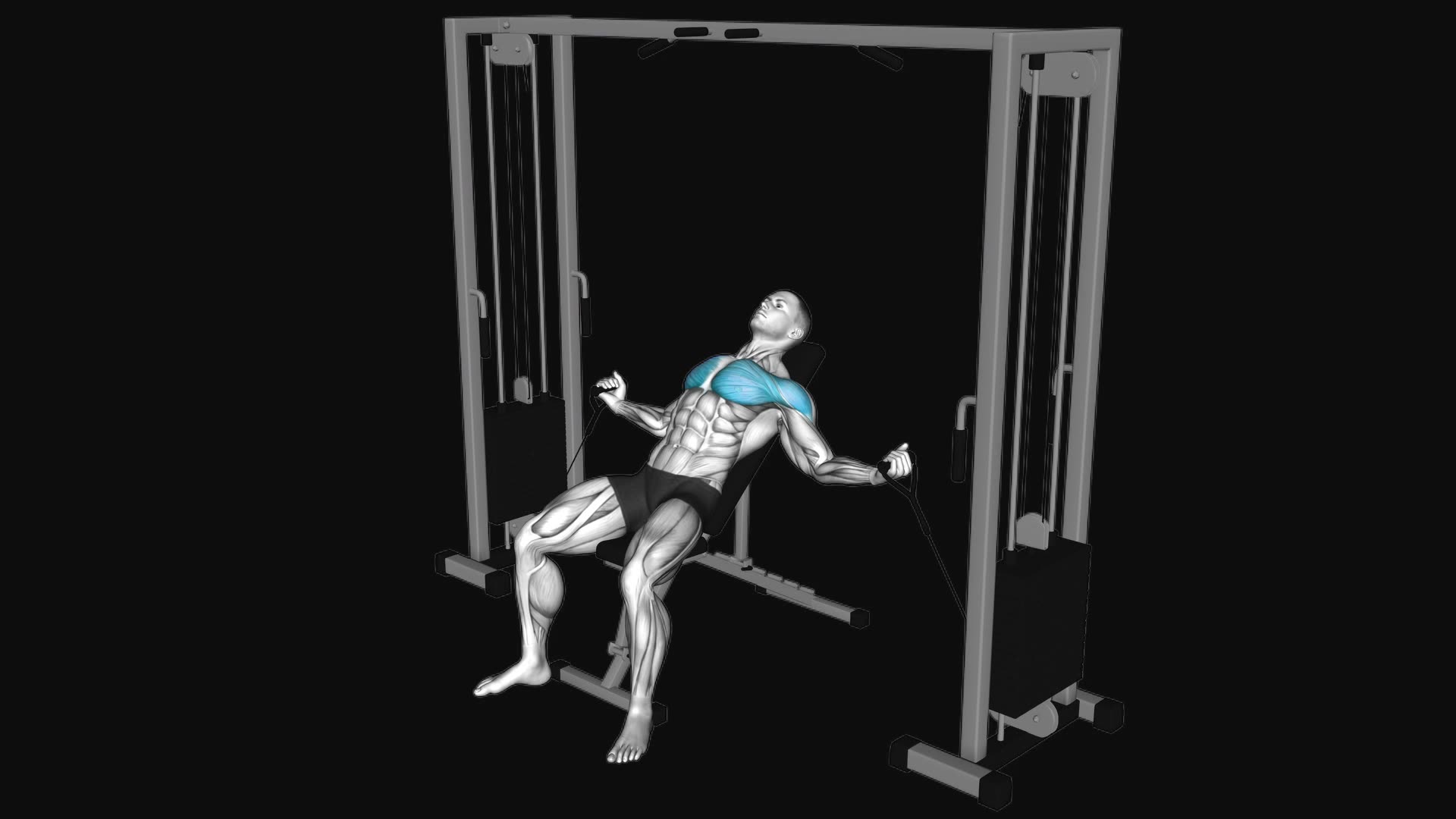
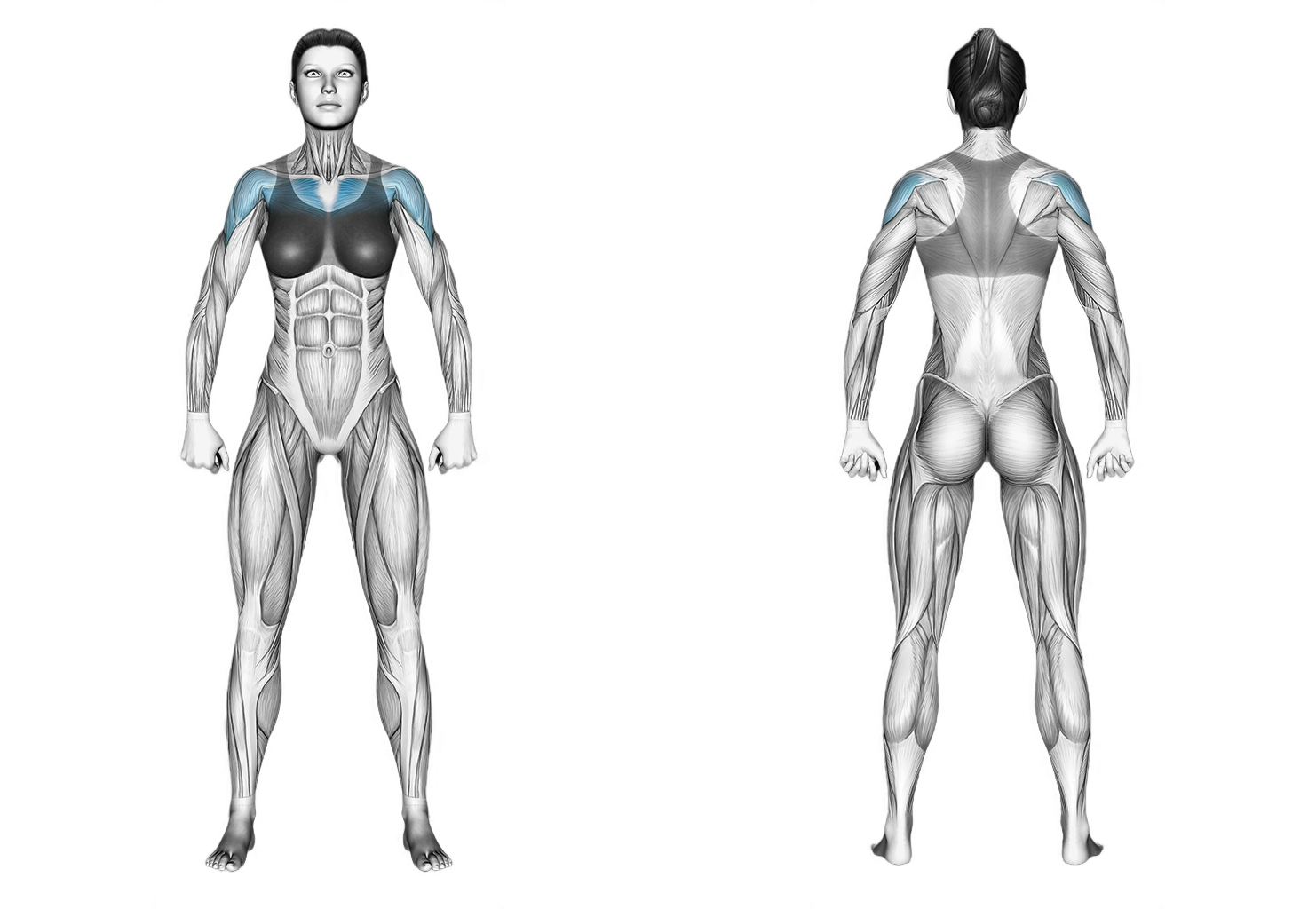
Cable upper chest crossovers are an isolation exercise designed to target the clavicular head of the pectoralis major with continuous cable tension. They fit best toward the middle or end of a chest workout to fully fatigue the upper fibers after heavy compound presses.
- Muscles
- Chest
- Equipment
- Cable machine
- Type
- Strength
- Animation
- Women
How to do it
- Set cable pulleys to the lowest position.
- Grab both handles and step forward into a staggered stance, leaning slightly forward.
- Start with arms down and out to the sides.
- Bring your hands up and together in front of your upper chest in an arcing motion.
- Squeeze your upper chest at the top, then return with control.
Common mistakes
- Bending the elbows excessively during the movement turns the fly into a biceps curl and takes tension off the chest.
- Using torso momentum to swing the weight forward robs the upper pectorals of direct mechanical tension.
- Shrugging the shoulders upward engages the upper trapezius and prevents full chest recruitment at peak contraction.
Tips
- Maintain a fixed, slight bend in your elbows from start to finish rather than opening and closing the joints.
- Focus on driving your inner biceps toward the center of your upper chest rather than just clapping your hands together.
- Set a solid staggered stance and brace your core to resist being pulled backward by the cables.
Sets and reps
Perform 3 to 4 sets of 10 to 15 repetitions to maximize muscle pump and hypertrophy. Rest for 60 to 90 seconds between sets to maintain high movement quality.
Muscles worked
Your coach guides every set
Turn on the coach in Gloox: it asks how you feel, picks the weight from your history and cues technique and rest. Rate each set and the next one is tuned to you.

On a computer? Point your phone's camera here to get the app.
Questions
How does this exercise differ from standard high-to-low cable crossovers?
Pulling from low to high specifically targets the upper clavicular fibers, whereas the high-to-low variation shifts the emphasis to the lower and sternal portions of the chest.
Can dumbbells replace this movement effectively?
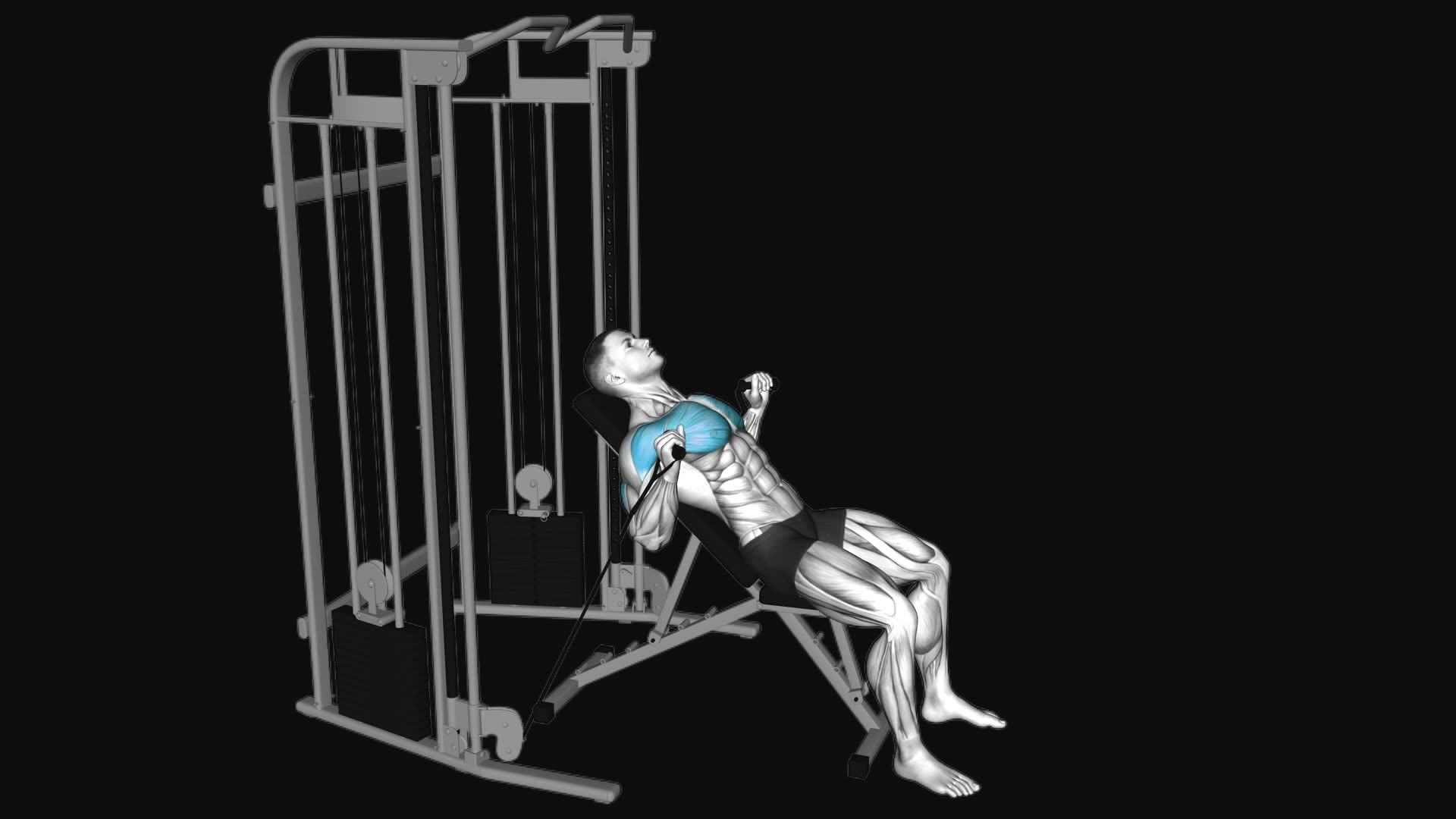
Incline dumbbell flyes or low-to-high underhand dumbbell raises mimic the movement path, though free weights lack the continuous tension across the entire range that cables provide.