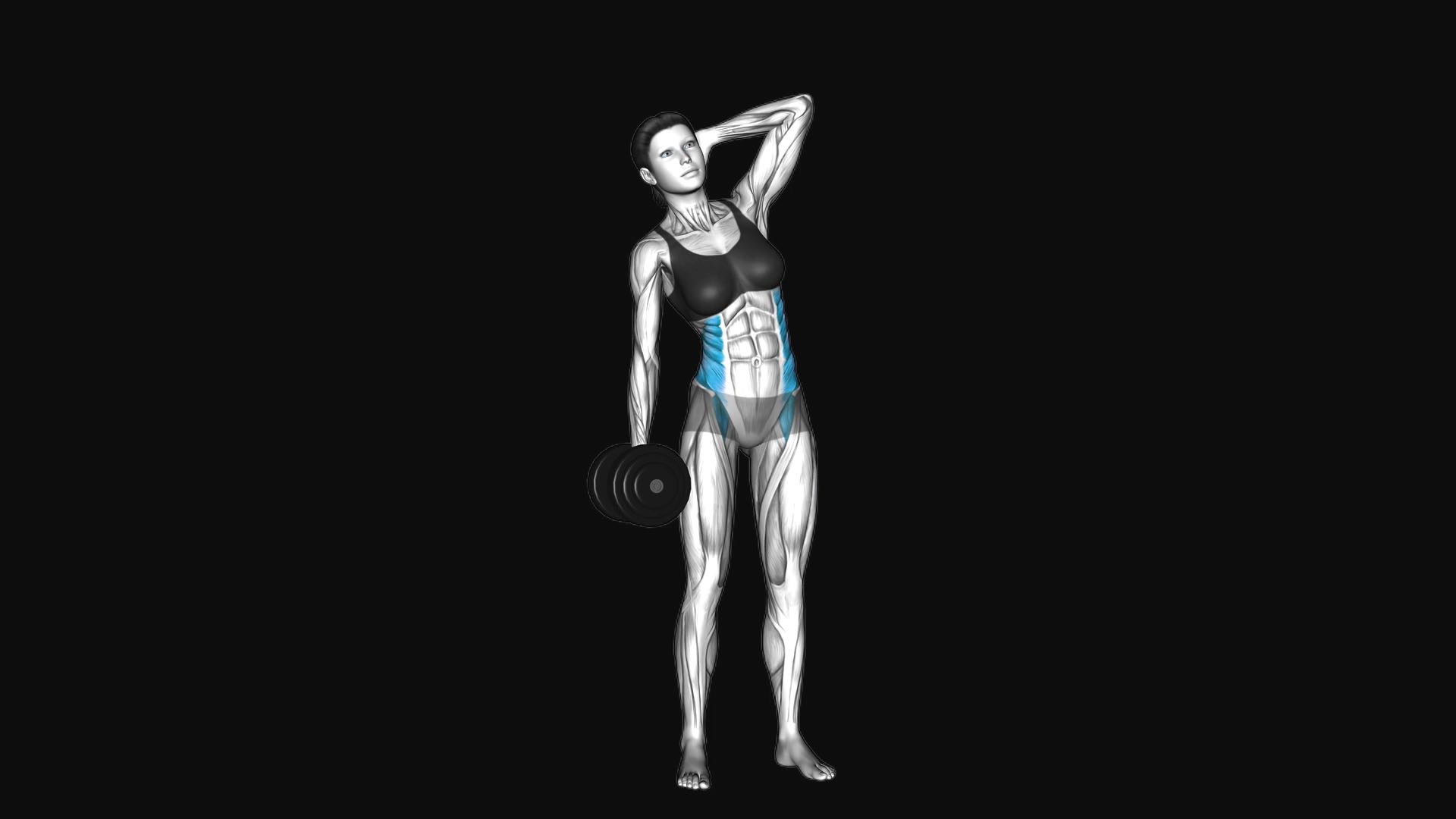
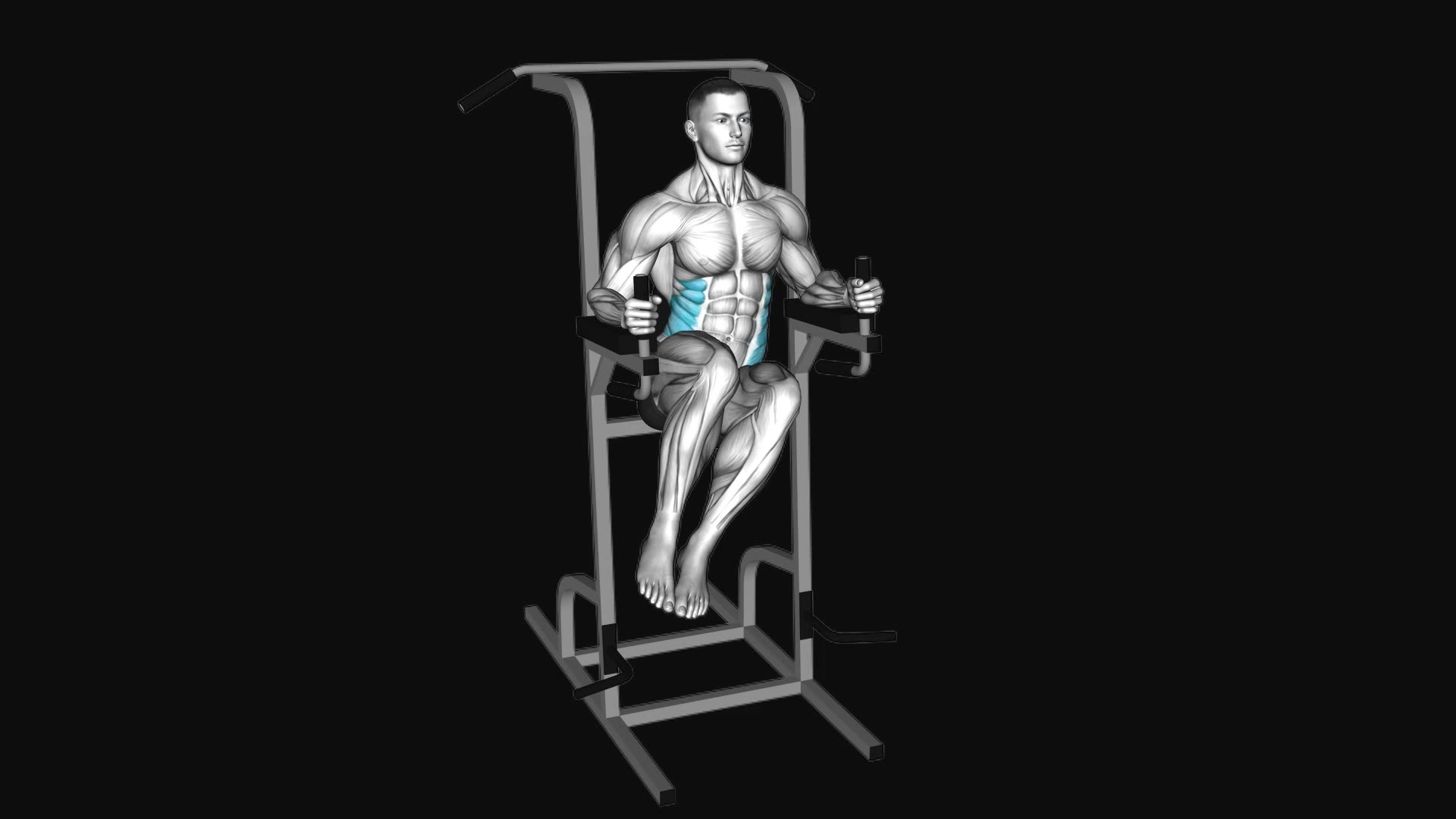
Abs · Cable machine
Cable Twist
The cable twist is a rotational core exercise that targets the internal and external obliques alongside the deep stabilizing muscles of the spine. It is well-suited for athletes and lifters seeking rotational strength and midline stability, typically programmed toward the middle or end of a workout.
- Muscles
- Abs
- Equipment
- Cable machine
- Type
- Strength
- Animation
- Men and women
How to do it
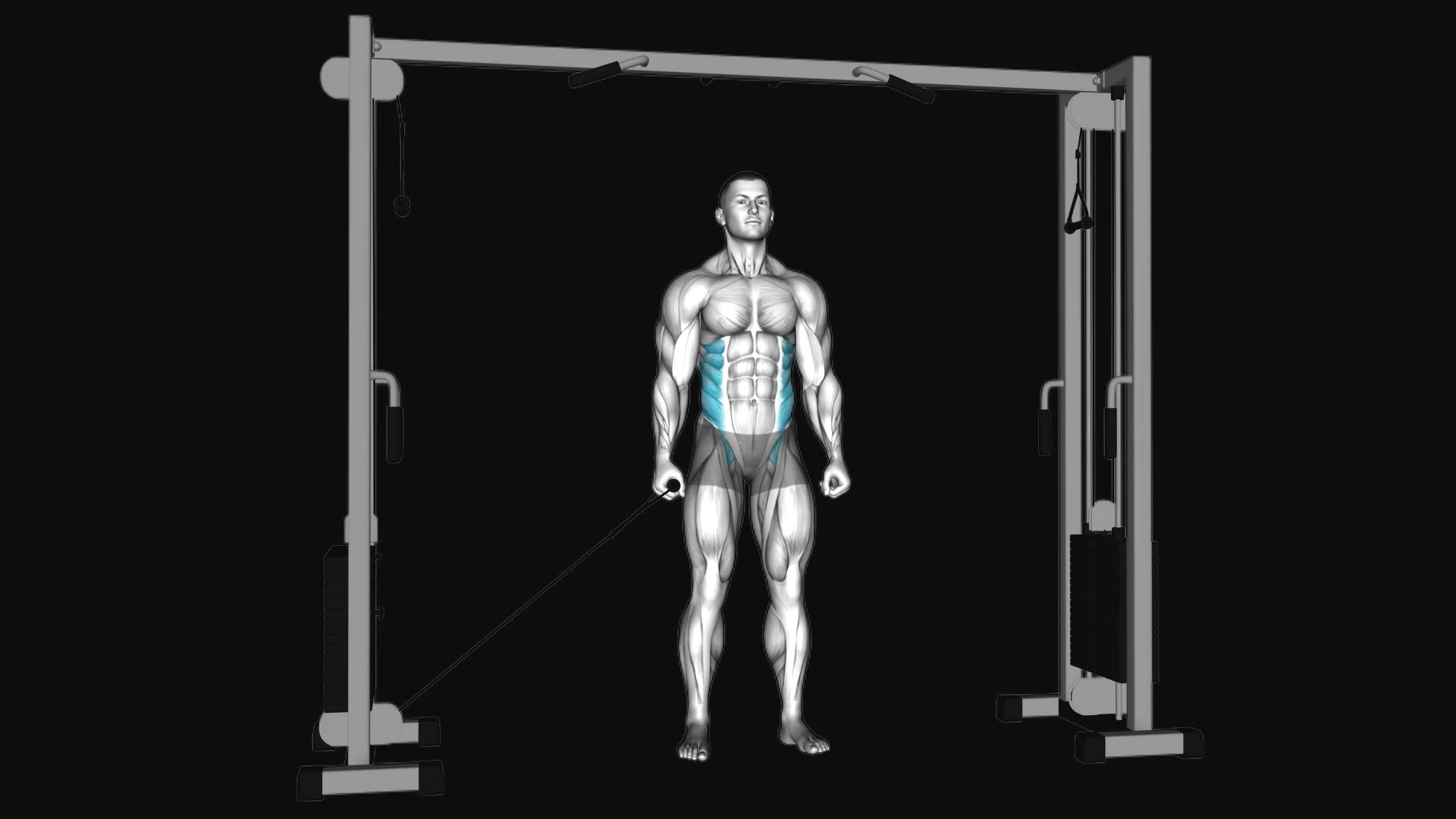
- Stand side-on to a cable machine with the pulley set to waist height.
- Attach a handle to the pulley and grab it with both hands.
- Stand with your feet shoulder-width apart, knees slightly bent, and your body facing the pulley.
- Extend your arms in front of you at waist level, keeping them straight.
- Inhale and brace your core. Exhale as you rotate your torso away from the machine, keeping your arms extended.
- Focus on twisting from your waist, using your oblique muscles.
- Keep your hips stable and facing forward.
- Slowly return to the starting position, controlling the movement and keeping tension in your core.
- Repeat for the desired number of reps before switching sides.
Common mistakes
- Pulling primarily with the arms and shoulders rather than rotating through the torso significantly reduces tension on the oblique muscles.
- Allowing the hips and pelvis to rotate freely shifts the workload away from the core and destabilizes the base.
- Using momentum to jerk the cable forward and releasing control on the return compromises muscle activation and places undue shear stress on the spine.
- Bending the elbows excessively shortens the lever arm, turning the movement into an arm press rather than a core exercise.
Tips
- Maintain a soft bend in your knees and keep your feet rooted to create an unyielding foundation for the hips.
- Track your hands with your eyes throughout the movement so your chest and shoulders rotate as a unified block.
- Hold the peak contraction for one second before resisting the cable's pull during the eccentric phase back to the start.
Sets and reps
Perform 3 to 4 sets of 10 to 15 controlled repetitions per side, resting 45 to 60 seconds between sets to build core stability and muscular endurance.
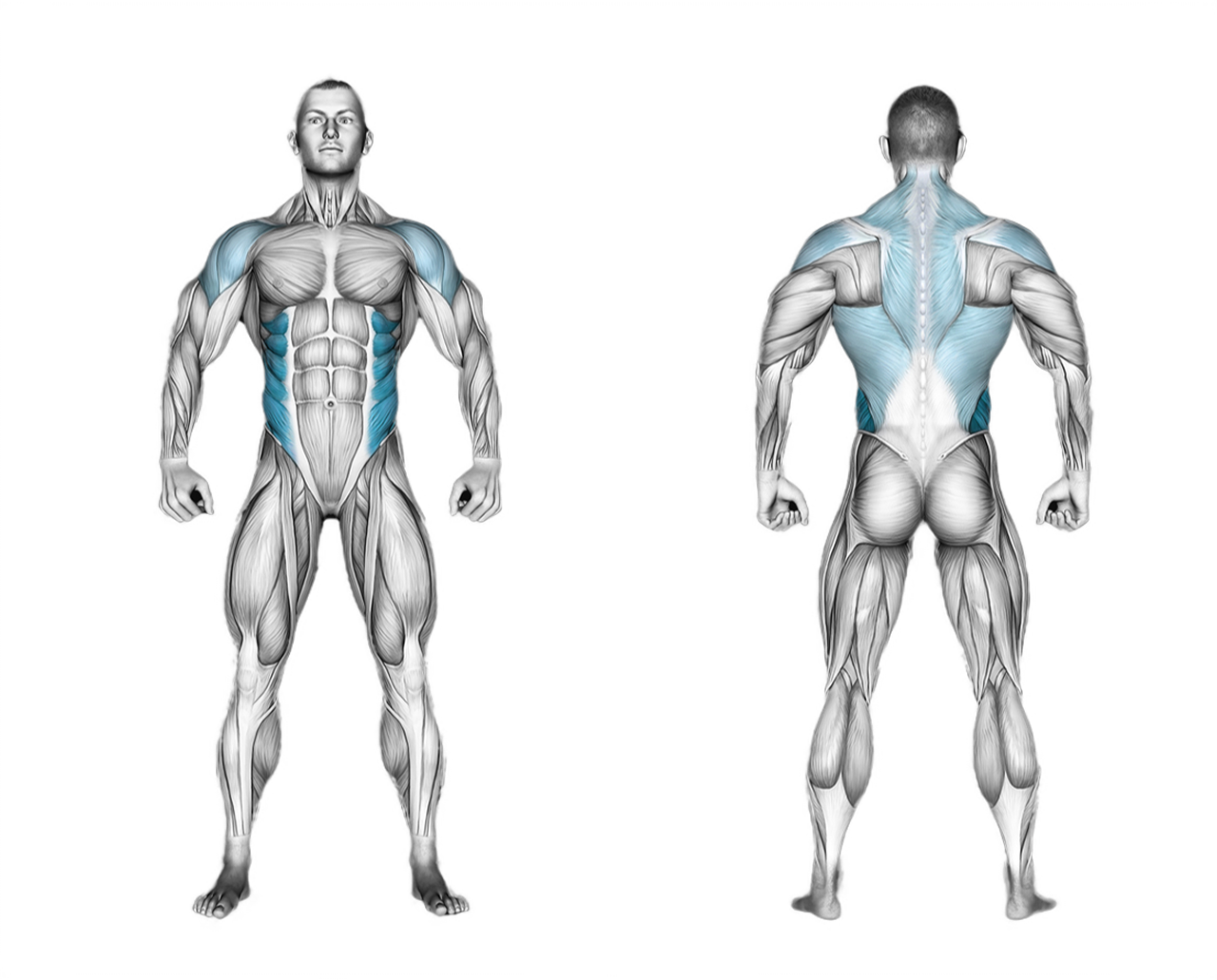
Muscles worked
Your coach guides every set
Turn on the coach in Gloox: it asks how you feel, picks the weight from your history and cues technique and rest. Rate each set and the next one is tuned to you.

On a computer? Point your phone's camera here to get the app.
Questions
Is the cable twist safe for the lower back?
It is generally safe when the pelvis remains stationary and rotation occurs through the thoracic spine, but if you experience any lower back pain, stop immediately and consult a qualified specialist.
Can the cable twist be done at home without a machine?
Yes, anchoring a heavy resistance band to a sturdy post at waist level provides a nearly identical rotational resistance curve.