
Back · Cable machine
Cable Bar Lateral Pulldown
The cable bar lateral pulldown is a compound vertical pulling exercise designed to build back width and upper-body pulling strength. It primarily targets the latissimus dorsi, serves lifters of all experience levels, and works best as a primary or secondary movement in back workouts.
- Muscles
- Back
- Equipment
- Cable machine
- Type
- Strength
- Animation
- Men and women
How to do it
- Sit at a cable pulley machine with a wide bar attached to the upper pulley.
- Grab the bar with an overhand grip, hands wider than shoulder-width apart.
- Sit down and adjust your thighs under the pads to secure your position.
- Lean back slightly, keeping your back straight and core engaged.
- Inhale and pull the bar down towards your chest, leading with your elbows and squeezing your shoulder blades together.
- Pull the bar down until it is at chest level, keeping your movements controlled.
- Exhale as you slowly return the bar to the starting position, fully extending your arms.
Common mistakes
- Leaning back excessively turns the movement into a horizontal row and reduces tension on the latissimus dorsi.
- Pulling primarily with the arms overworks the biceps while underutilizing the back muscles.
- Using torso momentum to jerk the weight down removes tension from target muscles and strains the lower back.
- Pulling the bar too far below the chest forces the shoulders into internal rotation, increasing the risk of joint impingement.
Tips
- Initiate each rep by depressing your shoulder blades and driving your elbows down toward your hips.
- Adjust the thigh pads firmly against your legs to prevent your hips from lifting off the bench.
- Allow a full stretch at the top of the movement while keeping the core braced.
Sets and reps
For hypertrophy, perform 3 to 4 sets of 8 to 12 repetitions with 90 to 120 seconds of rest. For muscular endurance, aim for 3 sets of 12 to 15 repetitions with 60 seconds of rest.
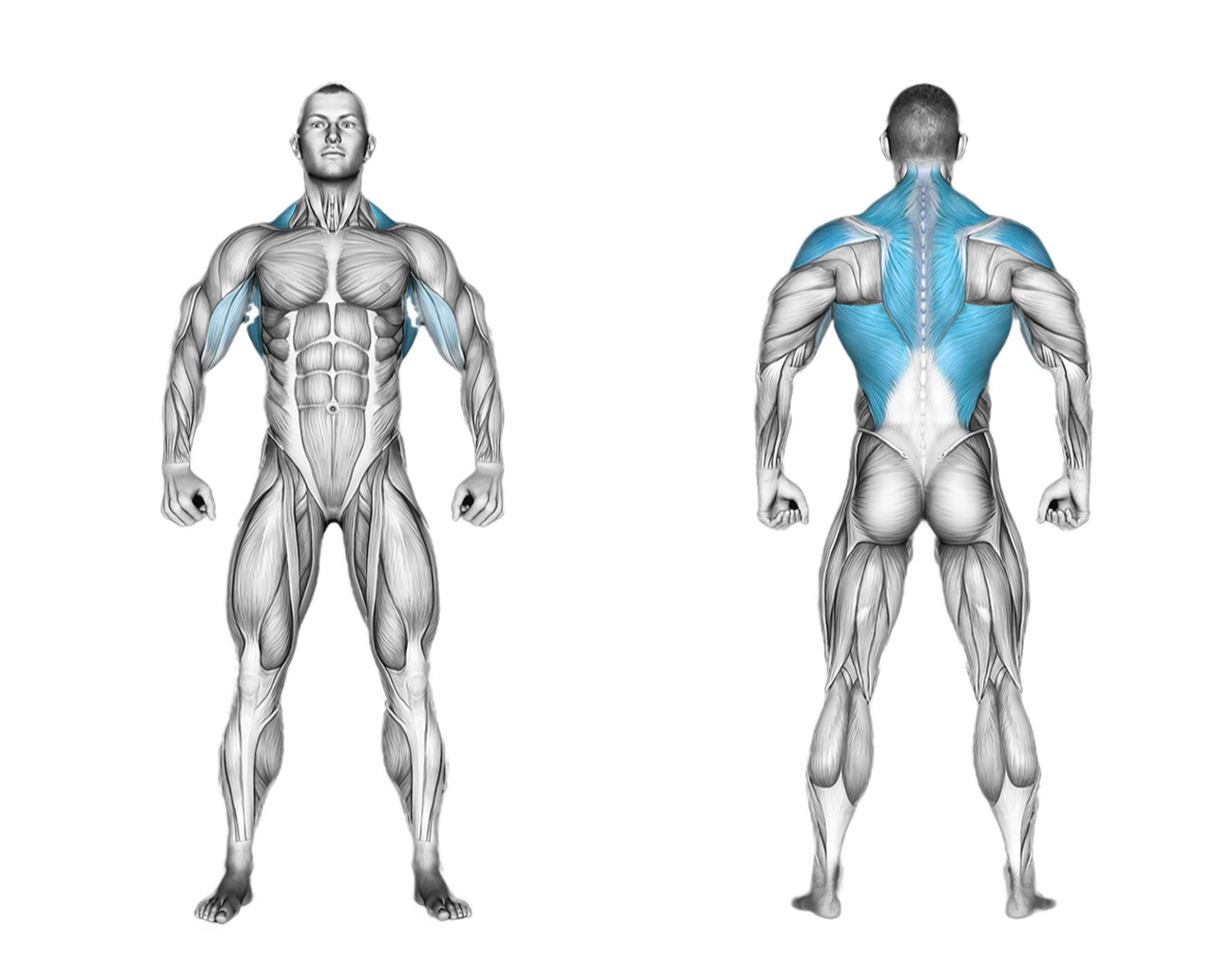
Muscles worked
Your coach guides every set
Turn on the coach in Gloox: it asks how you feel, picks the weight from your history and cues technique and rest. Rate each set and the next one is tuned to you.

On a computer? Point your phone's camera here to get the app.
Questions
Why is pulling to the chest safer than pulling behind the neck?
Behind-the-neck pulldowns place the rotator cuff and cervical spine into compromised positions, whereas pulling to the chest maintains a natural, joint-friendly path of motion.
What is the best alternative to this exercise?
Wide-grip pull-ups or resistance band pulldowns anchored overhead offer the closest functional substitution when a cable machine is unavailable.
Similar exercises
Cable Lateral Pulldown with Mag GripCable machine
Cable Lateral Pulldown with Mag GripCable machine
Cable High RowCable machine
Cable Single Arm High RowCable machine
Cable High Row with Chest SupportCable machine
Cable Standing Lat Pushdown (rope equipment)Cable machine
Lever Cross Lat PulldownCable machine
Cable Cross over Lateral PulldownCable machine