
Shoulders · Machines
Lever Seated Shoulder Press
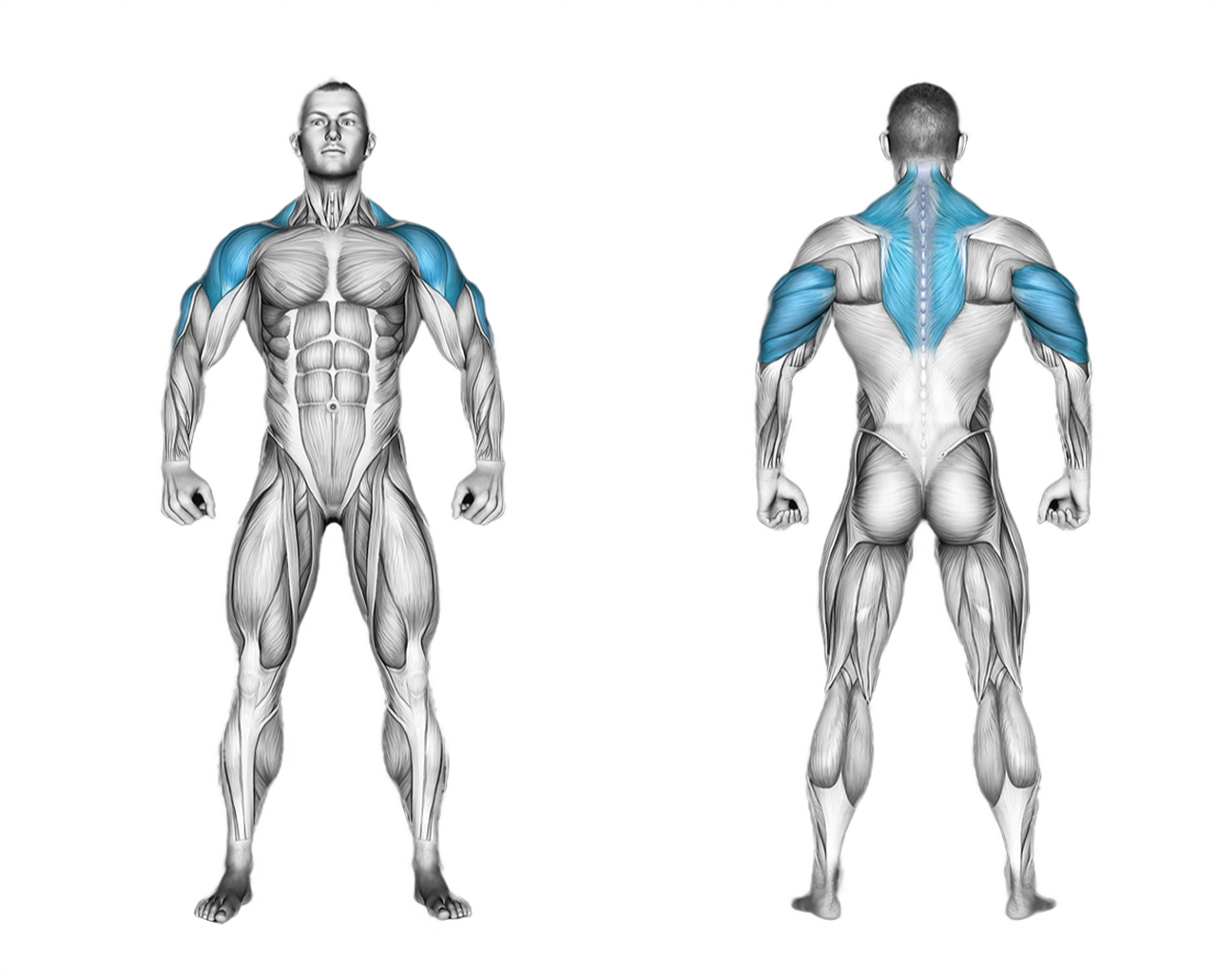
The lever seated shoulder press is a machine-based compound movement targeting the anterior and lateral deltoids, with secondary involvement of the triceps. Its guided motion minimizes the need for core stabilization, making it an effective choice for building shoulder size and pressing strength during the main portion of an upper-body workout.
- Muscles
- Shoulders
- Equipment
- Machines
- Type
- Strength
- Animation
- Men and women
How to do it
- Sit on the shoulder press machine and adjust the seat so that the handles are at the level of your shoulders.
- Grasp the handles with a grip slightly wider than shoulder-width, palms facing forward.
- Keep your feet flat on the floor and your back pressed against the seat.
- Inhale and brace your core. Exhale as you press the handles upwards, extending your arms fully.
- Focus on using your shoulder muscles, particularly the deltoids, to lift the weight.
- Avoid arching your back as you press.
- Slowly return the handles to the starting position, controlling the movement.
Common mistakes
- Arching the lower back off the backrest shifts tension to the upper chest and places unnecessary shear stress on the lumbar spine.
- Forcefully locking out the elbows at the top transfers the load from the shoulders onto the joint capsules.
- Setting the seat too low forces the shoulders into deep external rotation at the bottom, increasing impingement risk.
Tips
- Adjust the seat height so that the handles sit level with the tops of your shoulders at the bottom of the movement.
- Keep your elbows angled slightly forward in the scapular plane rather than flared out directly to the sides.
- Lower the handles in a slow, controlled manner over two to three seconds to maximize time under tension.
Sets and reps
For building muscle mass, perform 3 to 4 sets of 8 to 12 repetitions with 60 to 90 seconds of rest between sets. If training for muscular endurance, use 2 to 3 sets of 12 to 15 reps with shorter rest intervals.
Muscles worked
Your coach guides every set
Turn on the coach in Gloox: it asks how you feel, picks the weight from your history and cues technique and rest. Rate each set and the next one is tuned to you.

On a computer? Point your phone's camera here to get the app.
Questions
Is the lever shoulder press safer for the lower back than a standing press?
Yes, the back support stabilizes the pelvis and spine, drastically reducing spinal compression and shear forces. If any pain occurs, stop the exercise and consult a qualified specialist.
Can this machine fully replace free-weight overhead presses?
While it allows for heavier, safer loading on the deltoids, it does not challenge stabilizing muscles as much as dumbbells or barbells do. Combining both variations yields the best overall shoulder development.
Similar exercises
Lever Lateral Raise MachineMachines
Lever Seated Military PressMachines
Barbell Standing Military PressBarbell
Resistance Band 90 Degrees External RotationResistance bands
Resistance Band Standing 90 Degrees Shoulder External RotationResistance bands
Resistance Band Standing Shoulder External RotationResistance bands
Resistance Band Standing Around the WorldResistance bands
Dumbbell Arnold PressDumbbells