
Glutes · Machines
Lever Hip Extension
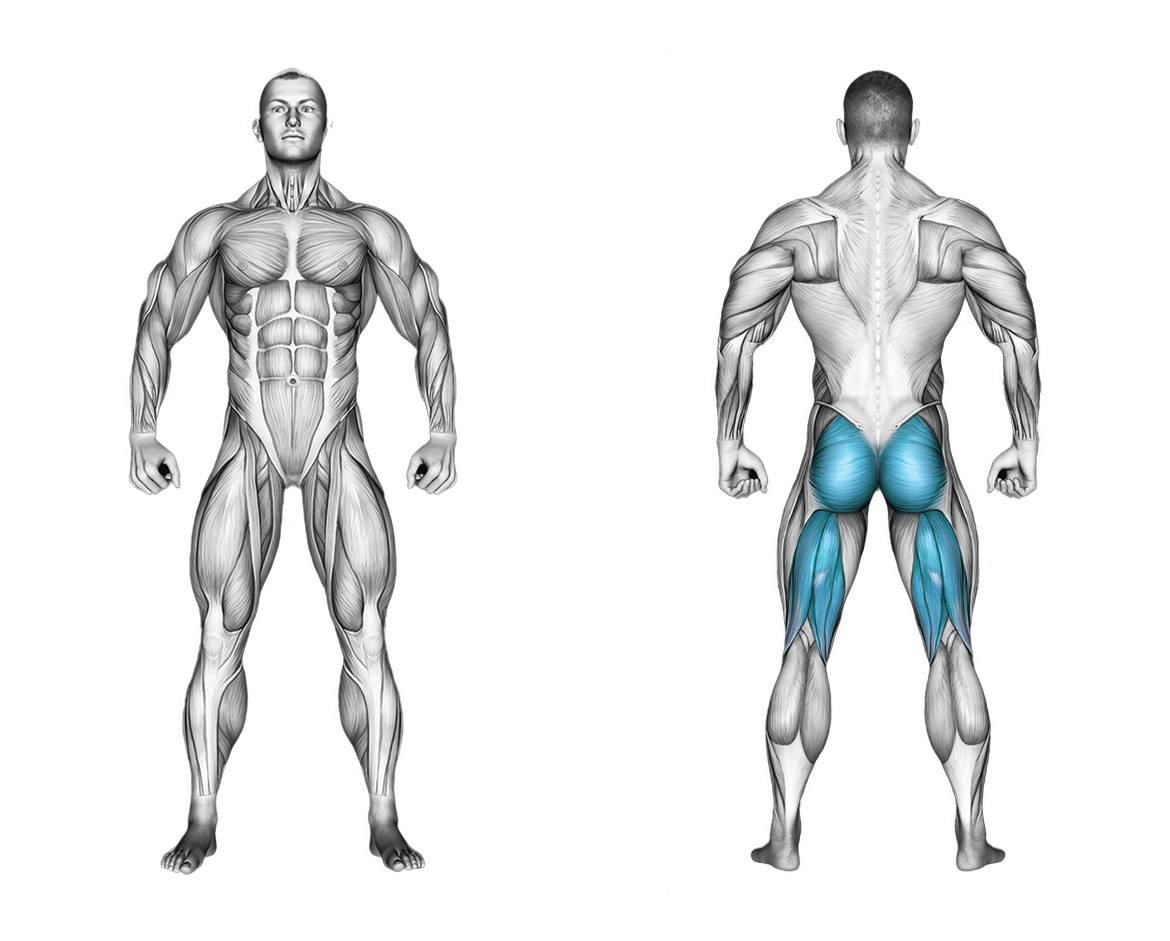
The lever hip extension is an accessory exercise designed to isolate and strengthen the gluteal muscles and hamstrings. It suits lifters of all experience levels and is best placed in the middle or end of a lower-body session after heavier compound lifts.
How to do it
- Position yourself in a hip extension machine with your hips supported and feet secured under the pads.
- Cross your arms over your chest.
- Lower your upper body by bending at the waist.
- Raise your torso back up by contracting your glutes and hamstrings until your body forms a straight line.
Common mistakes
- Hyperextending the lower back at the top of the movement shifts stress to the lumbar spine instead of keeping tension on the glutes.
- Setting the support pad too high above the hip crease blocks the pelvis and forces the movement to come from bending the spine.
- Swinging the torso upward with momentum reduces target muscle engagement and increases the risk of lower-back strain.
Tips
- Adjust the thigh pads just below your hip bones so your pelvis can hinge freely through a full range of motion.
- Finish each rep by contracting your glutes until your body forms a straight line from heels to shoulders without arching backwards.
- Tuck your chin slightly and lower your torso under control to maintain tension on the glutes during the eccentric phase.
Sets and reps
Perform 3 to 4 sets of 10 to 15 controlled repetitions with 60 to 90 seconds of rest to maximize muscle growth. If holding added weight against the chest, aim for 8 to 12 reps while keeping strict hip-hinge mechanics.
Muscles worked
Your coach guides every set
Turn on the coach in Gloox: it asks how you feel, picks the weight from your history and cues technique and rest. Rate each set and the next one is tuned to you.

On a computer? Point your phone's camera here to get the app.
Questions
How does this exercise differ from a traditional back extension?
This variation hinges strictly at the hip joint to target the glutes and hamstrings, while keeping the spine neutral rather than curling and uncurling the back.
What should you do if you feel pain in your lower back?
Stop the movement immediately if you experience sharp pain and consult a healthcare professional. To prevent mild lower-back discomfort, lower the thigh pad and avoid lifting your torso past neutral alignment.
Similar exercises
Lever Standing Hip ExtensionMachines
Lever Hip ThrustMachines
Resistance Band Lateral WalkResistance bands
Resistance Band Bent Leg Side Kick (kneeling)Resistance bands
Band Seated Hip External RotationResistance bands
Barbell Lunge TwistBarbell
Cable Donkey Diagonal KickbackCable machine
Cable Donkey KickbackCable machine