Biceps · Dumbbells
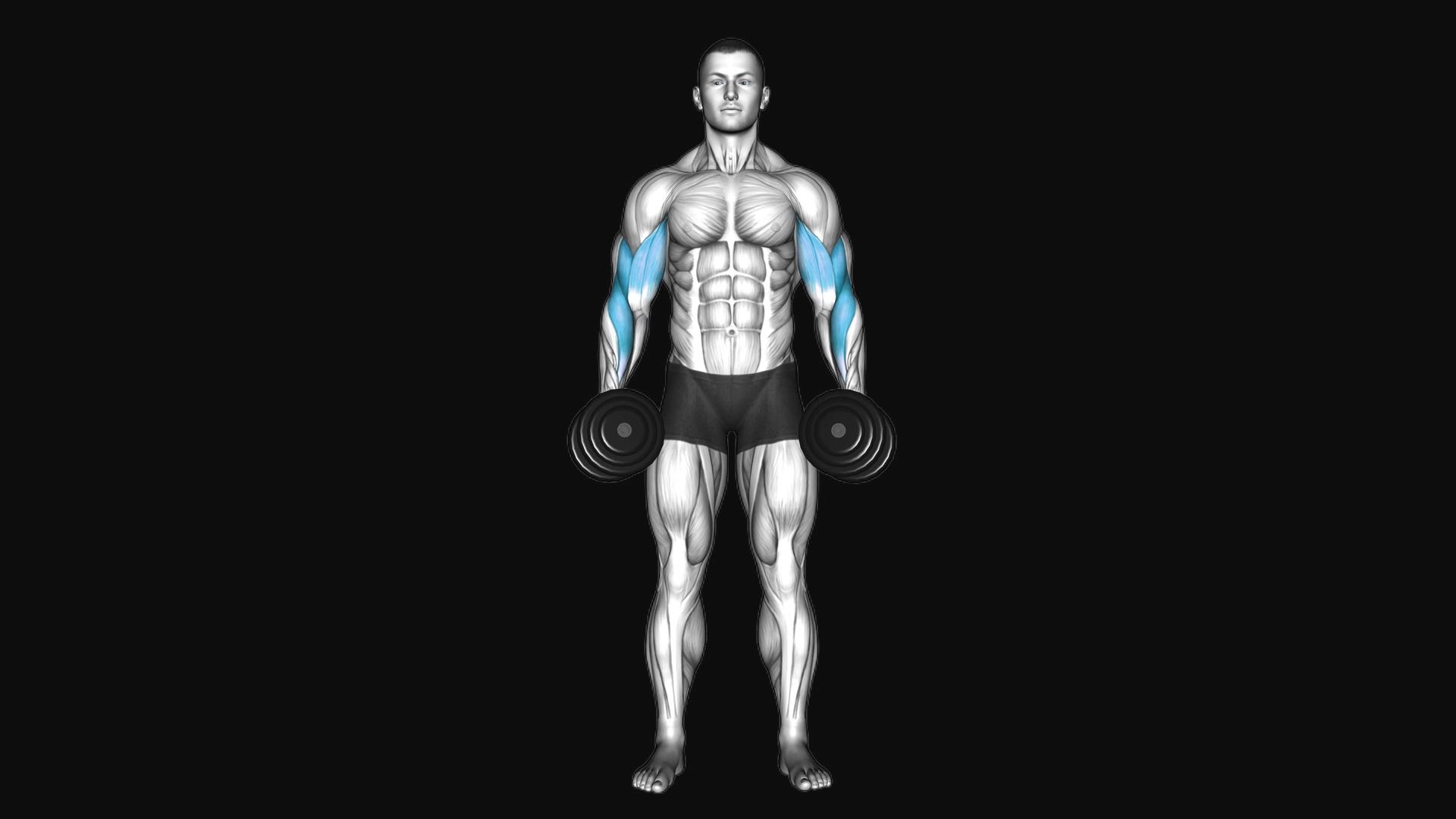
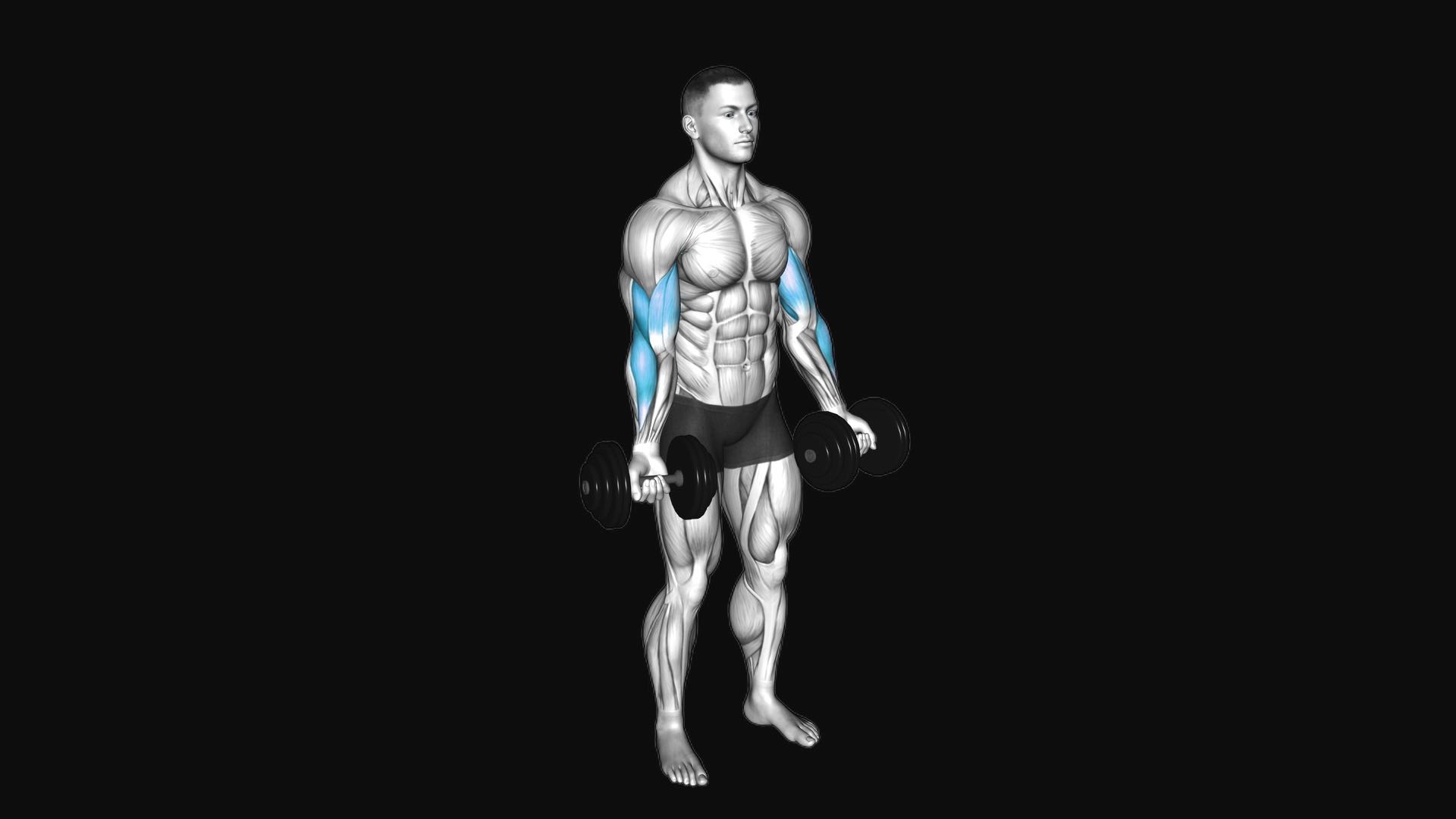
Dumbbell Standing Biceps Curl
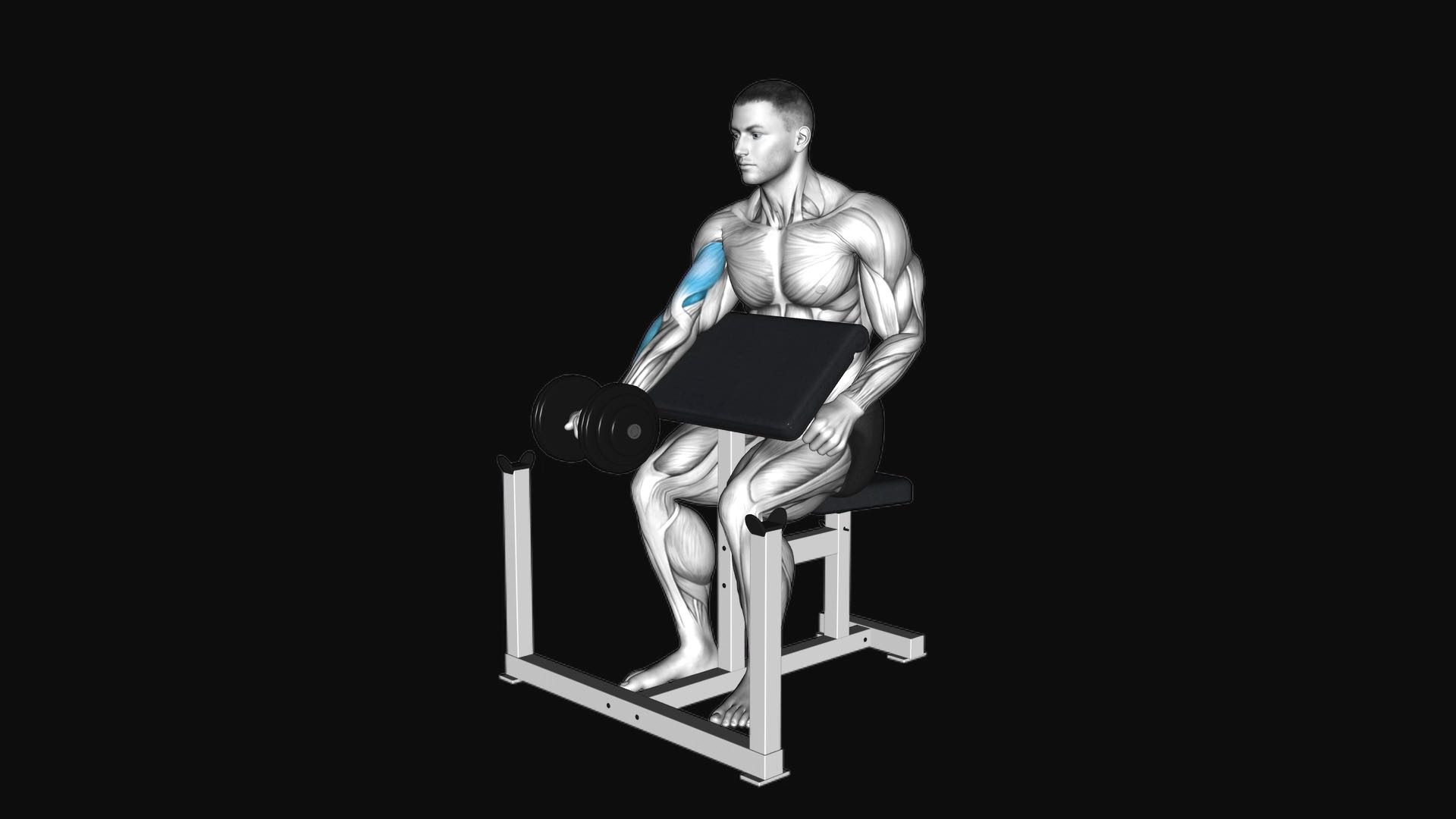
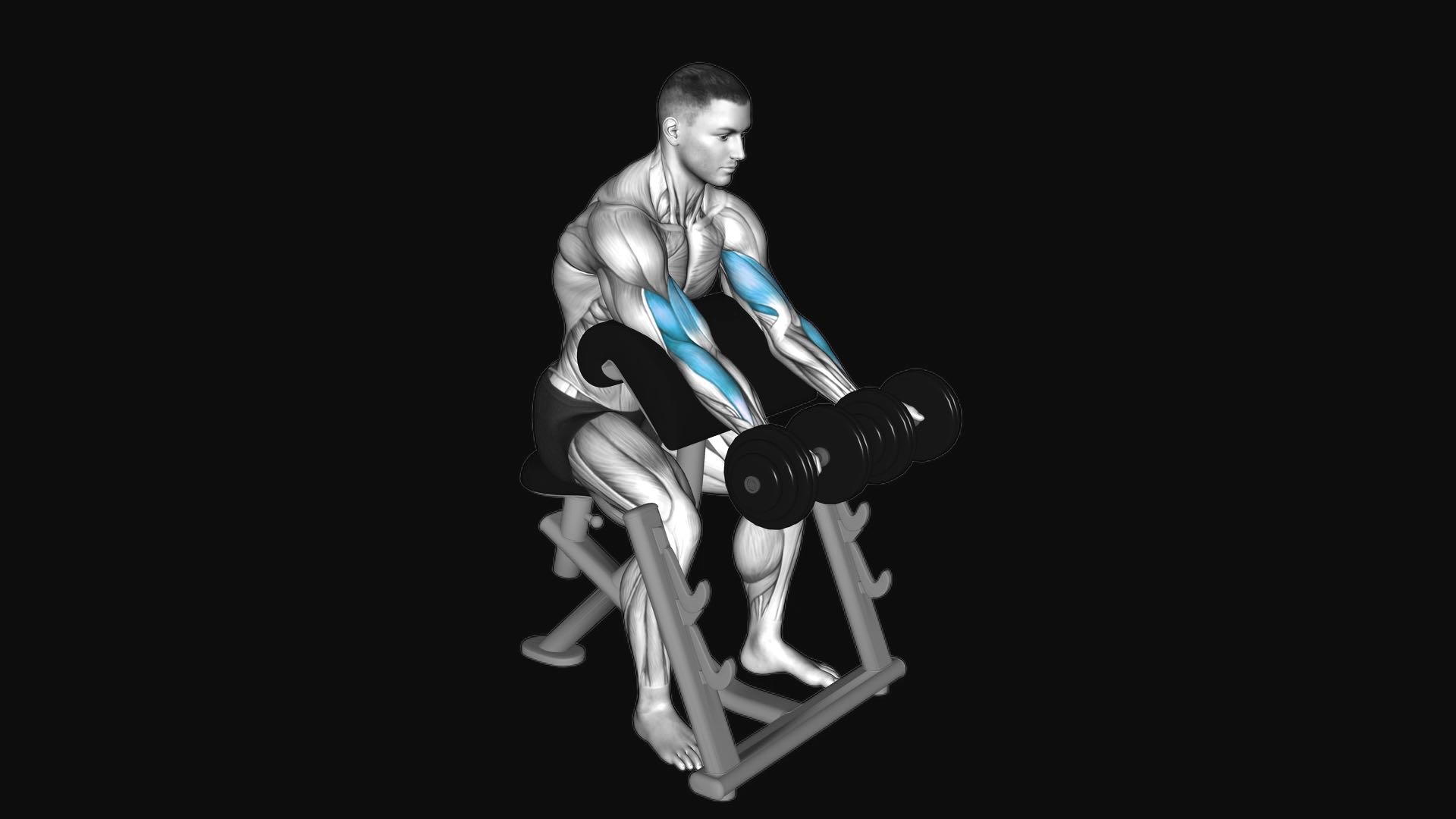
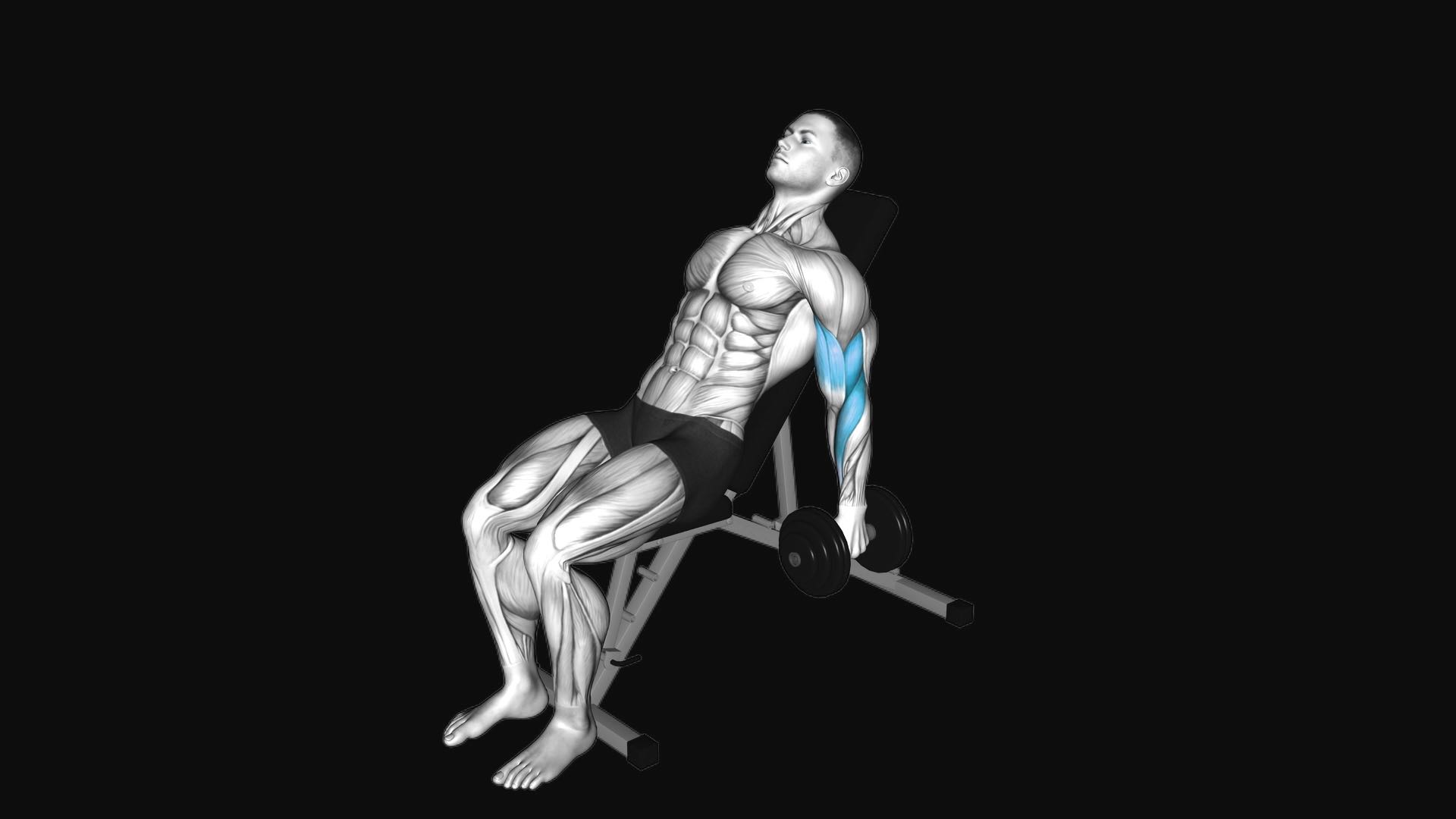
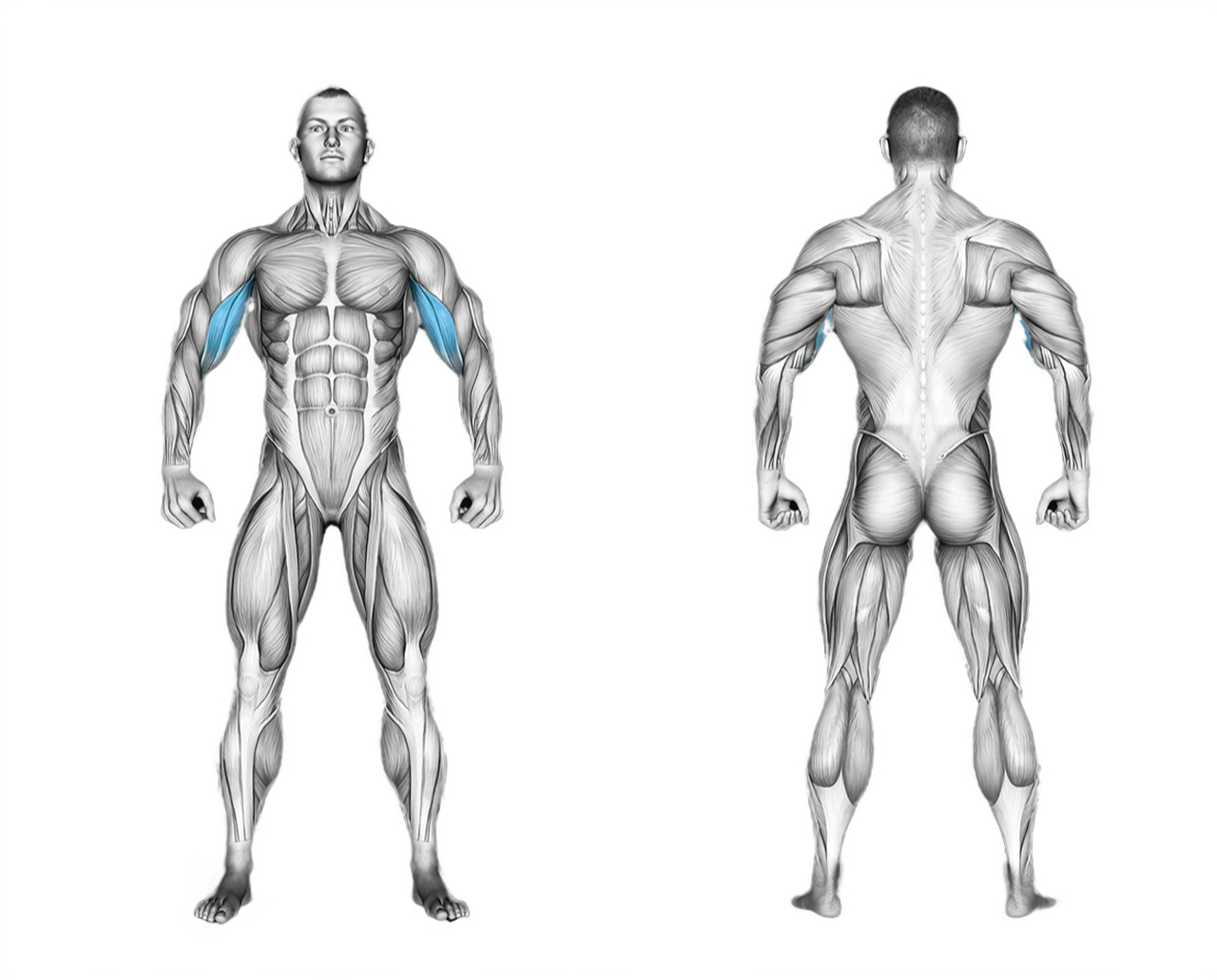
The standing dumbbell biceps curl is an isolation exercise designed to develop the biceps brachii and brachialis muscles. It suits lifters of all fitness levels and typically fits into the middle or end of an upper-body pull or arm workout.
How to do it
- Stand upright with your feet shoulder-width apart, holding a dumbbell in each hand at arm's length, palms facing forward.
- Keep your elbows close to your torso and your back straight.
- Inhale and brace your core. Exhale as you curl the dumbbells up towards your shoulders, bending only at the elbows.
- Keep your upper arms stationary, focusing on using your biceps to lift the weights.
- Squeeze your biceps at the top of the movement.
- Slowly lower the dumbbells back to the starting position, controlling the movement.
Common mistakes
- Swinging the torso to generate momentum takes tension away from the biceps and strains the lower back.
- Drifting the elbows forward during the curl shifts mechanical load onto the anterior deltoids.
- Dropping the weights quickly on the descent eliminates the eccentric phase, reducing overall hypertrophy gains.
- Bending the wrists backward excessively stresses the wrist joints and compromises forearm stability.
Tips
- Keep your elbows tucked close to your ribs and maintain their position throughout the entire repetition.
- Pause for one full second at the top of the movement to maximize peak contraction.
- Lower the dumbbells under strict control for two to three seconds to increase time under tension.
Sets and reps
For muscle building, perform 3 to 4 sets of 8 to 12 repetitions with 60 to 90 seconds of rest. For muscular endurance, use lighter weights for 2 to 3 sets of 15 to 20 repetitions with 45 to 60 seconds of rest.
Muscles worked
Your coach guides every set
Turn on the coach in Gloox: it asks how you feel, picks the weight from your history and cues technique and rest. Rate each set and the next one is tuned to you.

On a computer? Point your phone's camera here to get the app.
Questions
Is it better to curl both dumbbells at once or alternate arms?
Curling both arms together maintains constant tension, whereas alternating sides helps you manage heavier weights and focus fully on the mechanics of each arm.
What should you do if you feel lower back pain while curling?
Lower back pain usually stems from torso swing caused by excessive weight; reduce the load or perform the movement seated with back support, and stop immediately to consult a specialist if the pain persists.