
Back · Cable machine
Cable Twin Handle Parallel Grip Lat Pulldown
The cable twin handle parallel grip lat pulldown is a vertical pulling exercise that utilizes two independent handles to allow a natural, joint-friendly path of motion. It primarily targets the latissimus dorsi while recruiting the biceps and upper back, fitting well as a primary or secondary movement in any back workout.
- Muscles
- Back
- Equipment
- Cable machine
- Type
- Strength
- Animation
- Men
How to do it
- Sit at a lat pulldown machine with two individual handles attached.
- Grab each handle with a neutral (parallel) grip.
- Pull the handles down towards your chest, driving your elbows down and back.
- Squeeze your lats at the bottom.
- Return to the starting position with control.
Common mistakes
- Leaning too far back turns the vertical pulldown into a row, shifting the primary stimulus away from the lats.
- Pulling through the hands and flexing the elbows prematurely overworks the biceps rather than engaging the back.
- Allowing the weight stack to pull the arms up uncontrollably eliminates eccentric tension and strains the shoulder joints.
Tips
- Initiate the movement by depressing your shoulder blades before driving your elbows down toward your ribs.
- Take advantage of the independent handles by letting your wrists settle into the most natural, comfortable neutral angle.
- Pause for a brief second at the bottom position to maximize peak contraction of the lats.
Sets and reps
Perform 3 to 4 sets of 8 to 12 reps for hypertrophy with 60 to 90 seconds of rest between sets. If training for muscular endurance, aim for 12 to 15 reps with approximately 60 seconds of rest.
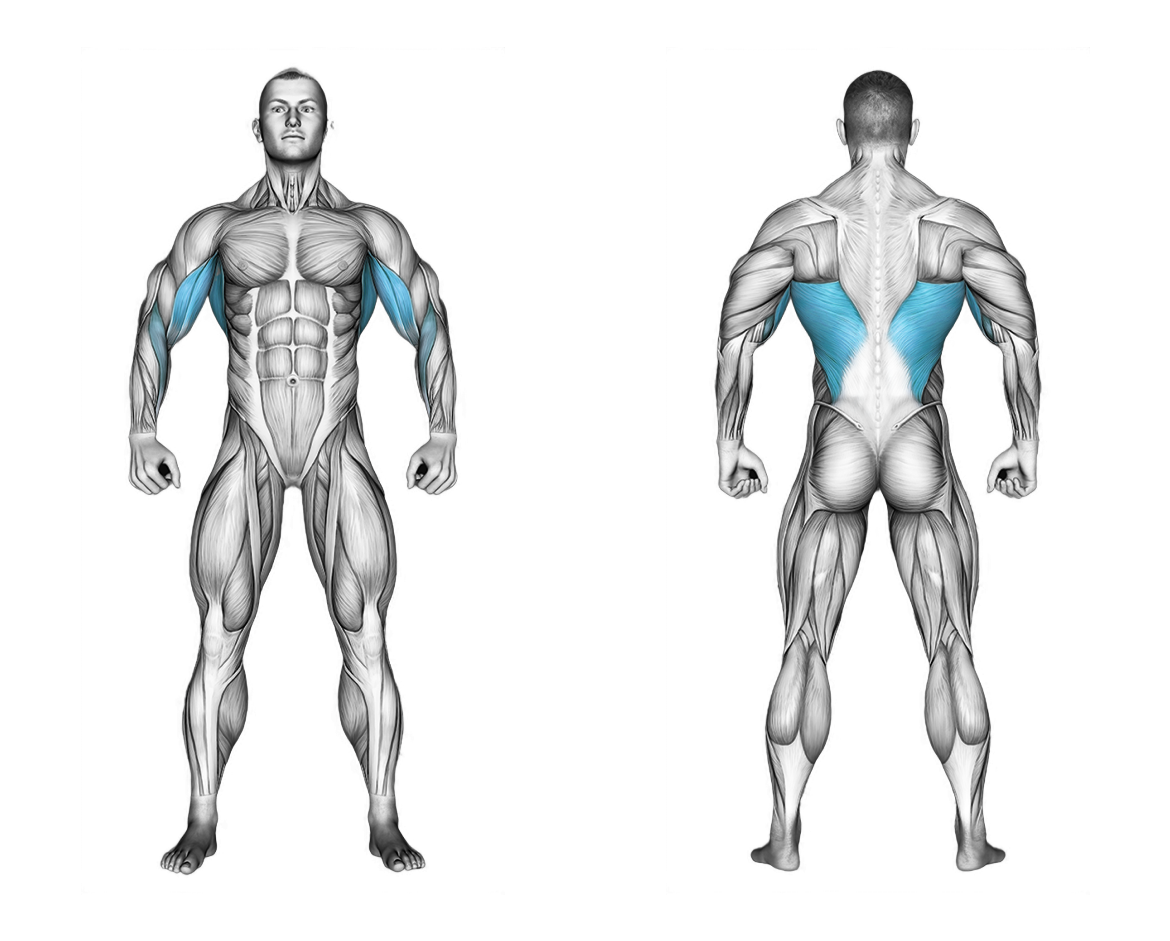
Muscles worked
Your coach guides every set
Turn on the coach in Gloox: it asks how you feel, picks the weight from your history and cues technique and rest. Rate each set and the next one is tuned to you.

On a computer? Point your phone's camera here to get the app.
Questions
What is the benefit of using two separate handles instead of a rigid close-grip attachment?
Two handles allow independent movement for each arm, preventing the dominant side from taking over while permitting natural wrist and shoulder rotation.
What should you do if you feel shoulder discomfort during the pull?
Stop the exercise immediately, ensure your elbows do not travel excessively far behind your torso, and consult a qualified specialist if the discomfort persists.
Similar exercises
Cable Lateral Pulldown with Mag GripCable machine
Cable Lateral Pulldown with Mag GripCable machine
Cable High RowCable machine
Cable Single Arm High RowCable machine
Cable High Row with Chest SupportCable machine
Cable Standing Lat Pushdown (rope equipment)Cable machine
Lever Cross Lat PulldownCable machine
Cable Cross over Lateral PulldownCable machine