Chest · Dumbbells
Dumbbell Decline Bench Press
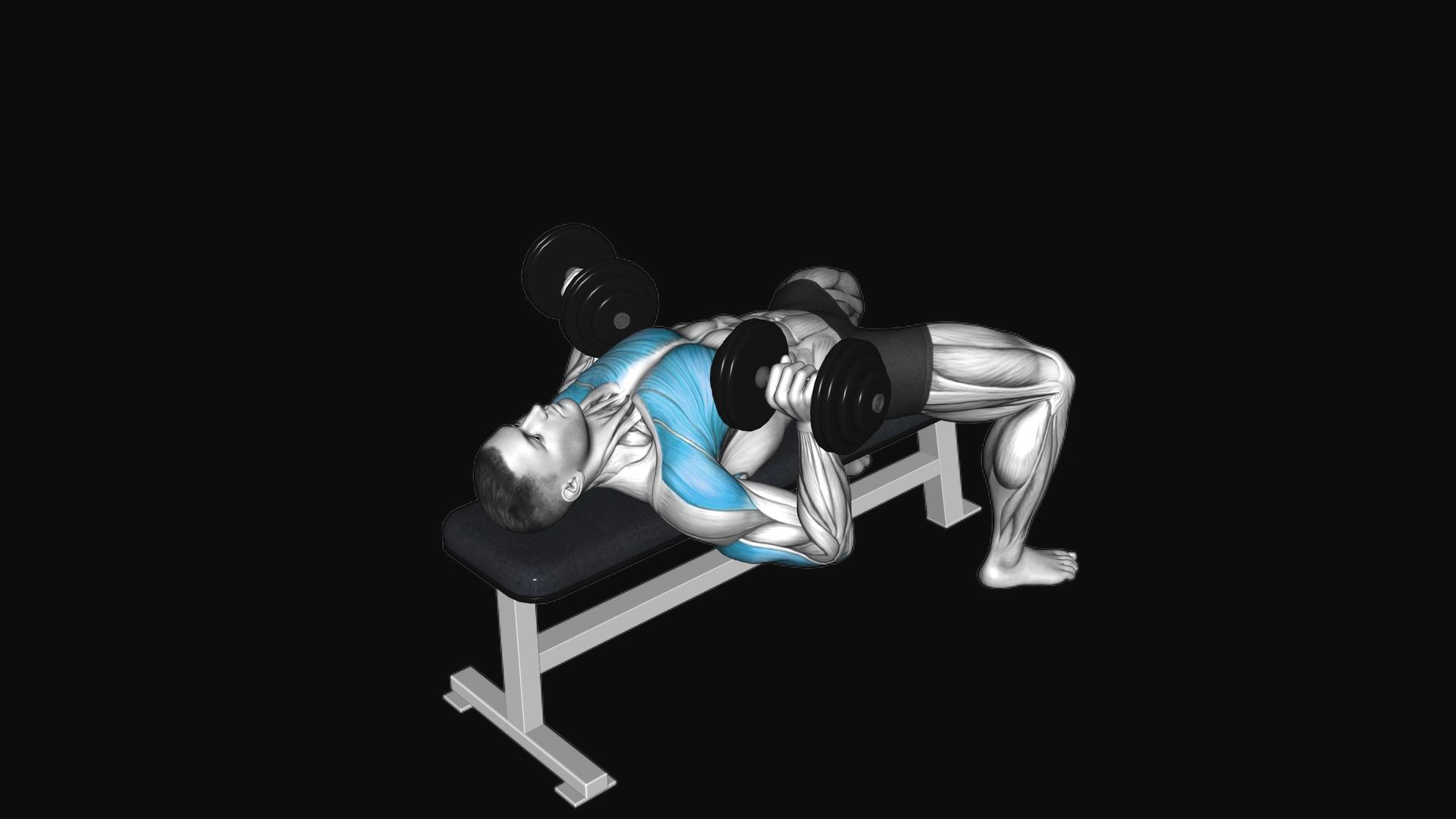
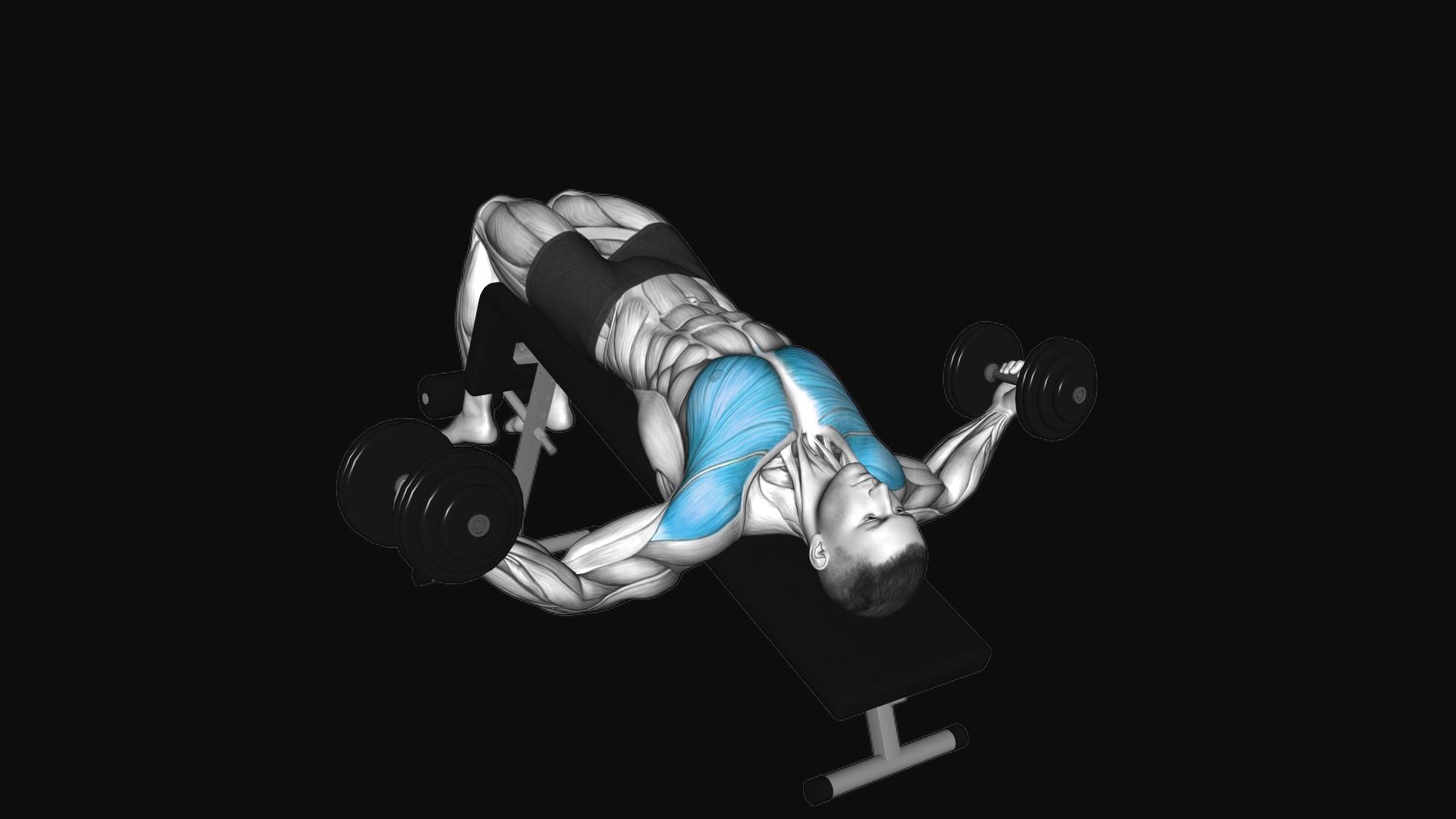
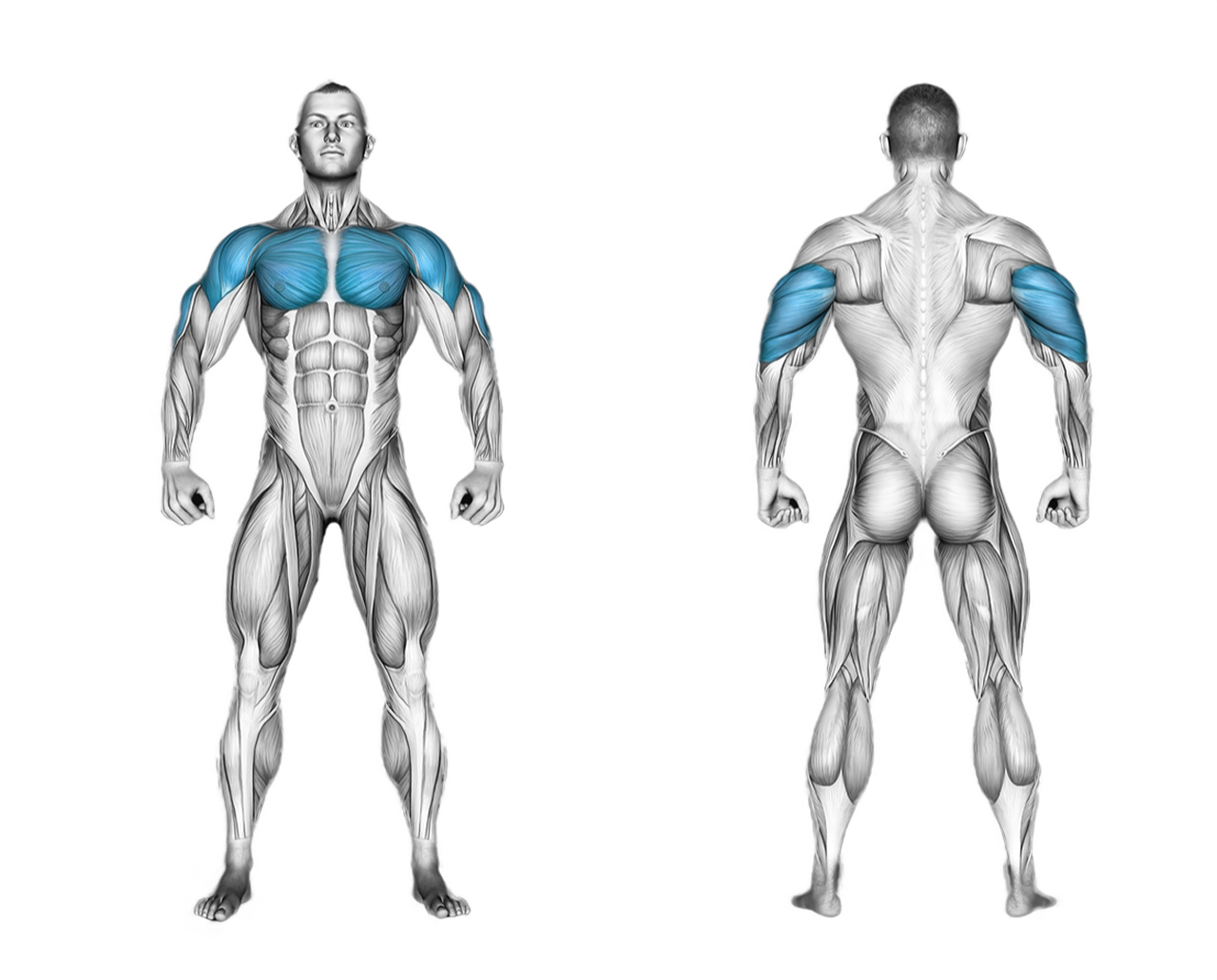
The dumbbell decline bench press is a compound upper-body exercise that targets the lower pectoralis major while engaging the triceps. The free weight path allows for a natural range of motion with less shoulder impingement risk, making it an effective choice for the middle of a chest workout.
How to do it
- Lie on a decline bench with your feet secured under the foot pads.
- Hold a dumbbell in each hand at chest level, palms facing forward.
- Keep your back flat against the bench and your feet firmly planted.
- Inhale and brace your core. Exhale as you press the dumbbells up, extending your arms above your chest.
- Keep the movement controlled, focusing on using your chest muscles.
- Avoid locking your elbows at the top of the movement.
- Slowly lower the dumbbells back to the starting position, just above your chest.
Common mistakes
- Flaring the elbows out at a 90-degree angle places excessive stress on the shoulder joints and rotator cuff.
- Dropping the dumbbells quickly at the bottom eliminates muscle tension and increases the risk of joint strain.
- Overarching the lower back and lifting the hips off the pad alters the decline angle and compromises core stability.
Tips
- Keep your elbows angled at roughly 45 to 60 degrees relative to your torso throughout the lift.
- Retract and depress your shoulder blades against the bench before pressing to create a stable foundation.
- Bring the dumbbells safely to your thighs or have a spotter take them before unhooking your legs to sit up.
Sets and reps
Perform 3 to 4 sets of 8 to 12 repetitions with 60 to 90 seconds of rest for muscle growth. For strength development, aim for 3 to 4 sets of 6 to 8 repetitions with 2 minutes of rest between sets.
Muscles worked
Your coach guides every set
Turn on the coach in Gloox: it asks how you feel, picks the weight from your history and cues technique and rest. Rate each set and the next one is tuned to you.

On a computer? Point your phone's camera here to get the app.
Questions
How does the decline dumbbell press differ from the flat bench press?
The decline angle concentrates the load onto the lower sternal fibers of the chest while significantly reducing front deltoid involvement.
What should you do if you feel lightheaded during the exercise?
Inverted positions elevate blood pressure in the head, so stop the set immediately, sit upright, and consult a specialist if the issue persists.