
Forearms · Dumbbells
Dumbbell Seated Neutral Wrist Curl
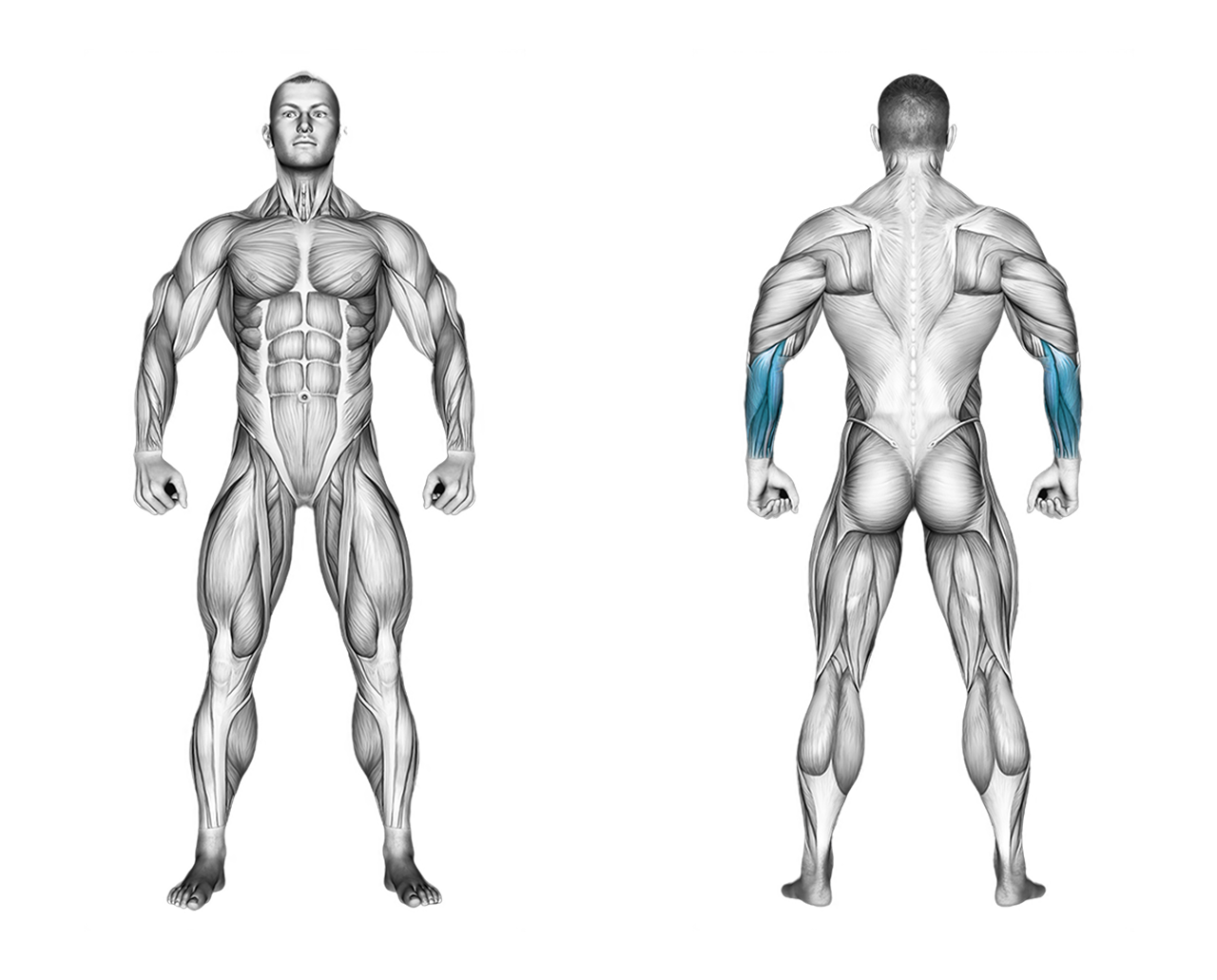
The dumbbell seated neutral wrist curl is an isolation exercise that targets the forearm muscles, with particular emphasis on the brachioradialis and wrist stabilizers. It is ideal for anyone aiming to enhance grip strength or build forearm thickness, best performed at the end of an upper-body or arm workout.
How to do it
- Sit on a bench with a dumbbell in each hand, forearms resting on your thighs.
- Hold the dumbbells with a neutral grip, wrists hanging over your knees.
- Keep your forearms stationary against your thighs.
- Curl the weights up by flexing your wrists in all directions.
- Slowly return to the starting position with control.
Common mistakes
- Lifting the forearms off the thighs shifts the workload away from the forearms and onto the biceps.
- Using weights that are too heavy restricts the natural range of motion and places excessive stress on the wrists.
- Dropping the weights quickly on the descent removes tension during the eccentric phase and increases the risk of joint irritation.
Tips
- Keep your wrists positioned slightly beyond your knees so the dumbbells move freely through full flexion and extension.
- Maintain a firm grip on the handles to maximize muscle activation throughout each repetition.
- Pause briefly at the top of each movement to rely strictly on muscle contraction rather than momentum.
Sets and reps
For forearm hypertrophy and endurance, aim for 2 to 4 sets of 12 to 20 controlled repetitions, resting 45 to 60 seconds between sets.
Muscles worked
Your coach guides every set
Turn on the coach in Gloox: it asks how you feel, picks the weight from your history and cues technique and rest. Rate each set and the next one is tuned to you.

On a computer? Point your phone's camera here to get the app.
Questions
Which forearm muscles work most in a neutral grip?
The neutral position shifts the workload toward the brachioradialis and radial wrist stabilizers, balancing forearm development.
What should be done if wrist pain occurs during the exercise?
If you experience sharp pain or persistent discomfort, stop the exercise immediately and consult a healthcare specialist.
Similar exercises
Dumbbell Seated Neutral Wrist CurlDumbbells
Dumbbell Reverse Wrist CurlDumbbells
Dumbbell Standing Reverse Wrist CurlDumbbells
Dumbbell Reverse Wrist Curl Over BenchDumbbells
Dumbbell Behind Back Wrist CurlDumbbells
Dumbbell Wrist Curl Over BenchDumbbells
Dumbbell Seated Palms Up Wrist CurlDumbbells
Cable Standing Wrist RollCable machine