Legs · Cardio machines
Walking on Stepmill
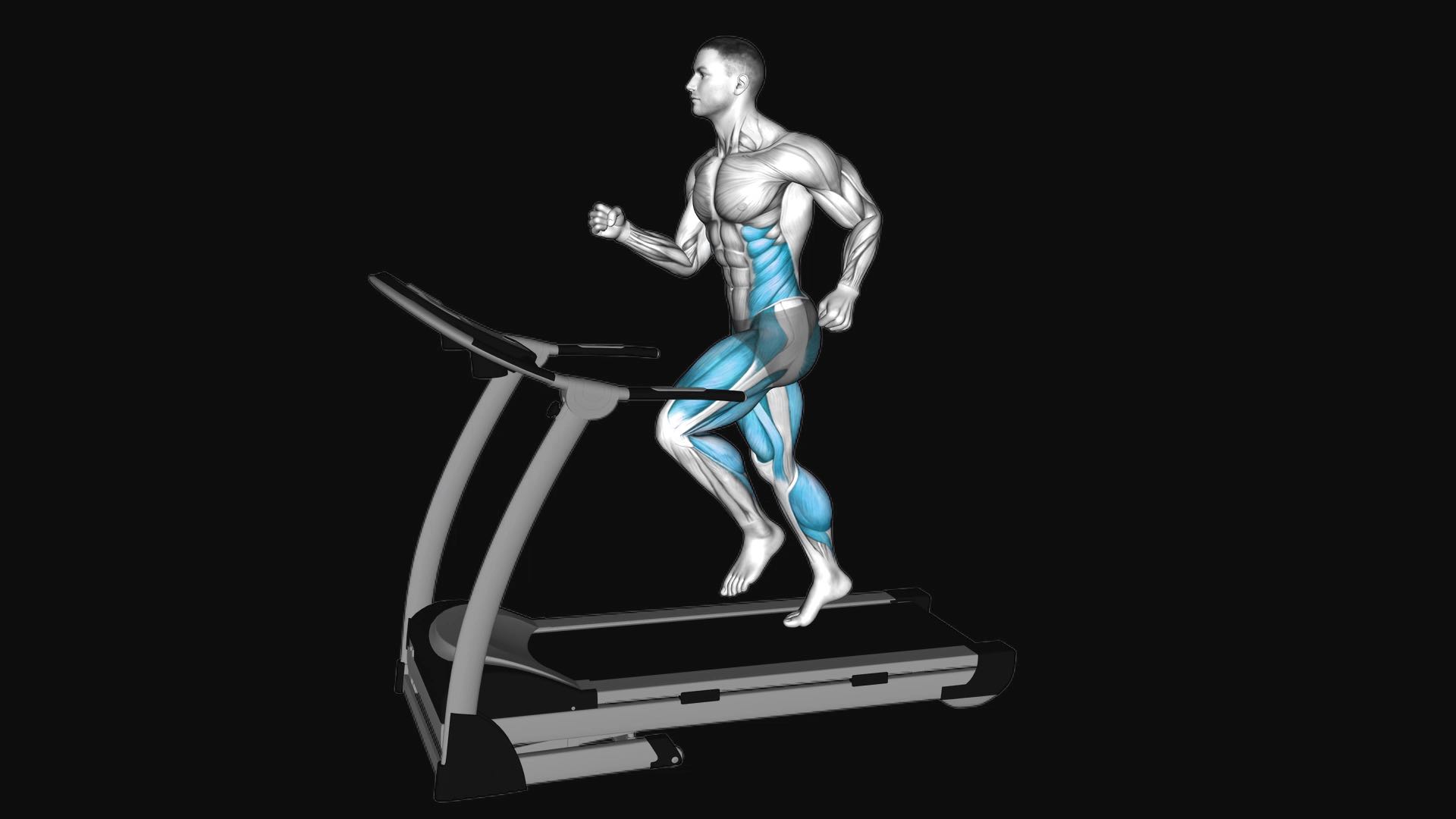
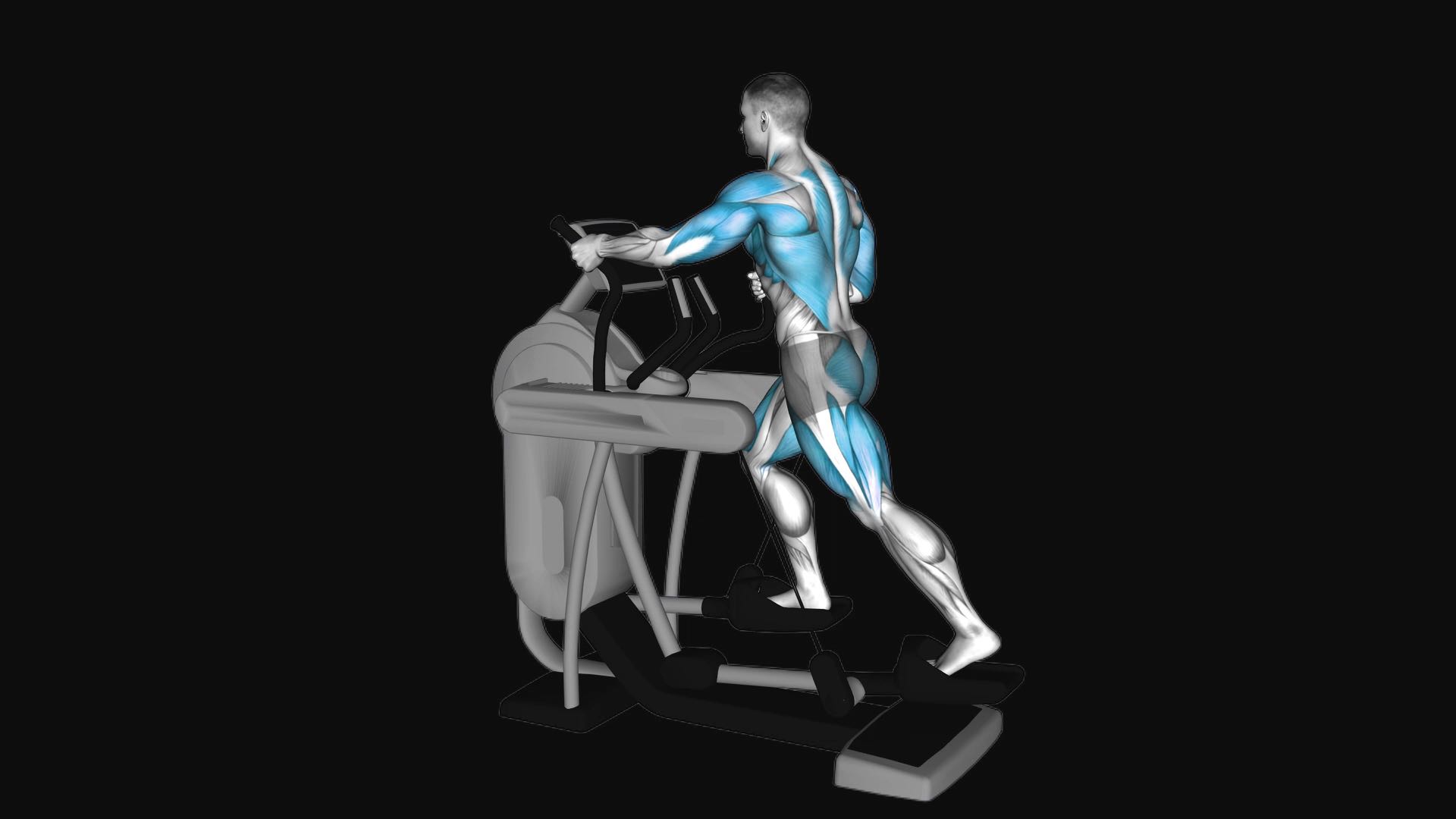
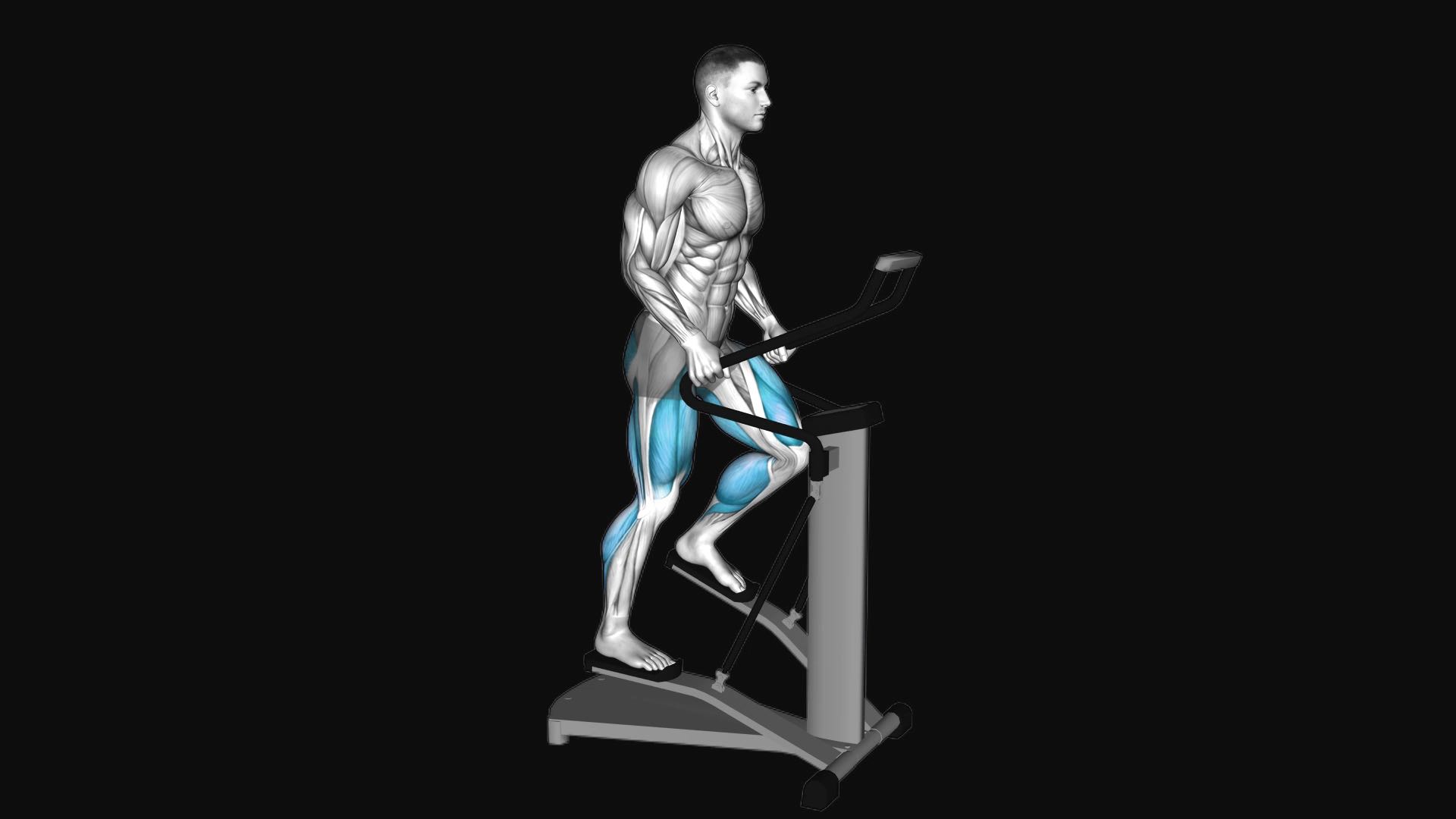
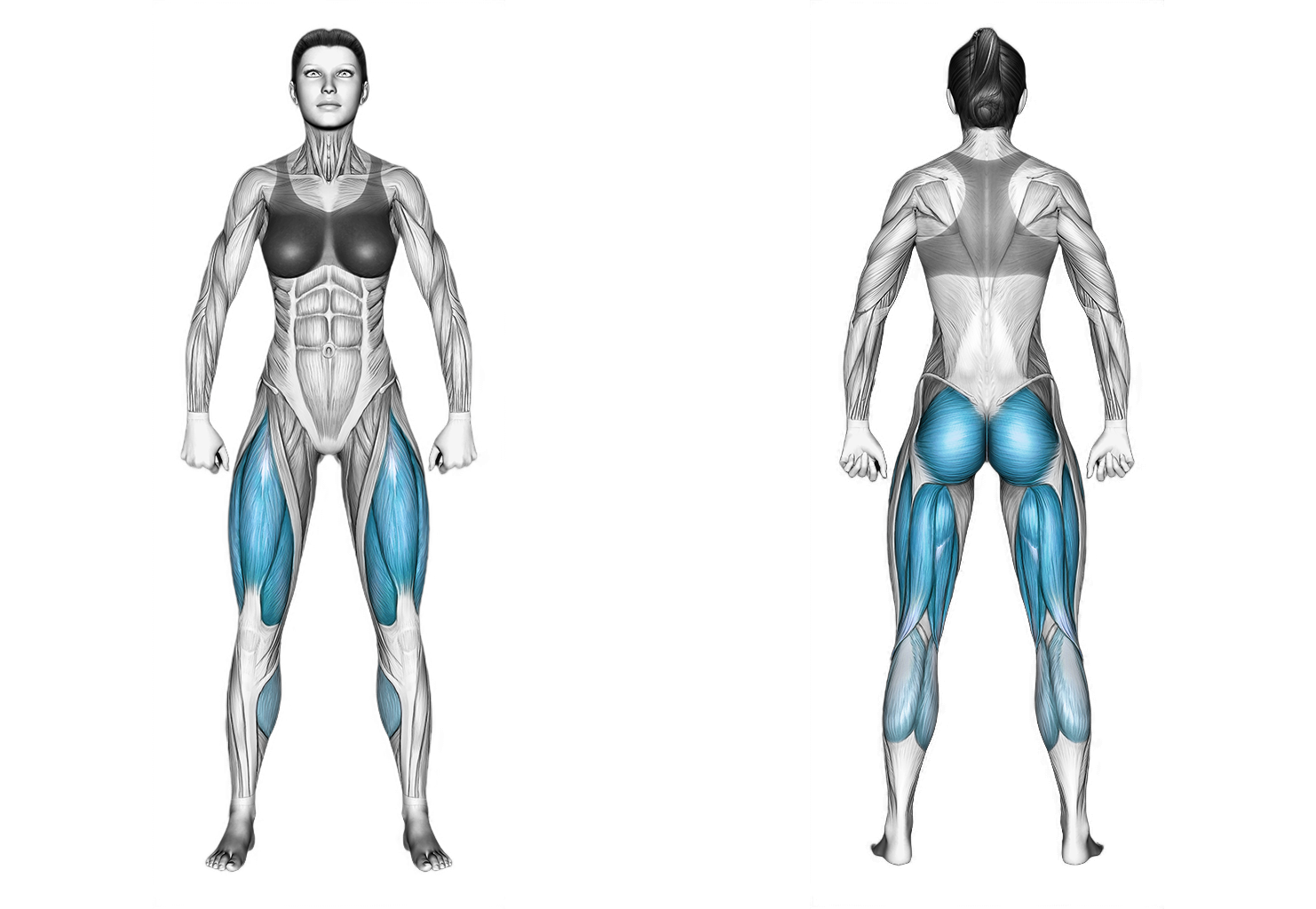
Walking on a stepmill is a low-impact cardio exercise that simulates climbing a continuous revolving staircase. It builds lower-body muscular endurance in the glutes, quadriceps, and calves, functioning well as a dedicated conditioning workout or a thorough lower-body warmup.
- Muscles
- Legs
- Equipment
- Cardio machines
- Type
- Cardio / timed
- Animation
- Women
How to do it
- Step onto the stepmill and hold the handrails lightly for balance.
- Begin stepping at a comfortable pace, placing your entire foot on each step.
- Maintain an upright posture with shoulders back and core engaged.
- Avoid leaning heavily on the handrails.
- Keep a steady rhythm and breathe naturally throughout.
Common mistakes
- Leaning heavily on the handrails reduces lower-body muscle activation and compromises the cardiovascular challenge.
- Stepping only on the balls of the feet overloads the calves and Achilles tendons while underusing the glutes.
- Hunching the shoulders and rounding the lumbar spine puts excessive mechanical stress on the lower back.
Tips
- Plant the entire foot firmly on each step, driving slightly through the heel to fully engage the glutes.
- Rest hands lightly on the rails solely for balance while allowing the legs to support your full body weight.
- Keep an upright posture with an engaged core and the chest held open throughout the climb.
Sets and reps
For a general warmup, perform 5–10 minutes at a moderate pace. For cardiovascular conditioning, aim for a continuous 20–40 minute session, or complete intervals of 3–5 minutes at a higher intensity followed by 1–2 minutes of recovery.
Muscles worked
Your coach guides every set
Turn on the coach in Gloox: it asks how you feel, picks the weight from your history and cues technique and rest. Rate each set and the next one is tuned to you.

On a computer? Point your phone's camera here to get the app.
Questions
Does the stepmill work the glutes more than a flat treadmill?
Yes, the vertical elevation requires active hip extension against gravity on every single step, recruiting the glutes and hamstrings more aggressively than level walking.
What should be done if knee discomfort occurs during the exercise?
Ensure foot placement is flat rather than toe-dominant; if the discomfort persists, stop the session immediately and consult a healthcare professional.