
Glutes · Cable machine
Cable Hip Extension
The cable hip extension is an isolation exercise designed to directly target and strengthen the gluteus maximus under constant resistance. It suits lifters of all experience levels and fits best toward the end of a lower-body workout as a finisher or at the beginning for glute activation.
- Muscles
- Glutes
- Equipment
- Cable machine
- Type
- Strength
- Animation
- Men
How to do it
- Attach an ankle strap to a low pulley on a cable machine and secure it around your ankle.
- Face the cable machine and get down on your hands and knees, keeping your spine neutral and core engaged.
- Keep the leg without the strap extended slightly back for balance.
- Inhale and brace your core. As you exhale, kick the strapped leg back and up, focusing on using your glutes.
- Extend your leg fully, keeping your foot flexed and parallel to the floor.
- Pause briefly at the top of the movement when your leg is fully extended.
- Slowly return your leg to the starting position, controlling the movement and maintaining tension in your glutes.
Common mistakes
- Arching the lower back excessively at the top shifts tension away from the glutes to the lumbar spine, raising the risk of strain.
- Swinging the leg with momentum reduces time under tension and makes it difficult to control the targeted muscle.
- Rotating the pelvis outward toward the working side compromises pelvic stability and reduces gluteus maximus engagement.
- Using too much resistance limits the effective range of motion and forces other muscles to compensate.
Tips
- Brace your core continuously throughout the set to keep your spine neutral and prevent lumbar hyperextension.
- Pause for a full second at peak extension to maximize glute contraction before lowering the weight.
- Control the eccentric phase by taking about two seconds to return the leg to the starting position against the cable's pull.
Sets and reps
As an isolation movement, perform 3 to 4 sets of 12 to 15 reps per leg using moderate weight. Keep rest periods between 45 and 60 seconds.
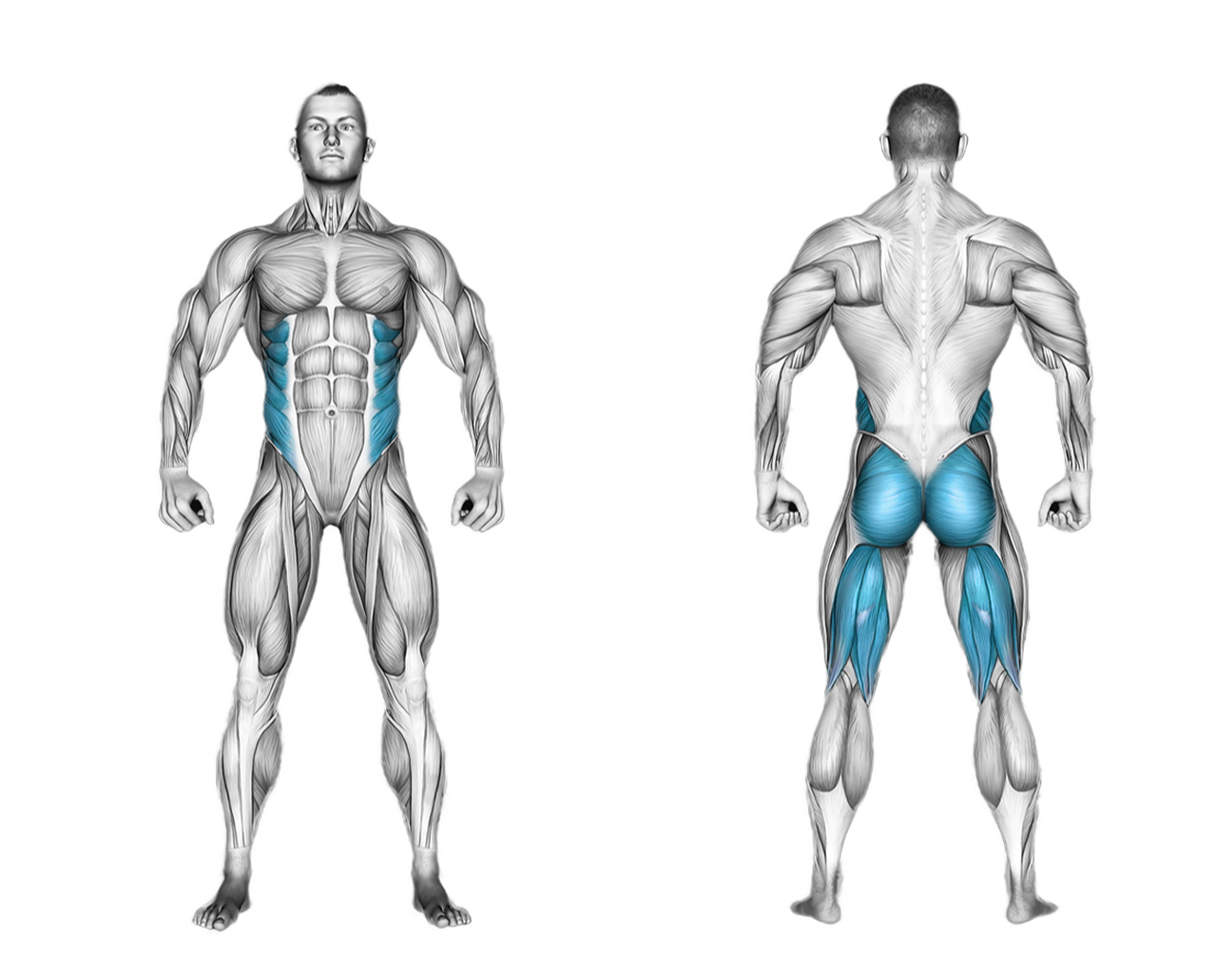
Muscles worked
Your coach guides every set
Turn on the coach in Gloox: it asks how you feel, picks the weight from your history and cues technique and rest. Rate each set and the next one is tuned to you.

On a computer? Point your phone's camera here to get the app.
Questions
What exercises can replace the cable hip extension if no cable machine is available?
Quadruped donkey kicks using ankle weights or resistance bands around the thighs closely replicate this movement pattern. They provide similar isolation for the gluteus maximus without specialized machines.
Is the cable hip extension safe for people with lower back sensitivity?
It is generally safe as long as the core remains braced and the spine stays in a neutral position throughout the kick. If you feel any pain in your lower back, stop the exercise and consult a qualified specialist.
Similar exercises
Cable Donkey Diagonal KickbackCable machine
Cable Donkey KickbackCable machine
Cable Kneeling Hip AbductionCable machine
Cable Standing Hip ExtensionCable machine
Cable Kneeling Glute KickbackCable machine
Cable Standing Hip ThrustCable machine
Resistance Band Lateral WalkResistance bands
Resistance Band Bent Leg Side Kick (kneeling)Resistance bands